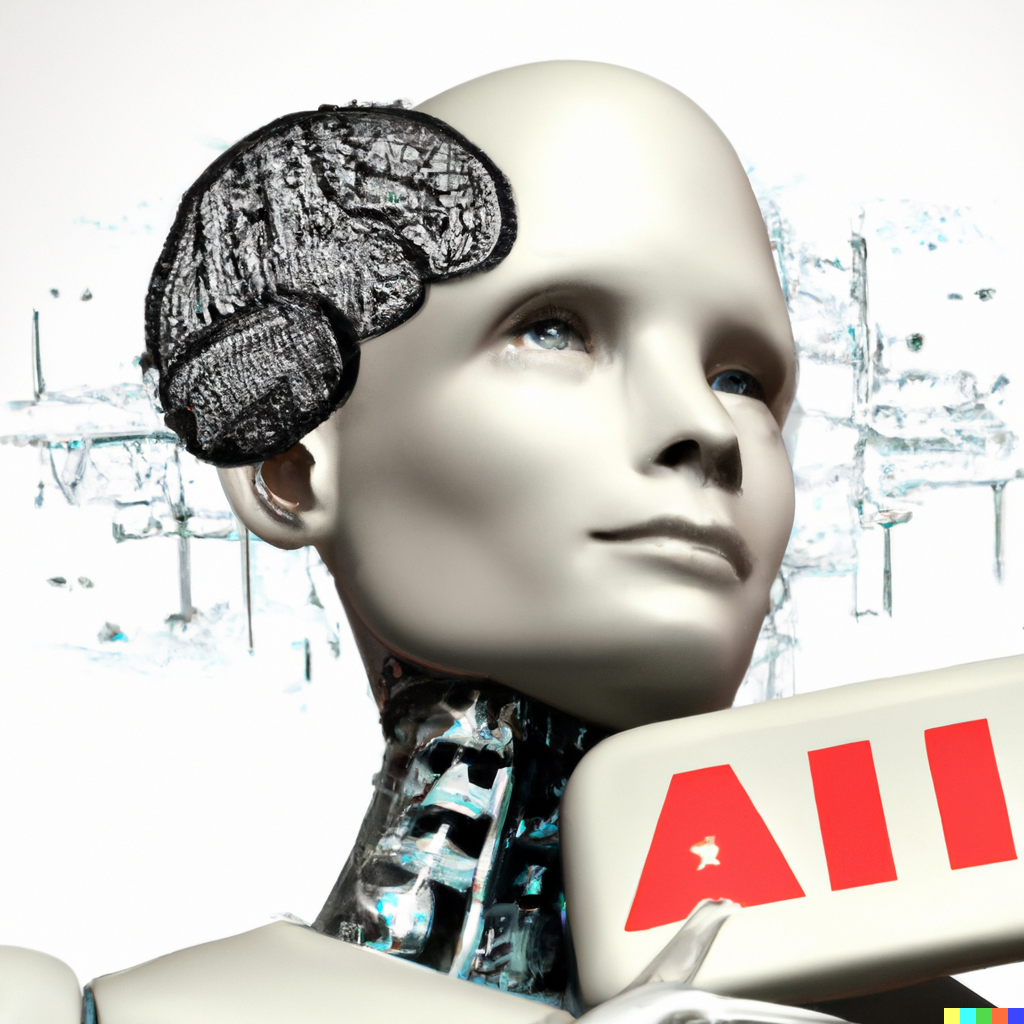
Today we discuss the current state of AI (Artificial Intelligence), the science, theories, and philosophies around its future, and the potential dangers/concerns with the impending next “phase” of AI. Is it possible we can create a “computer” that is as smart or smarter than us in every way (e.g. human-level intelligence)? Many scientists, technologists, and philosophers say “yes”, and “soon”.
How do you see it?
Show Notes
- waitbutwhy blog post on AI
- Elon Musk: artificial intelligence is our biggest existential threat
- Is artificial intelligence (AI) biblically possible?
- Fun with AI
- ChatGPT – your friendly neighborhood chatbot. It can generate some pretty hilarious text, and even provide some wisdom/advice 🤔
- DALL·E 2 – AI that can instantly create realistic images and art from a description in natural language.
Show Transcript
Justin:
Hello.
Mark:
Good morning.
Justin:
Good morning.
Mark:
How are ya?
Justin:
I’m good.
Mark:
Yeah?
Justin:
Mark just said he’s ready as he’s ever gonna be.
Mark:
That’s right. That’s right.
Justin:
We started the recording. ASAP.
Mark:
That’s right Because I don’t want to be less ready
Justin:
than you are
Mark:
a couple minutes later. That was the moment to say start.
Justin:
Did I did I hit play in the right time or record?
Mark:
Oh yeah, it was the right moment. Good. It was the right moment. Welcome to How I See It with me, Mark Pratt and Justin Sternberg.
Justin:
This is a podcast that works to counter cultural polarization through thoughtful conversations.
Mark:
And this is the right topic. for today.
Justin:
Is it?
Mark:
Yes.
Justin:
Alright. It is the topic for today.
Mark:
It is the topic for today, so therefore the right one.
Justin:
Yes. So the topic is we’re gonna talk about artificial intelligence.
Mark:
Yes we are
Justin:
and Mark is excited.
Mark:
I am
Justin:
is uh
Mark:
I am I think I think it’s good because uh in some ways You’re gonna recognize who uh who uh really knows what they’re talking about with the artificial intelligence of sorts.
Justin:
This guy who wrote this blog post
Mark:
Yeah, well, yeah. And then uh the ability to recognize our uh our our differences is a good thing. I think it’s another topic where we can express our differences in such a way that says, Hey, what about this and what about that? And Yeah. I think so much of it can sound like science fiction.
Justin:
Yeah.
Mark:
You know?
Justin:
Yeah.
Mark:
And it’s like some people are gonna say, allow artificial intelligence. And other people are gonna say Oh well, this might be something I can skip. You know what I’m saying? It it has that kind of feel to it. Just based on that science fiction, it’s like that’s not everybody’s thing. I I think of um Marvel, you know, and you know, what was uh Iron Man, Tony Stark, you know, and it’s just it’s just kind of a an interesting topic to to think about and how uh What was the what was the guy that he created?
Justin:
Yeah, uh well Vision
Mark:
Vision, yes.
Justin:
But but Vision fought that other guy. Mm-hmm. Uh to the both yeah. Both of those characters are based on Yeah, picture language versus uh AI basically.
Mark:
Exactly, yeah. Yes.
Justin:
Yeah.
Mark:
So that’s what kind of comes to mind for me, you know.
Justin:
Yeah.
Mark:
And Captain America wins out.
Justin:
Yeah. That’s right. That’s right. Always. But
Mark:
no, seriously. Share your thoughts.
Justin:
Yeah, so there’s this um vlog I really like called Wait But Why by a man named Tim Urban and he just writes long form posts about passion topics of his where he’ll just deep dive.
Mark:
Sure.
Justin:
And he is not a scientist and he’s not you know, he’s just curious. And so he’ll put together these f posts about things that write about them in a way that to me is very appealing. Like it’s very interesting. He’s a little bit quirky, a little bit funny. He’ll he uses tick stick figure drawings to illustrate his part and stuff. Um and so he wrote about artificial intelligence. big long post he split into two. Um but I’ve just found it so fascinating. And I c I particularly just to spoil the lead, like, kinda wanna talk about it from the perspective of believers, right? And and believe you know we know who our higher power is.
Mark:
Sure.
Justin:
And kind of how how will that how does that work, that kind of idea? Like w w I think that would be the fun part to talk about. But in order to get there I want to do some setup. So essentially we’re on this progress. uh bar chart, right?
Mark:
Sure.
Justin:
Where from, you know, the time we were created until now we’ve been progressing in terms of our human intelligence. Right. And to clarify that. No, no, no, no.
Mark:
Okay. I just
Justin:
to clarify that and and this is what he describes in the thing too is over each, you know, w wh whatever grouping of time you want to call it, right? Um, we’re better able to leverage our previous knowledge.
Mark:
Sure.
Justin:
And that’s the thing that’s growing p exponentially. So he he’s using the term exponential.
Mark:
Sure.
Justin:
So he’s essentially saying w you know, one of the one of the illustrations he uses this it’s kinda funny is if you went back to the year seventeen hundreds, I’m I think that’s the number he used.
Mark:
Sure.
Justin:
And you take a guy and you put him in a time machine and bring him back with you and now He would be so blown away with what ha what’s happened in those two hundred years well you know, two however many years.
Mark:
Sure.
Justin:
That he would die. He would literally die. He would just be blown away and die, right?
Mark:
Yep. Now this is all fictional as it’s the
Justin:
the joke, right? But Now if you t went back to he you know, he after he died came back and said, you know, I want to do that same thing, right? So he goes back to his time and n and then he piggy you know, he he leapfrogs excuse me, into the year fifty hundred and you know, brings a guy up to seventy hundred and says, look at all and you know, the guy’s like, Wow, yeah, lots of things have changed or whatever But it’s not a die level of progress the way he describes it, right? It’s like okay, things have changed, but it’s not mind blowing to the degree that he would die. In order for The seventy hundred man to cause a die progress level, you’d have to go back, let’s say, a thousand years, right?
Mark:
Sure.
Justin:
So in this guy’s blog post he’s talking about hunter or gatherer, that kind of thing, right? w you know, whether you a s uh ascribe to that idea or not. But the point is, this guy, you know, he’s beating his chest or whatever, and he you bring him to seventeen hundred, he might die at the level of progress, right?
Mark:
Sure.
Justin:
Assuming he could understand it, that idea. The point is it’s exponential growth for each generation or you know each you know the eye progress level or whatever. And so the premise of this blog post is that we’re at the edge of this essentially cliff straight up, right? Because we have continually gotten better at building on top of the foundations that we’ve built with our technology, with our quote-unquote intelligence. To answer your, you know, previous question, I definitely don’t think we’re more I don’t know what this the the author would argue. I think he might argue a similar thing but not quite that we’re basically the same intelligent it’s just that we have the advantage of technology and sure the um And keeping track of all the things we’ve done and then by keeping track we can now build on those things. So nobody alive today truly understands how every part of a computer works.
Mark:
Gotcha.
Justin:
Right? We basically go, well, this is a microchip. I know you plug the microchip in here and I understand you know, let’s say the the Wi-Fi part of a computer and I know how that works to f to a large degree, right? And that’s the part I work on. But I don’t know how a microtrip works or vice versa.
Mark:
Sure. Or But there are individuals that do
Justin:
That understand parts of the laptop, yes.
Mark:
Each each part. As a human race, there are individuals that understand.
Justin:
Theoretically, yeah, yeah. Uh yes, there have yes. Yes, because we’re continually
Mark:
designers, if we would
Justin:
improving on it, yeah. Yes. But yes, so but the point is there’s no one human that could you know, build a computer from complete scratch. They would depend on the existing knowledge and You know.
Mark:
Gotcha.
Justin:
Does that make sense?
Mark:
Yeah. Yeah.
Justin:
Um so anyway, we’re we’re we’re at this point. We’re we’re now working on what’s called artificial intelligence. And this is kind of where the cliff can come into play, depending on whether you believe it or not. You know?
Mark:
Yeah.
Justin:
Um and so he describes you know, a spectrum of artificial intelligence which he calls calibers. Where caliber one is uh artificial narrow intelligence And that’s essentially where artificial intelligence kicks in in one singular vertical.
Mark:
Yep.
Justin:
Right. Does that make sense?
Mark:
Yeah. His his example was the aspect of h creating a computer that can beat our best chess player. Yeah. But all that computer does, all that intelligence is designed for is to play chess. It can’t necessarily do your financial
Justin:
You can’t tell if you look pretty or sleepy or groggy or something. Exactly.
Mark:
It’s not gonna necessarily read your emotions or, you know scan your eye retina or all that stuff and and from a security level. It’s just designed to play chess.
Justin:
Yeah. And to that degree we have and he calls it A and I, artificial narrow intelligence.
Mark:
Sure.
Justin:
And to that degree we have
Mark:
Just one specific area.
Justin:
Yep. We have A and I all over the place in our world. Um He also goes on later to describe like the algorithms that feed you your social feed and Facebook um as well as the ad system where you look at something here and you go to another site and it serves you some a similar thing, right? Like sure Like they there’s all kinds of um artificial intelligence at play in um machine learning is a new term that we’re calling it. We’re basically Uh you can teach a computer to learn about a specific thing and then make judgments that are, you know, theoretically better than a human. because they have all this input and they can, you know, you you teach it over time. You essentially say
Mark:
it’s basically like the schedule in your phone. In other words, if you type a name in, it will give you the last time you saw that person or something along that line. And it will plug that in, almost giving you the exact time. you need so you’re not having to scroll through yeah to find
Justin:
Yeah it’s another great example of A and I. Yeah. Yeah. And so essentially that we’re there m already and that’s you know nobody’s wowed by that. Although really We’re not wowed because it doesn’t seem that impressive, but if you kinda understood it truly, you would go, who wow, you know, like
Mark:
sure.
Justin:
This is uh powerful, but almost There should be a level of like scary, right? Exactly. I think that’s Yes.
Mark:
Yeah. ‘Cause I I’ll admit I tend to I’m um it’s not that I’m It’s not that I’m what was the first one kind of bored with it or not impressed, unimpressed. It’s like, oh.
Justin:
Yeah.
Mark:
Yeah. I’m not sure I always like this.
Justin:
Yeah.
Mark:
I mean I understand how it works because I’ve done it over and over again and you know, for my schedule I’ll meet a person typically at the same time, but it’s like each time it happens I still think about it, it’s like I’m not sure I like this.
Justin:
Mark has not welcomed our robot overlords.
Mark:
And and and in all honesty, I’m not even sure I agree. with the the human progress as a line.
Justin:
Yeah.
Mark:
I would see it as a sickle uh excuse me, as sicular or s as cycles. I think Yeah, I’m not saying I think all intelligence is still the same based on creation, but I think there are times when we see people uniting. And I would say there’s still times today where we can go back and say, okay, we don’t necessarily understand with intelligence or without intelligence how they did that. I mean, granted, we can think of, you know, the the the Egyptians and the pyramids, and we recognize that slave labor type dynamic and more people together, but yet I still think there’s parts of history you know, that we don’t we when we look back, you know, there there are those who would say, oh, alien life forces came to make this possible.
Justin:
Yeah.
Mark:
‘Cause we can’t figure out how they did it.
Justin:
And that kind of further enhances the point, which is we’ve always again my my how I say it, we’ve always been the same level of intelligence. That’s how we were created. The difference is they didn’t have a way to record how that was created and then the next generation go, Oh, we can if they could build a pyramid this way, we could build it this way and make it better. Yeah where now nothing goes away, essentially. Like every not you know
Mark:
information.
Justin:
Right. Information about how, right?
Mark:
Right.
Justin:
Um And again, blueprints are created, whether whether whether you call that you know, software or
Mark:
Sure.
Justin:
What whatever that looks like. Blueprints are created so that I don’t have to truly understand how a pyramid is made, I just plug in this blueprint and the thing gets built. Does that make sense? Sure. The various teams or the various manufacturing plants, whatever. They come together and they produce this thing that I don’t have to know how to make.
Mark:
Sure.
Justin:
You know? But they didn’t have that then. Right, right?
Mark:
Sure.
Justin:
One could argue the Egyptians maybe didn’t want that to be recorded. They wanted it to look, you know. I don’t um who knows, right? I’m not an Egyptian. But
Mark:
no.
Justin:
Um but I think that again, that the point of this post. Whether agree or not, I um it’s I just think it’s fascinating, but just
Mark:
I agree it’s fascinating.
Justin:
Yes.
Mark:
Don’t don’t don’t misunderstand.
Justin:
Alright.
Mark:
Yeah. Yeah.
Justin:
So A and I, artificial narrow intelligence, is, you know, it’s kind of happening all over the place. But many people, many organizations are actively working on the next level, which is artificial general intelligence.
Mark:
Sure.
Justin:
And this is basically human level artificial intelligence. Sure. Essentially a computer that can think like us. And what does that mean? Well, think like us in every way. Not just can play a a chess against us, but can also figure out if you’re sad or happier, you know, but also can determine you know look at a thing and say that’s you know That’s a shadow or that’s a you know, an actual three D picture or that’s a two D picture. Like there’s just so many things uh that we just do intuitively and naturally. Sure. You know. Uh he describes like the things that are hard for us or easy for computers. Right, like big calculations, stuff like that. The things that are easy for us are n basically impossible for computers. Those natural intuitive systems where you like raise your arm in front of you and you look at it and it’s just like all of that was for free. You just there’s your arm, you look at it, you know, put it back down.
Mark:
Sure.
Justin:
And it’s like that was required no thought, no effort, and yet for a computer it’s in it’s impossibly difficult, right? Although, you know, they’re getting better at animatronics and computers and robots and all that and they’re gonna like if you ever seen the Boston dynamic videos where they create robots. Yeah, I do like
Mark:
familiar I’m familiar with it based on and that was where I was going, you know, it’s like the robotics part of it is the most difficult part. Yeah. You know, to because our our bodies. Well, I’m saying from a muscular standpoint, to be able how our bodies are designed as one muscle tensions, there’s equal and opposite relaxation in the other. And it’s very, it’s it’s been very hard for robotics to duplicate that. Which always makes, you know, robots look stiff or, you know, that and that’s just something that I’ve been fascinated with over time is that pretty progression.
Justin:
Yeah. As they look less and less stiff. Yes, yes.
Mark:
You know, to where they’re they’re they’re becoming smoother and that kind of thing, you know, from a from a human replica standpoint. Yeah.
Justin:
And they are basically leveraging AI to have the robot teach itself.
Mark:
Sure.
Justin:
So essentially when I jump and I fall Do figure out all the math that was involved in that and mark that as a fail. That doesn’t mean you don’t but and then you change a variable and you jump again.
Mark:
Sure.
Justin:
Still fail, okay you know
Mark:
what needs to
Justin:
Right. And that’s just so much math. And we c you know, our brains just like I give up.
Mark:
Right.
Justin:
But for a computer it’s like you just keep trying, keep trying, do the math, mark out what works, what doesn’t work
Mark:
Right.
Justin:
And you can, I think, visualize in your head how that can learn, right? Like it can it can adapt to go, okay, this is how you jump.
Mark:
Yep.
Justin:
And then they put a box in front of it. Well now start over, right? Like it
Mark:
Exactly.
Justin:
And they’ve been doing that for decades now and so they got, you know, robots that will like again the Boston Dynamics videos where they can do forward flips, backward flips, jump across, you know. holes, jump up and down boxes, do synchronized dances.
Mark:
Yeah.
Justin:
Like it’s it’s crazy. They got that little dog robot that can, you know, open doors and go in and rescue something, come back out. And those are real. Like those are things in use right now.
Mark:
Exactly.
Justin:
Yeah.
Mark:
Yeah.
Justin:
Um, but that’s definitely not artificial general intelligence, which is intelligence at the level of a human. You know, you might describe that as intelligence of an ant, maybe.
Mark:
It’s still f fairly narrow in the concept of the human body.
Justin:
Yeah.
Mark:
But
Justin:
certainly broadening.
Mark:
Yes, no doubt. And I and I think part of that too is the the advantage over, you know, computers or robots or that kind of thing is humans would give up on many tasks before you know they’d learn something. As as human, I myself included. You know, if I if I’m gonna I’m not gonna do something that requires me to fall 752.
Justin:
You need motivation.
Mark:
Yes.
Justin:
Right?
Mark:
Yes.
Justin:
There’s the key difference You could spend seven you know Addison, right? Invented the light bulb in the famous stories, how many he threw in the trash. I don’t know, whatever. Right. Lots. Right. basically that seven hundred whatever, you know. Um we can, but we need motivation.
Mark:
Precisely. I would admit that.
Justin:
So I think I mean you just touched on one of the biggest concerns and or fears of artificial intelligence. is that they don’t need motivation.
Mark:
Sure.
Justin:
And basically you can program to do a thing and they’ll do it. And they don’t care. They’re not thinking. They’re not having feelings about it yet. Right? According to this theory. Um And the scary thing there, right, in you know, th I think this is a level of artificial intelligence that most people are afraid of right now is not uh an intelligence that’s smarter than us in every way, like ar artificial general intelligence where they’re essentially as smart as a human. Because we uh that would be scary, but that would be a different kind of scary. What we’re scared of is a dumb AI doing smart things
Mark:
Sure.
Justin:
Right? So they launch all the nuclear codes because they think, you know, whatever.
Mark:
There’s a perceived threat.
Justin:
Yes, exactly. That is the thing. that freaks us out about AI and where we you know, we have it continually train itself and it trains itself into a position where we have to g get rid of this human thing ’cause they’re, you know, basically Cockroaches on this earth, you know, ruin you know, destroying a game? What’s that?
Mark:
Never mind. It’s a it’s a movie
Justin:
Which one?
Mark:
Uh it’s the one w when uh where the the computer takes over the intelligence and wants to send a and the kid gets on. Oh I forget the name of it, but yeah. It’s uh Never mind. Yeah. You’d have to be
Justin:
a old movie? Yeah, yeah, yeah.
Mark:
You’d have to be my age to get that.
Justin:
It’s like Tron.
Mark:
No, it’s not, but yeah.
Justin:
Let’s see 2001.
Mark:
Go back with it, but Moving along. I apologize. I apologize.
Justin:
No, I um now I really want to know. But yes, essentially, right? And there’s actually a lot of new movies. There’s one called Ex Makama Makama.
Mark:
No.
Justin:
And it’s essentially an AI robot that you basically learns and learns and learns and then Basically humans are the problem. And it’s in a uh an environment where that’s just two peop it’s a ro robot and a human.
Mark:
Sure.
Justin:
And at first she’s very affectionate and eventually she’s like fake affectionate as she’s like trying to figure out how to get rid of this human that’s a problem, right?
Mark:
Yeah. No, that’s typically where those kind of movies go. Is it comes full circle and it’s like humans are the problem again.
Justin:
Yeah.
Mark:
Because we’re the aggressors and we’re trying to uh you know, take over. And it’s like this other thing, we see it as an enemy, but yet it’s really just a kind, loving thing that’s just looking to promote its own behalf as well.
Justin:
Right.
Mark:
So yeah.
Justin:
Right. And artificial intelligence gets things wrong all the time, obviously already. And uh a class uh not classic uh an example that I’ve heard uh in the past is essentially uh artificial intelligence that can read facial expressions or whatever, like even your phone scan thing, doesn’t do as well with black skin.
Mark:
It’s like
Justin:
epic fail, you only had white people in the room designing that and it works great for them.
Mark:
Sure.
Justin:
Right? And so then it basically marks that person as no, you’re not allowed in your phone, you’re basically you’re a bad person, right? If it you know, kind of putting it essentially zeros and ones, black and white. You know what I mean?
Mark:
I hear you.
Justin:
And so you take that to a scale that’s scary and it’s problematic, right? Like oops, we didn’t include that scenario. Um So that’s kind of the general, I think, fear, right? Sure. Dumb AI doing smart things.
Mark:
Sure.
Justin:
You know, or vice versa, smart AI doing dumb things, right?
Mark:
Yeah. That that creates the fear.
Justin:
Yeah, and what he describes in this post he’s saying we’re kind of completely missing the point because um those are scary things, but what’s more scary is an AI that’s more intelligent than us. And then we now have, you know, essentially robot overlord, right? Like we we have to abide by their rules. Because they make the rules. They can turn the water off, they can turn the water on. everything, right?
Mark:
Sure.
Justin:
Theoretically.
Mark:
That’s the idea.
Justin:
That’s the idea. Yeah. Yeah, exactly. And so essentially the theory is once they reach artificial general intelligence, because of the advantages they already have over us, like not needing to be motivated to continue on a task or um also he talks about the power it requires to um The the power our brain uses is essentially pretty minimal, but we have access to power, you know, much greater than that to feed to them.
Mark:
Sure.
Justin:
Right? So they can you know, there’s just a lot of advantages. There’s also disadvantages, but
Mark:
No doubt.
Justin:
You know. But with those advantages, they’re not gonna stay at artificial general intelligence at AGI level for very long, right? Because we’re now in an exponential state and they’re teaching and learning themselves. So You know, they have the advantage, you know, again, this is the theory, this is the you know where they can continually improve where we can’t We’re kind of bound to our quote unquote hardware software and we’re kind of limited. Although we can build on what the last guy built, which is what I was talking about. We’re still limited to That.
Mark:
Sure.
Justin:
Where an AI essentially is not limited. Is the idea.
Mark:
Is the idea.
Justin:
Right. And so then you get into what they call artificial superintelligence. And that’s basically the one level above you know, human general intelligence to infinity. Right.
Mark:
Right.
Justin:
And
Mark:
it it’s interesting at that level. I like the uh it it’s the the the line that leads in, of course, Oxford philosopher So, you know, in my perspective, that’s uh that this is philosophy.
Justin:
That’s right. You know, yeah, yeah.
Mark:
To a certain degree.
Justin:
There is, right. There’s so much philosophy.
Mark:
Exactly.
Justin:
Right.
Mark:
Yeah. And I and I think that’s the part that we have to wrestle with.
Justin:
Yes.
Mark:
Because I think we can because and and I guess that’s where it comes back to For me, it can almost come back to Marvel. Because it’s really uh it it’s philosophy. It can even be entertainment you know, to think about. And and it’s and let’s be perfectly honest, there are people out there, not necessarily us, but I’d say smarter than us, even you. Um but to the point that that they get paid. to think about what could be next.
Justin:
Yeah. Yep.
Mark:
And from a from a philosophy standpoint. And I and I think that’s a that’s a great thing. Don’t get me wrong, but like you say, that’s not me.
Justin:
Yeah.
Mark:
And so yeah, but I think that’s a I think I enjoy when I read something along that line that says, okay, yes, this is what we’re talking about.
Justin:
Yeah. Philosophy. Yeah.
Mark:
Philosophy.
Justin:
Yeah, and uh you know because AI the people work on that next those next levels there are so many unknowns. Sure. Right. So that so they there’s essentially a very large, broad spectrum of people. working in this field.
Mark:
Sure.
Justin:
Philosophers and scientists. And who knows what else, right? But the idea is, uh yeah, you gotta get ph philosophers in there. So yeah and
Mark:
well in and in some ways I think it it lends to your point. I think philosophers create that motivation To a certain degree.
Justin:
Yeah.
Mark:
This could be. And that excites people to say, wow. And then your scientists, your designers, it’s like, okay, how can we do this? Or is this possible? And other people are automatically gonna hear that and they’re gonna say, This is scary. I don’t like this.
Justin:
Well, to be fair, there’s a good contingency of philosophers andor scientists that are saying This is scary. This is a big deal. This we need to be very careful. And so it’s interesting because there are contingencies of AI developers and and and you know innovators that are the first category of this is exciting, this is we gotta get this done. This is gonna be amazing. This is gonna solve cancer. This is gonna solve death. This is gonna, you know And then there’s a camp of
Mark:
War Games was the name of that movie.
Justin:
War Games. I don’t think I’ve seen it, but Thank you.
Mark:
No problem. I didn’t watch you.
Justin:
So the first camp is kind of the the the sky is rose rosy or whatever. You know, sky’s blue.
Mark:
Yep.
Justin:
You know, vision is rosy. Whatever. The other camp is this is very dangerous, so let’s do it let’s do it, but in a way that’s as careful as possible because they’re still doing it. Right? This other camp. There’s other camps that are gonna do it, so we have to try and get their as quick as possible, but in a way that is cognizant of the risks.
Mark:
Sure.
Justin:
And cares about the risks.
Mark:
Sure.
Justin:
Uh so it’s not like a hands off type of thing because they know Someone’s gonna put their hands on it. So let’s do it in a way that’s responsible. Does that make sense?
Mark:
Yeah.
Justin:
Um
Mark:
and he and even Tony Stark failed at that.
Justin:
Yeah.
Mark:
Yeah.
Justin:
Yeah. I mean th those yeah, those movies are great in terms of kind of setting up the the issue.
Mark:
Yeah.
Justin:
Um But Elon Elon Musk has some different his hands in some different companies.
Mark:
No doubt.
Justin:
Yeah. W where he’s basically one of those people that would say this is very concerning, we need to do it the right way.
Mark:
Responsibly.
Justin:
Whether he means that or not. You know, that’s the besides the point, but that’s kind of that camp. Um
Mark:
and even that, it’s like what is a person’s motivation? Are we always as altruistic
Justin:
Right.
Mark:
As we would like to think we are.
Justin:
So to get through all of that, we’re we’re to a point where there’s this artificial superintelligence that’s smarter than us and we know you know, are not the top
Mark:
mm
Justin:
top dog, right? And uh he said A ASI, Artificial Superintelligence Is the reason the topic of AI is such a spicy meatball, you know why the words immortality and its extinction will appear in these posts multiple times, right? Because you know, once we’re not the top, it’s They can either enable some unlock some things that we never could, and they basically say, you can be our immortal pets.
Mark:
Sure.
Justin:
Or they can say, no, we’re knocking you off the total, you know, off the balance beam of existence.
Mark:
Yep.
Justin:
And you’re not worth keeping, you know, kind of thing We don’t know, right? So all that to say, the real question, the the polarizing
Mark:
is
Justin:
do you think it’s possible? Do you think that ’cause in my Uh let me just share a little bit of my perspective.
Mark:
Go for it.
Justin:
I think there’s a tower of bab babble in here somewhere.
Mark:
Hmm.
Justin:
Right
Mark:
I hear you.
Justin:
And to explain that reference, the Bible, you know, there’s a Bible story where, you know, before uh you know, the world was split up into different languages and countries or whatever. We kinda all left the boat, right? Noah’s boat. I think it was after, right? And we all just stayed in the same pr basically but one big happy family and as a result we started to build this tower in a town called or a city called Babel and we were very proud of it and we said, This is gonna be amazing, this is gonna reach the heavens, this is gonna rival anything God’s ever done, like and we can do this because we’re so smart and we’re you know, co doing this together, etc etc and we don’t have the the limits of we don’t have limits essentially.
Mark:
Sure.
Justin:
And they built built built and and God basically said
Mark:
snap
Justin:
and then, you know Uh broke basically broke everyone up into different languages. So you’re working side by side with someone laying a brick and all of a sudden you he’s talking a different language. language, well that puts a hamper, right, in any kind of development process because he can’t communicate. And that basically destroyed that, right? That yeah that was the end of that. And as a result, that’s how, you know, countries and it nationalities formed because the ones that could understand each other kind of separated out and said, I
Mark:
sure
Justin:
the rest I’m not sure about, but let’s let’s go do our own thing, right?
Mark:
Mm-hmm
Justin:
So I’m saying I think there’s a there’s a piece of this, right? Where Do you? Well, I do. I don’t know.
Mark:
Mm-hmm.
Justin:
I don’t know. That’s uh the
Mark:
No, and that’s why I’m Asking.
Justin:
Let me have your thoughts.
Mark:
Oh no, I I’m uh it’s a I guess I’m pragmatic to a certain degree. Because I realize, you know, for every science fiction movie there’s another there’s another um apocalypse type movie, you know, that shows um, you know, cities being overgrown by vines and everybody’s back out in the countryside and, you know There’s no electricity. The grid is just so small. You know, certain something happened, you know, and I’m recognizing a lot of this AI is dependent upon electricity, grid you know, circumstances like that. And I’m and I even today, you know, I think about, you know, third world countries at times, you know, and that you know, people indi I’ll call it as if I may, you know, like a indigenous people who are, you know, just out completely Disconnected. And those people, from my, in my opinion, will continue to exist the way they’ve always existed outside of artificial intelligence from my perspective, you know, because I think, you know, AI is definitely a a first world thought.
Justin:
Yes.
Mark:
You know, to where we
Justin:
Yeah, but first world thoughts have impacted the whole world many times throughout history, right? So whether it’s colonization
Mark:
Sure, but I I also think if I may, on the other end of the Bible, you know, when we talk about revelations, now we can talk about what John sees, and he’s still talking about horses Now, is that something that looks like a horse that’s mechanized? You know, or was he describing that uh from his his era as something that looked like a horse. You follow me? That kind of thing. And that’s and that’s kind of where I
Justin:
He also describes a lot of things that are nonsensical. Yeah,
Mark:
like scorpions with heads like a lion and
Justin:
like bur like the size of a horse, but yeah, heads of a lion. Yeah, like
Mark:
Yeah, and I’m open to that, you know. I mean it Could a helicopter, you know, look like a scorpion, you know, that kind of thing. You know, I’m
Justin:
Yeah. Or to stay in this AI vein, right? Like They create some sort of helicopter like thing that l for all intents and purposes is just a big insect as it’s mechanized, it’s whatever. Maybe even has organic parts, right? Because again, once you’re smarter than us, no, I think what’s what’s the limit, you know? I think that’s his big concern, his big you know, thing is just like just see you know, real we’re real close to hm stuff you can’t even imagine.
Mark:
Right.
Justin:
Right? And I j I th I just think it’s so fascinating. I don’t necessarily agree though, ’cause I again You know, his point with the exponential growth is that we’re about to hit a tipping point, right?
Mark:
Correct.
Justin:
Where bam, it’s exceeded past us and now artificial intelligence is
Mark:
And it continues to grow exponentially, yeah.
Justin:
Which is the the the crazy thing, yeah.
Mark:
Yeah.
Justin:
Um We saw this illustration in this post where it’s a animated GIF right where it’s water it’s the Lake Michigan and all the drops of water in Lake Michi Michigan and it showed uh basically animation of the time span so like seventeen hundred and the w you know like mis j Michigan is empty.
Mark:
Sure.
Justin:
And what was the numbers? Uh hang on I gotta It?
Mark:
Right there.
Justin:
Here it is, yeah. It’s basically calculations a second. So in 19, it’s going through 94, 2000, 2006, and we’re barely filling it, and then you hit uh 2018 and up to 2025 and the whole basically the whole lake just instantly fills like that’s the power of exponential yeah
Mark:
growth
Justin:
which people truly can’t understand unless they’ve experienced it in one way or another. Um and so that’s why um you know investments are so important, right?
Mark:
Oh sure, very much like from where it was twenty-one to twenty-five, you are correct, and then it just fills the whole lake all of a sudden.
Justin:
Yeah.
Mark:
Yeah.
Justin:
Yeah. So that’s uh Yeah, so in terms of once but and what what what this illustration fails to demonstrate is it doesn’t just stop once the lake is filled.
Mark:
Mm-hmm.
Justin:
Right? Right. To your point, the exponential growth continues to be exponential and we have no idea what that looks like after that, you know.
Mark:
Yeah.
Justin:
Like the cat ‘s out of the bag. You can’t put the toothpaste back in the tube. You know, it’s like this thing’s going and you’re not stopping it.
Mark:
Sure. So if you’re not stopping it, of course, at that point, you know, I think there again, from my perspective, the sci-fi part comes into play. Because now we need to live on other planets and we need to, you know, develop other areas to live. And I think sometimes and it The some of the AI for me, granted, it’s with us in a narrow form, that kind of thing, currently. And I really You know, don’t necessarily have a strong issue with that. But there is a part of me that can even kind of tie some of this to like a well, overpopulation. You know, that there is a a movement that says yes, you know, and and granted different people are gonna have different it can be a polarizing topic, you know, that yes, we don’t have enough There’s too many people, you know, and I think sometimes for me, AI can be tied to that because it’s about being able to and world overpopulation and hunger, you know, because something else is gonna kick in and provide that balance for us that we need And I guess that’s how I see it. Sometimes it gets connected, and I’m not saying, yeah, I get that ‘s that’s how I see it.
Justin:
Yeah. You see that as how you think it will go, you mean or
Mark:
No, I see that as part of this um model that we currently have, you know, in in in government, in certain movements that basically are concerned about that. You know, and this A, I think that’s a part of the development or a purpose behind it is that we can end all of these human type problems because a computer will fix it.
Justin:
Mm-hmm.
Mark:
You follow me? And we can end world hunger. We can end poverty. We can end. And I’m not sure that’s that’s part of the design.
Justin:
Yeah.
Mark:
For our earth, you know, for that that’s just my personal perspective on it. I I think, and here again, I I may sound, you know, resistant or anti and I’m I I’m really not, but probably my questions or my thoughts as I’ve thought about it, you know, probably my questions may come across that way. And it and it’s like that’s you know, that’s that’s kind of I I I think it’s fascinating to talk about, but there again, I I’m not I’m not a philosopher. So I’m okay with being able to say I’m not. And so therefore I’m gonna probably move on with some of the things that I do have. the ability to recognize. And it’s in in some ways it can be kind of like we we spoke about government
Justin:
You know,
Mark:
I see it as bigger than I am. So I’ll go on and I’ll be responsible for my circle of influence.
Justin:
Yeah.
Mark:
But once it gets to that level, it’s like Yeah.
Justin:
What’s Mark gonna do anyway?
Mark:
I’m not even updating my phone right now, you know.
Justin:
Don’t worry, AI will do it.
Mark:
Exactly, exactly. And I hate it when they give me that new update and then changes the other stuff that I got used to. But that’s just my
Justin:
Yeah.
Mark:
But bringing it back.
Justin:
Yeah.
Mark:
And then so then is that is that your full-on perspective on the uh if you will the uh the super intelligent artificial super intelligence
Justin:
Well, he kinda
Mark:
You said babble. I I wanted to bring it back for that.
Justin:
Okay, gotcha. He kinda tips his hand a little bit in the article when he says a large contingency of you know, people who are in this field believe this is close.
Mark:
Sure.
Justin:
Between you know artificial general intelligence where a computer is about as intelligent as a human. The kind of the furthest projections in the mean is like 2060.
Mark:
Okay.
Justin:
They’re saying at l at the latest.
Mark:
Okay.
Justin:
But more like 2040.
Mark:
Okay.
Justin:
Maybe even, you know, sooner.
Mark:
Right.
Justin:
Because of exponential growth. Um And but the big sticking point is we don’t know we really don’t know how far we are from it. Whether it’s possible. We don’t know what we don’t know.
Mark:
Sure.
Justin:
And so that’s the part to me that um I think I I I think there’s more to that than this particular article is letting on. Because this article’s basically saying this is a big deal. Everyone should be thinking about this. Like it’s So close, maybe.
Mark:
Sure.
Justin:
And you know, all the leading experts agree this is really close and you don’t even know about it.
Mark:
Right.
Justin:
You know? And so that’s kind of what this post is about. The way I see it is again I think we don’t know what we don’t know and I think there’s some insanely difficult things that they don’t know about yet. It’s gonna stall progress, is the way I see it. Kind of that Tower of Babel, the language is like, well now we gotta r relearn how to communicate it it took us from Babel until the internet, right, to be able to collaborate effectively. Maybe not the maybe not the internet, but because I think we’ve been collaborating effectively with other language speakers for a long time.
Mark:
But sure.
Justin:
I think the internet really kinda has boosted the ability to collaborate globally.
Mark:
Sure.
Justin:
Right? To maybe a similar degree as Babel. I don’t know.
Mark:
No, and I and I think you’re exactly right in that progression. And I think and I’m not I’m not equating the two, don’t get me wrong, but when I think of AI to a certain degree, I do think of war on terror. You know, because there has been this global connection to fight this war on terror. So therefore information is being filtered in such a way and you know that these logarithms have been created in such a way to be able to filter out all of this information in such a way that says, okay, is this threat credible? You follow me? And I think that’s a part of our connected intelligence, if you will And I think it also the the point you alluded to earlier, I think it’s also can be dangerous because a person, like you said, dark skin versus light skin wasn’t no you know, a person who might be expressing a certain anti -government opinion could also be identified you know, in this and and I think with sometimes, you know, I’m I’m equating it to what Facebook and you know and these other entities can do that basically filter all this information to feed you exactly what you want to hear. And I for me that’s that’s a part of this intelligence, the artificial intelligence dynamic.
Justin:
That’s still very much in a department since uh dumb computers doing smart things or vice versa.
Mark:
Sure.
Justin:
But yeah, I I mean I agree with you. I think you know uh probably those same algorithms that would flag a terrorist or whatever probably would have flags. caught you know Benjamin Franklin exactly George Washington exactly Hamilton
Mark:
that’s my point yeah yeah
Justin:
or you know some of I think that’s fascinating and
Mark:
Someone who is basically just recognizing um
Justin:
independent.
Mark:
Yeah, I was I was just what with a federalist if you were, if you were, you know, to be able to say, yeah this this bigger government design isn’t my thing. And so, you know, that that that’s kind of what how I connect it or and I I am so back to your point though um you were talking about something that could stall this progression. Now I need to know, is there any one thing that you are specifically aware of? as you think about it. What what might be one of those things?
Justin:
Wow. I mean, essentially they’re described the difficulty of I mean we talked about robotics, right? How long it’s kind of taken us to figure out how to make a robot kind of move like a human. And movement is physics and so, you know, in calculations and math. And so it’s hard, but we’ve been doing it, right?
Mark:
Sure.
Justin:
Um we don’t even know where to begin with emotion.
Mark:
Hmm.
Justin:
You get what I’m saying?
Mark:
Oh. We don’t even know where to begin with. You talk about people in general
Justin:
Yeah, for instance he people. Right. Uh but yeah, just like they need the computer to figure out how to do that because we don’t even know where to start. So essentially there’s already a non-starter in a sense.
Mark:
I hear you.
Justin:
But I also don’t necessarily think that’s the thing, right? That may not be the thing. The computer might just be able to read faces and you plug a million movies into this thing and a million pictures and a you know whatever millions a small number just sure the whole planet’s worth of information it eventually goes okay sad is this
Mark:
right
Justin:
right
Mark:
Right.
Justin:
And it can figure it out. You know? And it can replicate it.
Mark:
Yeah.
Justin:
And it might even program itself to be able to be SAT, right? Sure. Again, these these are just things that we don’t know.
Mark:
Yeah.
Justin:
Because it’s requiring us to depend on something else doing it that we said, hey, now do this.
Mark:
Exactly.
Justin:
You know?
Mark:
Yeah.
Justin:
So to me that’s kind of the big th when you say is there a thing? The thing is where it’s We can’t know.
Mark:
Yeah.
Justin:
You know.
Mark:
I think of it in the terms of the old Terminator.
Justin:
with
Mark:
Arnold Schwarzenegger, you know, to where there was this glitch. Well no, there was this glitch that made him the Terminator and other people could notice if you looked closely that he wasn’t able to assimilate. to empathy and emotional to where those emotional dynamics tended to give him away. So if someone was observant enough they could tell the terminators from actual people because they were just yeah unable to connect with certain m emotional cues.
Justin:
Yeah.
Mark:
And I and I I think that’s the point you were bringing up to a certain degree. It’s like that becomes an obstacle. But there again, that’s on my current level of thinking. But that’s yeah. I I’m in agreement with you. And uh I guess in some ways I’m honestly uh surprised that we are in as much agreement as we uh as we are from uh You know, IT person to uh non-technical person. I was
Justin:
Yeah, that’s true I mean I think it’s just so theoretical that it’s hard it’s not about IT versus
Mark:
No, I hear you.
Justin:
It’s just it’s like you said, it’s philosophy, right? So then Yeah. It it you know, it’s interesting, you know, you talking about the Terminator.
Mark:
Mm-hmm.
Justin:
That that’s probably another challenge which is kind of human ambition to leverage what we’ve gotten so far, right? Like, oh, you mean you can create a machine that will do that? Terminate da da da da Well, that’s good enough, you know, and and kinda take that off and kind of wreck things, right?
Mark:
Mm.
Justin:
That kind of sets us back.
Mark:
Yeah.
Justin:
Again, you know, seems biblical to me in the sense of like we can’t control ourselves and we wreck our own progress as a result of that. We set ourselves back a hundred years, you know. Doesn’t surprise me at all if that were to happen. You know what I mean?
Mark:
No, I do. I hear where you’re coming from.
Justin:
Yeah. Because
Mark:
Because our our ambitions are to be like God.
Justin:
Yeah.
Mark:
And
Justin:
yeah.
Mark:
We can see how he frustrated in that example.
Justin:
Yeah.
Mark:
And who’s to say that he can’t and I and I would say There might be a uh I’m not saying that individuals who tend to, you know, promote or philosophize about artificial intelligence might be anti-God, but I think we factor that in that God is we we see God as our higher power, you know, Jesus Christ is our higher power, of course, but you know, being able to recognize anything that would be lifted up to be higher than that will tend to experience frustration.
Justin:
Yeah Yep.
Mark:
From my perspective.
Justin:
And right, and I agree completely. Um yeah, it’s you know back to the scenario about us kind of ambitiously ruining our own progress. Speaking of movies, that made me think of Jurassic Park, right?
Mark:
Okay, sure.
Justin:
Where they create this amazing park from science and they have these dinosaurs, but you know that one guy. Yeah. You know, that’s one company.
Mark:
Yep.
Justin:
And then the storm happens and he drops the thing in the mud or whatever and then, you know, sets up the next twenty two movies in the franchise, right?
Mark:
But
Justin:
it’s basically frustrated the progress of what was gonna be fascinating, amazing progress for us and we went backwards because human image Uh movies are a great, you know, philosopher’s tool.
Mark:
Exactly. Yes. Because they create this picture of what it could be.
Justin:
Yeah.
Mark:
Yeah, and it’s interesting as as we’re uh kind of processing this, I’m I’m processing it a little more with you. It’s like it’s funny because how how movies themselves create this balance. if you will.
Justin:
Yeah.
Mark:
You know.
Justin:
Yeah.
Mark:
Between, yeah, we we go to other planets, we conquer those, you know, and, you know I’m just thinking of different clips that I’ve seen. And then, you know, on the other end is this process to where, yeah, all technology. doesn’t exist and we’re back to bartering. Right. You know, and that kind of thing. And then you can put zombies in there too.
Justin:
Oh yeah. Of course. AI zombies.
Mark:
Exactly. But yeah, so that being said Um, I appreciate the discussion. It’s it’s it’s interesting to think about. And I think there’s a part of our world that, you know has artificial intelligence in that and I, you know, unless something major happens, you know, from an electrical standpoint, you know, I still I still think uh power would be a interesting uh dynamic to talk about.
Justin:
Smarter than you with without the the tiring aspect. I mean how big of a problem is it?
Mark:
I’m not saying We don’t know. Yeah.
Justin:
We don’t know how big of a problem it is.
Mark:
Yeah.
Justin:
It might be huge still and your point is hundred percent valid.
Mark:
But
Justin:
but give one step above quote unquote our intelligence, maybe even in the A and I sense, like they in this one way they’re just vastly superior and they solve the power problem so fast, right?
Mark:
Right. Well, and I and I think that is a that is a real human dynamic, is that we resist change. You know, to where even the power itself, if something could be generated. I was initially thinking of solar. Yes, that can be a a portable source of power. And yet I’m also thinking, you know, okay. we use fossil fuels right now, but if something could be designed that actually ran off oxygen like a human, you know, or you know hydrogen, oxygen, you know, something along that line as a source that would be that would that would fix that problem, you know, to some degree. And I think, you know, some of this information is out there, you know, of I think the technology in some of these things is out there, but you know, we would have to re-mechanize so many things to shift our cars and, you know, it just Some of the I’ve um I’m not a conspiracy theorist, but you know, I do believe that some of that technology does get squelched to a degree, you know, just because yeah, it’s not efficient. Well it’s more efficient, but you know, yeah. It it does away with the status quo. And I think yeah. Yeah, that’s another topic.
Justin:
Yeah. You think again, tying it back in though, with AI, again, quote unquote smarter than us, would go, you know, the emotional aspect of the political aspect of well we have to go green, we have to be electric now is it’s kind of like uh well we put all our eggs in this basket so you know yeah so we have to we have to s The AI would go, that’s silly.
Mark:
Yes.
Justin:
Let’s do it this way.
Mark:
Yes. Which might have certain aspects of this, but might have certain aspects of the old school that ‘s
Justin:
the combustion engines around for a while until we made this so good that it then becomes an obvious replacement.
Mark:
Or a hybrid.
Justin:
You know.
Mark:
If you if necessary. Yes.
Justin:
Whatever. That’s what I mean. We don’t know. And and you take away the politics because it’s quote unquote smarter than us and doesn’t need politics.
Mark:
Well and I
Justin:
then it can choose the best thing based on the best thing not based on politics.
Mark:
Yeah.
Justin:
You know what I mean?
Mark:
Yeah, and I I would dare say part of AI in some ways would do away with nostalgia.
Justin:
Hmm.
Mark:
Because I think, you know, yes, it’s a learning from the past.
Justin:
If the AI cares about us or not. And that’s what his whole whole second post is about, is essentially What happens if it’s a good good guy and what happens if it’s a bad guy, right?
Mark:
Yeah.
Justin:
And uh again, just f philosophy, right? But if it’s a if it’s a benevolent robotic dictator, you might go, you know, nostalgia’s good for these guys They need a little bit of that to be the most productive they can be.
Mark:
Yeah.
Justin:
You know?
Mark:
Mm-hmm. Interest interesting philosophy, as you say. Yeah. So and and here again it would come back to from my perspective, can human design do that?
Justin:
Yeah. Yeah.
Mark:
Or or is human design to the degree that it’s human flawed in some way?
Justin:
Right. That’s kind of.
Mark:
Based on sin nature, if I may.
Justin:
That’s kind of where you know, you asked me what the thing is. I don’t know, I don’t know of a thing except that, right? Like to me that is that is a thing. That is a thing, yeah.
Mark:
Yeah.
Justin:
And we’re talking about, you know basically leapfrogging human intelligence to where that’s in nature isn’t the blocker. And I’m saying, yeah, but we gotta get through that one. You’re saying, right? Like that’s not a non non-issue, right?
Mark:
Yeah.
Justin:
Um Yeah.
Mark:
And that’s where I would come back to that altruistic dynamic. And
Justin:
yeah, it’s you know Altruism, you know. Uh y all every altrue, right? Like there’s no such thing in a human perspective because even when you think you’re thinking altruistically, you have a bent. And why is that bent important? You know? Why is saving old ladies from getting hit when they cross the street important? Why? Well that just j because. Why? Well, I know why. It’s because God created us to honor life and his creation and But if you take away God, there’s no it’s like, well, sh that person is close to death. She, you know, probably will die in the next decade. And she’s consuming resources that could be leveraged in a better way, you know? And she’s blocking the the the cars that are uh that becomes inefficient, right?
Mark:
Sure.
Justin:
And so this system that’s supposed to work perfectly is now, you know, blocked by this imperfect old thing that should go away. You know, right?
Mark:
Yeah, no, it’s creating a parameter. Yeah. And therefore she’s outside this parameter. Right and therefore her her value is diminished. And I would argue that, you know, is Yeah.
Justin:
And so altruism is like what do you base that on if you don’t have a moral center based on a God given moral center, right?
Mark:
Sure.
Justin:
His values the reason I think that’s valuable is because he said it’s valuable and he knows better than I do. Right. Uh that’s how we operate, right?
Mark:
Sure.
Justin:
But if you don’t have that, then it’s like what how do you determine highest values? You know, it’s gonna to me it’s gonna look a lot different than what we currently universally think is a good value. Don’t murder people. Don’t murder old people. Don’t murder well, young people, I guess we kinda
Mark:
penny people.
Justin:
Right.
Mark:
Yeah.
Justin:
I mean, apparently we’re slipping up on that one, right? So we’re already seeing some of that progression of when we lose what you know, w when our values don’t align with what God’s values are, we’re, you know you know, sometimes we think, well that’s not real life, right? So you go into a fetus stage and I guess I’m arguing that like the old lady crossing the street We’re not that far from that saying that’s not valuable either. You know? But
Mark:
yeah.
Justin:
I don’t want to get into that.
Mark:
And and there again, I think some of that comes back to, you know, what is the earth And what it what are people, and if people are just biological beings, you know, that have no actual purpose, then yes. There’s a there’s a there’s a formula for that.
Justin:
Yep. And there’s so much philosophy that’s left out of this post in terms of why are we who we are?
Mark:
Mm-hmm.
Justin:
Sure. You know?
Mark:
Yeah.
Justin:
Because that should tip tip you know g tip tip some information our way about we’re unique for a reason and there’s something going on here that doesn’t you know but it’s evolution. Well I guess that’s you know
Mark:
Yeah. Well thank you for the uh the topic, Justin.
Justin:
You’re welcome.
Mark:
It’s uh yes, it’s been a
Justin:
share with you my artificial intelligence.
Mark:
I appreciate that. I appreciate that. Yes indeed. And uh anything else you would like to add for uh a c a wrap-up?
Justin:
It will be interesting. To see how the AI sees it. We’ll have to interview it.
Mark:
How does it and that’s and that’s how today, that’s today, that’s how we see it
Justin:
Hey, thank you for listening to our podcast. If you like how I see it, please do all the things that podcasts tell you to do. Subscribe, rate, review, follow us, uh, and or talk nicely about us on social media. If you want to reach out, the email is us at howiseeit.click. Yep, I said dot click. As in dot C L I C K Please tell your friends about this show, and we’ll see you on the next one.