
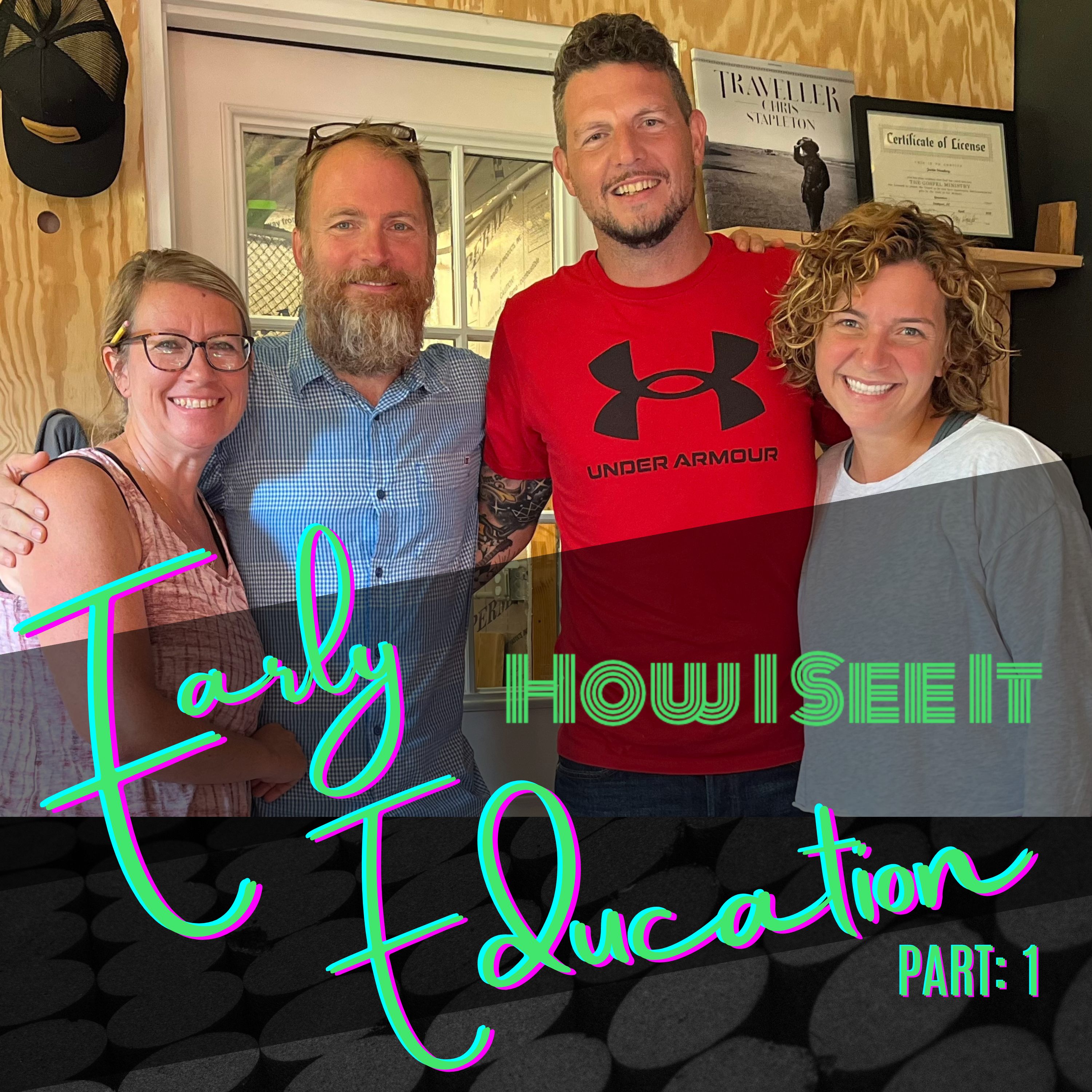
This episode was another treat for us as we got to have Chris Pratt, Mark’s wife back on the show, along with Kellie Perry, Justin’s sister-in-law who has, in her words, become podcast famous for cameo mentions in previous episodes (the Wives episode). In this two-part episode, we’ll discuss a topic these women are so passionate about, Early Education. We chat about the value of reading in the home, what aspects of education can be polarizing, and with all the educational offerings and opportunities, how do you choose the best option for your kids and your family?
Make sure to catch part 2 as well!
Show Notes:
- Listen to Part 2
- HISI – Reading Resources (PDF)
- Some of our favorite books: reading-aloud, picture books, books for beginners, and elementary-aged kids, historical fiction, etc! We hope you enjoy this valuable resource!
Parent Resources:
— for Reading
— for Leadership
Show Transcript
0:00
[Music] um so I I feel like all of them have sacrifices that you make all of them
0:06
have pros and con and Pros um so polarizing it is polarizing but I
0:12
think people aren't as like judgmental maybe of somebody who has a different
0:18
opinion or a different way of educating their children unless we experience that someone thinks
0:25
the way we're doing it is wrong I think that's where I've seen but you know yeah but I was going to say
0:33
I think that maybe the most polarizing part of it is that I think as parents we all want to feel like we're doing the
0:39
right thing and and the best thing right like we're like [Music]
0:49
[Music] we welcome to how I see it with me Mark
0:56
Pratt and Justin Sternberg this is a podcast that works to countercultural
1:02
polarization through thoughtful [Music]
1:08
conversations so we ready to do this yeah morning Justin morning Mark ready
1:13
to do it morning ladies who are these ladies should we introduce them or should we ask them to introduce I think
1:20
they can uh would it be okay to introduce yourselves certainly go ahead
1:25
Kelly you go first all right so I am Kelly Perry um um I happen to be
1:31
Justin's sister-in-law you may have heard of me from previous podcasts I'm sort of podcast famous I feel there you
1:37
go I have no doubt so um so yes you may know her as smelly maybe yes or Kelly
1:43
belly Kelly B I've had a person that did not know me by that name call me Kelly belly about a week or two ago and I was
1:50
like oh okay so this is happening um this I live in Southport with my husband
1:57
Jackson and we have four kids um Raleigh is seven Lenor is five Walter
2:03
is three and Gibson is one so that's me nice thanks and you and we love Kelly
2:11
yes who's we thank you our family loves Kelly well I love Kelly so who are you
2:16
Miss I am Chris I am Mark's wife mother to John and
2:22
Elizabeth um Kelly and I actually used to be co-workers so we did uh work together at
2:30
Generations church and uh with children's ministry so we have a fun history together MH
2:37
um I am currently a teacher at Southport Christian school but I have taught in
2:44
public school I have taught um little people I've taught high school middle
2:52
schoolers and so we're glad to be here yeah that's a great uh segue Chris
2:58
because we today are going to talk about uh we kind of T talk talked about it
3:04
being about Early Education but really we anticipate the conversation going as
3:09
far up as you care to um but I know both of you have a lot of experience with
3:14
Early Education right in some form or another and as you briefly mentioned you know doing Ministry with Kelly at
3:21
Generations Church Kelly you want to share a little bit more about like kind of what got you passionate about the
3:28
topic of Early Education and when I say passionate I mean if you've ever seen Kelly in the treehouse
3:34
at Generation Church you you see that passion come through as she's jumping all over the place you know doing crazy
3:41
Antics so yeah what are your thoughts yeah well so Tre house just if you don't know Generation Church has an elementary
3:48
age program so it's kindergarten through fifth grade and I actually started serving there when I was like 12 and so
3:56
from that age I already knew like I loved to just be in there and experience
4:02
kids learning and growing it was just really cool to see like light bulb moments and all that was really exciting
4:08
uh fast forward to after we got married we moved to Texas and ended up working in Ministry there and we were in that
4:15
same kind of role um an elementary age program that we were leading um my husband and I and so that was always
4:22
just something that we loved um I love watching kids grow and learn and um and
4:29
so now we moved back here to North Carolina worked with Chris ran the treehouse for
4:35
several years and loved that so much it was a great season um and then ended up
4:41
stepping back from that so I could focus on my children and now I'm actually homeschooling my girls and my boys too
4:48
but you know they're pretty young but Walter thinks he does school so um so yeah so and now I get to kind of see it
4:55
from the perspective of you know a parent and teaching my children is super sweet and my husband Jackson's actually
5:02
also a public school teacher so we kind of have that side of things too yeah so so as you think of as we talk about this
5:09
educational Dynamic and the diversity of it from your L's opinion what makes
5:15
education such a polarizing topic if you stop and think about it as
5:22
far as you know H school public education you know Church setting non
5:28
you know speak to us from what you see makes education a difficult topic
5:34
sometimes for people to talk about and even if that's like kind of a obtuse or
5:40
like out there concept what makes doing your jobs hard because of how viewpoints
5:47
differ from your own like that might be a good way to think about it in terms polarizing but you might already have an
5:54
answer when I think of polarizing I do think of like people having very
6:00
strong opinions about their way of doing things and um I would say education
6:08
isn't maybe as polarizing as some other topics y'all have talked about um I think people are open and accepting to
6:15
way the way other people do things even though it's not exactly the same way they do it so I mean there's so many
6:22
ways you can educate your children now uh from you know homeschooling to Charter Schools to private schools to
6:28
public school um so it's great that we have all of those options available to us but um which one is the wrong answer
6:36
so we know to avoid that one yeah uh yeah so there's pros and cons to
6:41
all of them right uh which is what makes it really hard for a parent I think to
6:47
make a decision or to go through the process of decision- making because there are pros and cons and you know
6:53
when I talk to friends who are kind of going through that decision-making process I often say there's a sacrifice
6:59
to all of it like if if you choose to homeschool you're going to sacrifice a part of your financial security maybe
7:06
that one parent has to stay home on the other end if you send your kids to public school you're sacrificing
7:13
that time that you would be spending with your children so indepth and um just that deep relationship MH um so I I
7:22
feel like all of them have sacrifices that you make all of them have pros and con and Pros um so
7:30
polarizing it is polarizing but I think people aren't as like judgmental maybe
7:36
of somebody who has a different opinion or a different way of educating their children
7:42
unless we experience that someone thinks the way we're doing it is wrong I think
7:47
that's where I've seen yeah but you know yeah but I was going to say I think that
7:53
maybe the most polarizing part of it is that I think as parents we all want to feel like we're doing the right thing
7:59
and and the best thing right like we're like we so so say I'm you know a homeschool parent you know talking to a
8:06
public school parent and I feel like sometimes there's like this oh you think you're doing the best thing and let me
8:13
try to like explain why well no I think I'm doing the best thing you know and I think that that can be I mean it
8:20
definitely can be polarizing it can be like okay so you're on that side and I'm on this side and um I always try to make
8:26
sure people feel like like we homeschool yes but that's because I think public school is from the devil and you know
8:32
what I mean like but I think sometimes people get that from me like people feel like oh she thinks she's a little bit
8:39
better cuz she's doing all this stuff with her kids you know and then even in the homeschool World which is the world
8:44
that I'm in right now like I feel like there's all these levels of like how people do it and oh you do that oh you
8:52
use that curriculum and so I think that can be kind of a big thing too and um
8:57
yeah so I definitely think it can be polarizing but I also agree with Chris I think that for the most part people do
9:04
support each other in it and everybody's got to do different things for what works for their kids and for their
9:10
family's culture and all that too I will say uh there I think there's stereotypes
9:15
that people have of each of those categories and that's what feels really
9:20
uncomfortable I think so we did homeschool I always say Mark homeschooled so I was teaching at the
9:26
time Mark was uh going back doing online education for his degree you were doing
9:32
your own home school yeah yeah I was did Chris teach you as well so many things
9:39
so many things it was an interesting era for us because Mark was the homeschooler
9:45
I wanted to be the homeschooler but I was working at Southport um Elementary
9:50
at the time so anyway the kids ended up going back um to John went back in 8th
9:57
grade like he was home home school from 6th to 8th yeah and so when he decided to go back of course they needed to
10:03
place him so where's back back to public school public school okay so he went to Southport Middle uh South Brunswick
10:09
Middle School and so immediately when they said
10:14
tell us your experience he said homeschooled oh well he's not going to be placed in the any of the gifted
10:19
classes or the classes that were ahead because homeschoolers are not usually on track
10:25
right they're usually laidback and they you know so we're not going to it's like
10:30
so we had to really Advocate that okay he can handle this test him as much as you want to test him he's he's able and
10:37
so he did end up you know proving himself but the automatic stereotype was
10:42
homeschoolers aren't quite as on level as they should be because there are some sure you know in the spectrum of
10:48
homeschooling parents yes there are some homeschooled parents who don't take it seriously and it's more of
10:55
a um lifestyle choice that they can just have freedom to you know not have the have to
11:02
be to school every day and you know so you know you kind of have to work against those stereotypes and you could
11:08
see how if someone's making that transition right back to the public school from hom School how maybe the
11:15
percentage of not being on the level might make sense cuz it's like yeah we're giving up on this we need to go
11:22
back into the system I can see how maybe that perception is you know kind of
11:28
tipped towards that pers because of we're back sked because yeah maybe the
11:33
parents sometimes the parents putting their kids back in or putting them back in because they feel like oh we're not quite handling this properly let's put
11:41
him back into or the kids not cuz I mean it's I guess I'd love to hear you guys thoughts on homeschooling the the
11:48
balance of the parent versus kids responsibility one other thing though so
11:53
I would I'm I was able to see it from the other side also from the teacher yes
11:58
so I would when I was working at Southport Elementary we would have homeschool kids that come back and they're three grade levels behind in
12:05
they're reading and so we would have to work to you know get them back so I
12:11
understand both sides of that um but there clearly there are stereotypes in
12:16
place and and and I think following up on that too even with what you shared
12:21
Kelly so much of the decision we made or the basis for our decision was on what
12:28
is is working best for us as a family at this time you know and I and I think
12:34
part of it was you know there were some fears you know honestly going into
12:39
junior high that kind of thing you know and friends of ours had had a difficult experience you know that kind of thing
12:46
and and then John was in travel travel Sports to where you know it was for us
12:51
it worked to have that time because then we could leave early to get him to Wilmington you know but then as we
12:58
transition through that you know he decided he wanted to play for a school
13:03
he wanted you know something that homeschooling didn't have he wanted you know organized Sports and so in a lot of
13:10
cases that was really what made the basis of our decision was based on what
13:15
works best for us as a family right now yeah and I and I think we benefited if I
13:21
may say so from those early homeschoolers you know 10 12 years ago
13:26
cuz I could I remember you know in that conversation at times people would come directly up to me and say oh you have a
13:33
problem with the school too huh you know and it's like no we have no acts to grind here you know I just have a
13:39
problem with you you know and I would explain it this is what's working best as the options we
13:46
have available thanks to those who have gone before us and made this a option
13:52
you know this is what works best for us as a family and I think you know that's how we kind of came to that EB and Flo
14:00
because Li Lizzy didn't homeschool as long as John did but yet there was a year there where she did and yeah I just
14:07
worked for us as a family and I think you know I appreciate what you both share in that and yeah and and going
14:14
ahead with what you were going to say from there Mrs P sorry I was Justin remind me what your question was a
14:19
minute ago it it was a good one but I forgot what it was when you're talking about was the spectrum of homeschool you
14:26
um the one I interrup child role yeah the balance between parent and children
14:33
responsibility that is a great question you want to say is a great question I mean I would say so from my
14:39
experience I'm homeschooling very young kids so my responsibility is
14:45
great and so I I can definitely see as Raleigh she'll be starting second grade
14:51
this year and so like even just last year her ability to be independent was much greater than when she was in
14:57
kindergarten and so that was wonderful to be able to say I'm going to expect you to do these things but for the most
15:03
part you got to be pretty Hands-On when they're that little so what was y'all's experience when they were older well I
15:09
would say the one of the huge benefits of homeschooling is that growth of
15:15
responsibility like um and it depends on the curriculum you choose you too but um
15:21
the curriculum we chose was very self-directed and so the kids you know
15:26
they'd have their things to do for every day get them they if they amount of they have some
15:32
good free time you know so I feel like that Rhythm and routine and those
15:37
choices that they had of how to spend their time as middle schoolers really
15:43
prepared them for you know bigger decisions that would come later like how are you going to spend your time as a
15:48
high schooler or a young adult and growing those skills early on I think is
15:53
one of the big benefits of homeschooling I'd say it was more even like a Jeffersonian type Dynamic to where the
16:00
kids were able to you know take on that leadership role for themselves sometimes they make choices about what they were
16:07
learning yeah and based on classic Chris did a fabulous job with that as far as you know it was a lot of the education
16:12
was based on classic literature you know and so forth and that that you know versus textbook type Dynamic we didn't
16:18
have a textbook to speak of you know and I think there was I think John is a has
16:25
developed the love of reading you know um not saying that's because of his homeschooling experience but and I and I
16:32
use that word he developed but I think Lizzy had that from early on that she just loves to read and I think that
16:39
makes a difference too you know as a as a student you know just in that process
16:44
and that the ability to self- te at that point and you know take on that yeah and
16:51
if we talk about Early Education just backtracking a little bit reading is the
16:56
number one yeah and we're I mean we're talking about reading from as early as you can reading in the
17:04
womb I I can't stress enough just the lap reading and just the love of words
17:13
um I think our culture is going away from that and unfortunately with technology you can set up a kid with a
17:20
book on their computer or on their what iPad or whatever but it's not the same
17:26
as sitting on a lap and reading to together and talking about the words and
17:31
um I guess that's one of my what do you um passions passions yeah pet peevees
17:37
pet it is a little bit of a pet peeve when I see just kids sitting in front of Technology um but even just the
17:44
relationship the parent child relationship that's developed as you're reading together it cannot be replaced
17:50
and if I there's one thing that I would say to young parents is read read read read and have the kids choose their
17:56
books at the library make Library the best place to go every week and um and
18:02
You' be surprised too like as you're if if you're used to giving your kid
18:07
devices and whatever if you transition to this like I want to add to your your encouragement to try this because if you
18:15
engage with them in a reading experience you know read a book to them or whatever they'll prefer that to the device maybe
18:23
not when you present it but if you don't present it as an option you say hey now before we go to bed this is what we're
18:28
doing to do yeah and I know you guys do this all the time reading and
18:34
Jackson makes up stories which maybe doesn't count as reading but certainly no I was just like adding on
18:41
to what Chris is saying about reading like I I can't Echo that enough like for us in our family even though our kids
18:47
are young like we we try to read all the time and we're like right now we're
18:53
reading through The Chronicles of Narnia we're on the last battle so we're on the final book and what's super neat about
18:59
it is we generally read it around the dinner table and um so we've been reading obviously we've reading for a
19:05
while because there's a lot of books but like Walter my three-year-old will have very thoughtful
19:12
things to say about Narnia which is like amazing right because nardia is not
19:17
written for three-year-olds you know um but he's like soaking it all in and he'll like talk about a random character
19:24
in the last battle there's a horse that's name is Jewel and Justin's daughter's name is juel and he just
19:31
thinks it's hilarious and so he'll he'll talk about that like juel the horse you know and um but it's been so neat to see
19:39
how he really is like following along with these very deep stories and these thoughtful things and just the
19:45
conversations that come from it and then just like the shared experience like it's us all getting to be part of this
19:51
great adventure together and like what's going to happen next and you know like I think nothing nothing's better nothing's
19:58
better than reading together so and it makes me sad to think about families that are missing out on
20:05
those Rich experiences like maybe because you're too busy I
20:11
mean we've done the travel teams and the rushing off to practices and and though
20:18
that has benefit I think in my personal opinion short-term benefit um just not
20:25
being on that Rush of going on to the next thing it
20:31
robs you when you're so busy and I feel like those richer exp the Richer
20:36
experiences that Kelly just talked about um I wish we had more of those
20:41
looking back I mean our kids are in their 20s so I'm looking back from a different perspective we're looking back
20:47
like we loved the eras of each of the children's developmental stages and
20:53
looking back it's like I wish we had and we did a lot of that but I wish we had more guess I'm I'd be curious to hear
21:00
what you guys think in terms of families who are busy not because traveling teams
21:06
right like they have two working parents and they have to to make those bills paid or whatever and you know they are
21:14
missing out on Rich experiences but maybe not because they prefer that or they're choosing that
21:21
like like what would be some tips or tricks for that kind of that reading experience we're talking about even in
21:27
that like do you have any thoughts about that kind of on the spot but I mean I would say
21:35
like it's okay to like legitimately schedule it like to say like hey this is
21:40
this day this time we're reading you know like and you don't need to start by saying we're going to read every day we're going to read every day for 30
21:46
minutes you know like to say hey on this day we're going to read we're going to read together for this amount of time
21:51
and I would say sometimes maybe it would come across and feel like almost like a
21:56
burden or like a chore but I think as you commit to it it will start to feel
22:02
like a privilege and not like something you have to do but something that you get to do an opportunity yeah and then
22:08
also like I would also say um I think social media makes this whole like read
22:14
aloud thing seems so magical and beautiful and it is magical and beautiful but it also is like super
22:21
chaotic like often times Gibson is like standing up in his high chair throwing his food around while Jackson reading
22:29
and like we're trying you know like it's not this pitcher perfect beautiful like thing where everyone is always 100%
22:34
engaged and like what we've learned is we just kind of power through because if we stopped at every single little hiccup
22:40
and bump in our reading with four young kids we're never going to read more than you know a sentence really successfully
22:47
and so that would be too like your expectations doesn't have to be high you're not all going to sit under like a willow tree with the wind blowing your
22:53
hair on a beautiful picnic blanket and like your kids staring lovingly into your eyes you know like that's not going
22:59
to happen and that's okay like it's okay to start small and um it's also okay to
23:05
not I mean I think the whole family unit being together is wonderful and it great to have that be the intention but also
23:11
like I have read alouds that I'm doing with the kids just on my own because Jackson is at work and so it's okay to
23:17
say you know as the the mom or the dad that is home more more available in that
23:22
season to say hey this is going to be a read aloud we do you know without dad or without Mom um um right now while
23:29
they're at work and I and I was honestly thinking about that even from that perspective do you have like books you'd
23:35
recommend even just favorites of your families I'm thinking of off the top of
23:41
my head was there any I mean you mentioned Narnia and that that's kind of what but you know that might be but for younger kids I mean I got a great one
23:48
you got a great one I know it's supposed to be about them Mark you're doing great Justin you're
23:54
doing great I want to hear what Chris says too because I got to write down my the books she said go ahead I want to
23:59
hear just the one that we really love and is a great one if you're not used to reading out loud is the book with no
24:06
pictures because it forces you to be silly you can't if you read it you will
24:11
be silly you can read it as monotone as you want and it will sound silly and it's a good way to get the kids
24:17
listening and engaged and in our case laughing hysterically out loud it is it
24:23
is great book and that's a book that would be read in one setting sitting very very easily
24:35
b a little bit better and like more of an accomplishment so Chris what do you have well I want to say with your when
24:42
you're talking about the experience isn't always wonderful every book isn't always wonderful true right so if unless
24:49
I've read the books ahead of time we're going into you know somebody else's recommendation which may not be something that our family loves so every
24:56
book isn't going to be oh this is a Wonder story um Mark has a better memory than I do uh so he could probably pull
25:03
out a lot of the um titles but um I know that one year we did American history
25:10
through the we taught American history with literature chronologically so you know it went from
25:17
early Native American all the way up through and you read a book about each era and which I loved but some of our
25:23
favorites were like Johnny Tain that was a read aloud because it's a much lover much higher reading level yeah um Carry
25:31
On Mr bodic um oh what were some other ones across the five aprils across five
25:37
aprils all those are all historical fiction so but that isn't the only genre
25:43
um John of course loves like Narnia and like that not Science Fiction it's not
25:49
it's a more of aant fantasy um and Lizzie and I are definitely more into the you know we we
25:57
Lizzie and I just love to read and so we can read anything but um yeah we love the I love historical fiction I think
26:03
Lizzie does too so yeah um uh back to the original question a little bit ago
26:09
was I really feel um or think do I think or feel uh I
26:17
think uh the difficult the most difficult situation is the single parent
26:23
and that's how that's my heart goes out to the single parent because their choices are much diminished yeah because
26:30
you know they've got to work mhm so what options does a parent have a single parent have is using the um the car
26:40
time um we are huge fans of adventures and odyssey which is another it's like
26:45
you you pop in a it's a christian-based um reader
26:50
theater yeah anyway our kids we would travel for hours up and you know to our
26:56
family in New York and pop in at adventures and and we would all love it even up into the teenage years even now right Mark I
27:04
mean I suppose if we get in the car we can pop one in and still really enjoy it so um but it's a form of reading
27:11
together or listening together um because we get to discuss it and laugh together it develops the imagination
27:18
yeah yeah yes vocabulary yeah yeah those
27:23
wonderful different people in that and the vocabulary they use it just yeah which is something the TV I think the
27:30
visual when you have the visual it takes away from that imagination piece so even though it's not reading per se we're all
27:36
listening to the same thing and all kind of yeah and there's discussion made I think that that's part of the beauty of
27:42
the reading as well you know even from uh I think you're having conversation or you know developing
27:49
thought in such a way that says okay how do I communicate this and and I think that's a lot of it and you know
27:54
especially for the you know the single parent I think have those times when you're building that connection is is
28:02
helpful later on when you know it's difficult to have that communication you know from a parent child Dynamic and
28:09
what do I you know how do we um address these difficult topics and I think if we
28:16
have that foundational you know time of reading together and interacting together I think it helps it's not going
28:23
to make it perfect of course but yet we've we've established that relationship you know and that I think
28:30
that's that's beneficial as well and I just want to just put out there even for adults there have been anniversaries
28:37
where Mark and I will go away and we'll just take a book and read the book while we're I mean those are some of on our
28:42
honeymoon we we read a severe Mercy I don't know if you've read that book but it's I put it on your to read the list
28:49
not necessarily with your kids no that was not a kid book but um I even think as a couple reading
28:56
together yes um it has so much value yeah yeah I will say this too um like
29:03
for Raleigh who's in second grade like she's starting to read on her own now and it's like so fun cuz she just is
29:10
like in her world reading and like the other day she's starting to read the American Girl books um which she's just
29:18
loving and she started Kiren the other day and um she'd read like one or two
29:23
pages and she's holding her book and she comes up to me and she says Mommy I have only only read like for like 3 minutes
29:30
and I already love her and it was just and then she just marched back off to keep reading and I was just like oh my
29:36
word like one you're so cute but also just like how cool like she's already feeling this connection to this
29:41
character and so I think that's so cool um a couple of things I would say for reading um like recommendations Narnia
29:48
for sure um especially if your kids are I like i' would say kindergarten up um
29:54
that would be awesome and then we've loved it's called The Wing feather side a um it was written by Andrew Peterson
30:00
um he's an artist and he like that is very Narnia esque but um it's not where
30:07
narie is written a little bit more I guess old englishy kind of way like it's
30:12
maybe a little bit harder to read and comprehend Wing feather is not quite that way um we love wing feather we
30:20
think it's just amazing in our house and then we also have been loving reading Little House in the prairie so the the girls and I and the boys have been
30:26
reading that at lunchtime um and we're loving that too so cool cool I was uh
30:33
thinking about the reading stuff too and it especially single parents or whatever because again that is a tough thing um I
30:41
think I had a good conversation with someone recently about trying to get their kid to read more well before I say
30:48
that I was going to say uh um what were you going to say there's a
30:55
big bug on the wall that's what I going to say actually you've been watching it the entire podcast it started over here all
31:02
the way around he's like I'm just waiting for the right question here all
31:07
right Mark took care of business ah there has never been a parent who has regretted forcing their
31:14
kid to read and I mean Force right and so they might not be into it they might
31:19
not like Kelly was saying setting realistic expectations your kid might not be into reading but if that's a
31:26
required part of what they have to do in order to x uh in order to you know stay
31:32
up in order to U watch their favorite show or have a device right like if you
31:38
want that device then you have to put in 15 minutes or reading time or whatever like anchoring it against some of those
31:45
things that they do want to do saying you can do that thing but first you have to put it you'll never regret it there's
31:51
never been a parent who regretted forcing their kid to read and there's never been a kid who looked back on his
31:57
life and said I wish I would have read less right so this is something you can do in any Walk of Life as a parent and
32:05
no matter what your schooling preferences right like if you're high school home school you know whatever
32:12
charter school no matter which version of that they still need to learn to love
32:17
to read and again love is a high expectation that comes over time they still need to learn to read as a form of
32:25
Education as a form that is a universal yeah tenant of Education reading like
32:32
you want to score well on your SATs it's linked to how early you read how often you read how many books you read every
32:38
year I mean all of that all of your academic success you and maybe
32:44
even maybe even life success if you want to put it kind of more general terms is going to come back to reading and I and
32:51
I think I'm not disagreeing with with what you're saying at the first but it does remind me of kind of that ER and I
32:58
think there's something to be said for inspiring versus requiring you know I think I think as
33:06
for my child and I didn't always do this well but for my child to develop a love
33:12
of reading to a certain degree it's more important that I Inspire them to do that
33:18
you know in that process I and maybe even model it well that's what I'm saying ultimately as a model you know is
33:24
like well if reading's so important why aren't you you know cuz that's what a
33:29
kid is going to say you know initially it's like why is this so important and why do I have to do it if you're not
33:35
doing if you're sitting down watching TV for three hours why can't I do that you know and I think great Point yeah it's
33:42
just you know and I I it's not only in mine you know it's part of that Jefferson type thing you know to where
33:47
it's like that leadership you know it's not about you know the the professor
33:53
it's about ownership of your own you know the teacher necessarily but yeah just that that that was one tenant was
33:59
that Inspire versus require and I think you know that's who we all like tend to
34:07
look look to as those people and I and even when you were talking about Treehouse you know as you ladies I think
34:13
that was so much of your ability to connect with parents and kids was you
34:19
were involved in the process you know and join me and help me and that kind of
34:25
thing that creates that inspiration to learn more yeah and I think that's that's helpful I think you know we as
34:32
parents we need to be modeling those you know how important it is but yeah
34:39
and did you have anything no go ahead keep going I I wanted to get back to
34:44
what Justin you were going to say something about somebody you were talking to
34:49
somebody who yeah um wanted to get their children to read more actually as I
34:56
recall the conversation it was about bed times and I was telling them what you
35:01
can do is rather than move their bedtime up is say you don't have to go to bed earlier but you have to be in your room
35:06
and you have to be reading sure so now cuz I think their struggle was like then they want to stay up and watch whatever
35:13
what you know just they wanted them to get settled sooner or whatever I said well what we
35:19
would do is we would say you can stay up as late as you want but you got to be reading you know and uh you know
35:25
naturally that makes you a little bit sleepy at the end of the night if you know say they're not going to stay up all night and if they stay up all night
35:32
reading I got no problem with that never there is a current challenge
35:38
though that um so I teach middle schoolers now um I think there is a
35:43
challenge of quality literature for middle schoolers and high schools in particular because there's a lot of
35:50
stuff out there right now that is uh just putting forth agendas that you
35:55
don't want your kids to fill their minds with all all the time and so I think early on like you know up through fifth
36:01
grade we've got so many great choices of Classics and um just fun but once you
36:09
get to that Middle School um era it's hard to find good literature
36:15
for kids and I think as a parent you really do need to be in touch with what they're reading what they're filling
36:22
their minds with read the reviews I mean there are different websites um that you
36:27
can go to that will kind of give you a summary of what the book is about and you know all of that so it makes me sad
36:33
that we don't have more really great literature for middle schoolers but I think as parents we need to be aware we
36:39
need to know and honestly even with little kid books like there's a lot of
36:45
books right now that I will pick up at the library because it looks cute and I'll read a couple pages in and I'm like
36:51
Oh my like we can't read this book like so even the library books that we pick up at the library I'll generally let the
36:58
kids pick a few and then I'll have like a little list of what I grab and like when we get home I have to read through
37:04
all the little kid books that Raleigh and Lenor picked to make sure Raley's not going to read them and read
37:11
something that she shouldn't be reading like that's in little kid picture books at the library you know that there's
37:17
there's stuff in those you know um and then also I would say too like how how
37:22
how do you make that decision as a mother just just out of curiosity I hear you say stuff in that how how do you
37:28
mind sharing how you personally kind of vet a book yeah I mean I would say
37:37
for me right now and I don't know if you've noticed this or anything but like in young kid books now there's a lot of
37:46
like LGBT things and like agendas being pushed in that of you know like here's
37:51
this home with two dads or here's this you know this um this donkey that thinks
37:58
they're a unicorn and it's going to be true to himself and he's going to become a unicorn and this is what he's going to
38:03
do to do that and it's like that is like it you know like those sorts of things that I'm like okay like this is seems
38:10
like it's harmless but it's really not um and so for me I mean I'm just I'm
38:16
following I guess the morals that I have and that I hold to and what I I wouldn't want to be reading that even myself like
38:23
a book that is filled with these things and so I'm going to hold that to the same with my kids and sure protect their
38:29
heart and their eyes the same way I would with a show you know like I wouldn't have them go watch a show with
38:34
this kind of content so why would I have them you know read a book um but it's crazy to think that you really have to
38:40
check everything because like even the little kid picture books at the library like um if it's newer you definitely
38:47
need to check it that's that's what I was thinking yeah the older ones you generally don't like if I look at one
38:52
and I see how that it looks pretty old I'm like it's probably fine like Ry we can read this out loud together right right now as opposed to me like
38:59
pre-reading um but yeah and then also I'd say like what Chris is saying about as they get older like good literature
39:06
like as far as it being having clean and having good content but also like just
39:11
being good like well written like there's so much stuff that I've when I'm reading it I'm like what are we reading
39:18
right now like this isn't even well thought out or well written for them to be able to like grow in their um I guess
39:26
their language skills and things like I feel like it's not enriching it's just kind of blah you know and so that too
39:33
there's a book called um it's called honey for a child's heart and in the
39:39
book The author talks a lot about just the value of reading at the beginning but then she has really amazing book
39:46
lists um and like I'll bring that book when I go to book sales so I'm and I'm like look I'm like okay is this on her
39:52
book list and I I really trust this person's judgment cuz every book I've gotten from her book list really enjoyed
39:59
um and so that could be a cool thing if if you're a parent listening and you're like wanting to start building a library
40:05
that has really quality things um it's honey for a child's heart it's a good one that's awesome I was also going to
40:10
say in the show not notes will include some of these books and I'll hit you guys up afterwards for like your
40:16
favorite books cuz I think that' be a great resource to be able to offer people specifically different age in
40:23
like you even talk about historical books like that would naturally make the list for me but maybe it should right
40:30
yeah cool so yeah it' be great to provide that at the end and the other thing is somebody recently was um asking
40:37
me about reading with their children their children was behind in
40:43
um in the testing for the year and so she was picking books to read with her
40:49
children I'm like well what you want to do is choose a book that's slightly more
40:54
difficult like uh not frustration level not independent level it's called instructional level so you kind of have
41:01
to know where your child is on that whole spectrum of um like and this uh there's different ways you can do this
41:07
online you can give them a little test and figure out what reading level they're at but if you want to improve let's say through the summer you want to
41:14
improve your child's reading level you got to figure out where they are and that's an alphabetical scale like okay they're a k or a j you want to give them
41:20
one level ahead of where they really are um because if you go too easy it's
41:26
really not increasing their read reading um ability it's just
41:32
kind of making things too easy and I'll find that like when I worked I I taught um fifth fourth and fifth grade for a
41:37
while and I I found that a lot of the the boys especially liked a certain series of books but it was way below
41:45
their reading level and so you know it was really a difficult thing to not only find a good book with good content good
41:53
vocabulary well written good morals but also is the right reading Lev like that is it's just really a a science and
42:00
really hard to do the best for your child and choosing the books I think that's a real
42:07
challenge yeah yeah and so there are tools for that though there are tools again that' be good uh maybe afterwards
42:14
I can get with you to get that for the show notes because yeah tools any tools we can give
42:21
people to help on this journey uh childhood education right because
42:27
that's what I mean really that's what we're talking about when we're talking about reading to bring it back to the topic that is I think we're all saying
42:36
one of the most significant drivers of your childhood's education is if you can incorporate significant amounts of
42:42
reading right and I think it stretches across all Home School charter school
42:48
public school whatever you do all ages reading is always something that can be
42:54
parent-driven no matter who's instructing your child you can guide them in this way like
42:59
that's important for everybody like if your kid goes to public school it's not like oh good my kid goes to public school I don't have to worry about that
43:05
like they've got it like well no like you can also play a huge role in this specific area no matter what your child
43:12
you know is doing right now for schooling so I think one of the other
43:18
this is kind of going down a different tangent but um one of the other skills or things that parents really need to
43:24
think about is um who you're putting in your child's life I'm saying like Role Models or um I
43:34
was reading an article by Tim Elmore recently about how intergenerational
43:39
relationships uh used to be so rich and deep when you had the like the
43:45
schoolhouse that had multiple ages in it and when you had grandparents investing into you know when you had this is
43:52
nothing against um children's ministry with children going a different direction but when you have a church
43:57
with the children in the church with you you know years ago they didn't have like children's programs and whatnot like
44:03
everybody was learning together the intergenerational value is good and so I think that's
44:11
another thing maybe we've lost in this era that we're in is you know keep your
44:16
kids with their same age group because that's how they learn best I think homeschool has kind of pushed that back
44:23
a little bit because you are like classical conversation you are learning with different age groups so to speak um
44:30
but you I think as a parent you have to be very intentional about growing that skill that social skill with your kids
44:37
that they can relate to a a person of any age like they're not only comfortable with people who's their age
44:44
yeah and um again a parent you need to just think about that and be intentional
44:52
about putting people into your children's life who are different age groups different have different experiences um because there's not only
45:00
education in the school sense and I'm using air quotes there in the school sense you're educating your child all
45:06
the time yeah all the time there's emotional intelligence there is you know
45:12
the academic intelligence um there's your your spiritual intelligence all of these
45:17
things feed into who your child is becoming MH [Music]
45:27
hey thank you for listening to our podcast if you like how I see it please
45:32
do all the things that podcast tell you to do subscribe rate review follow us uh
45:40
and or talk nicely about us on social media if you want to reach out the email
45:46
is us how I see it.click yep I said dot click as in c c k please
45:57
tell your friends about this show and we'll see you on the next one
46:03
[Music]