
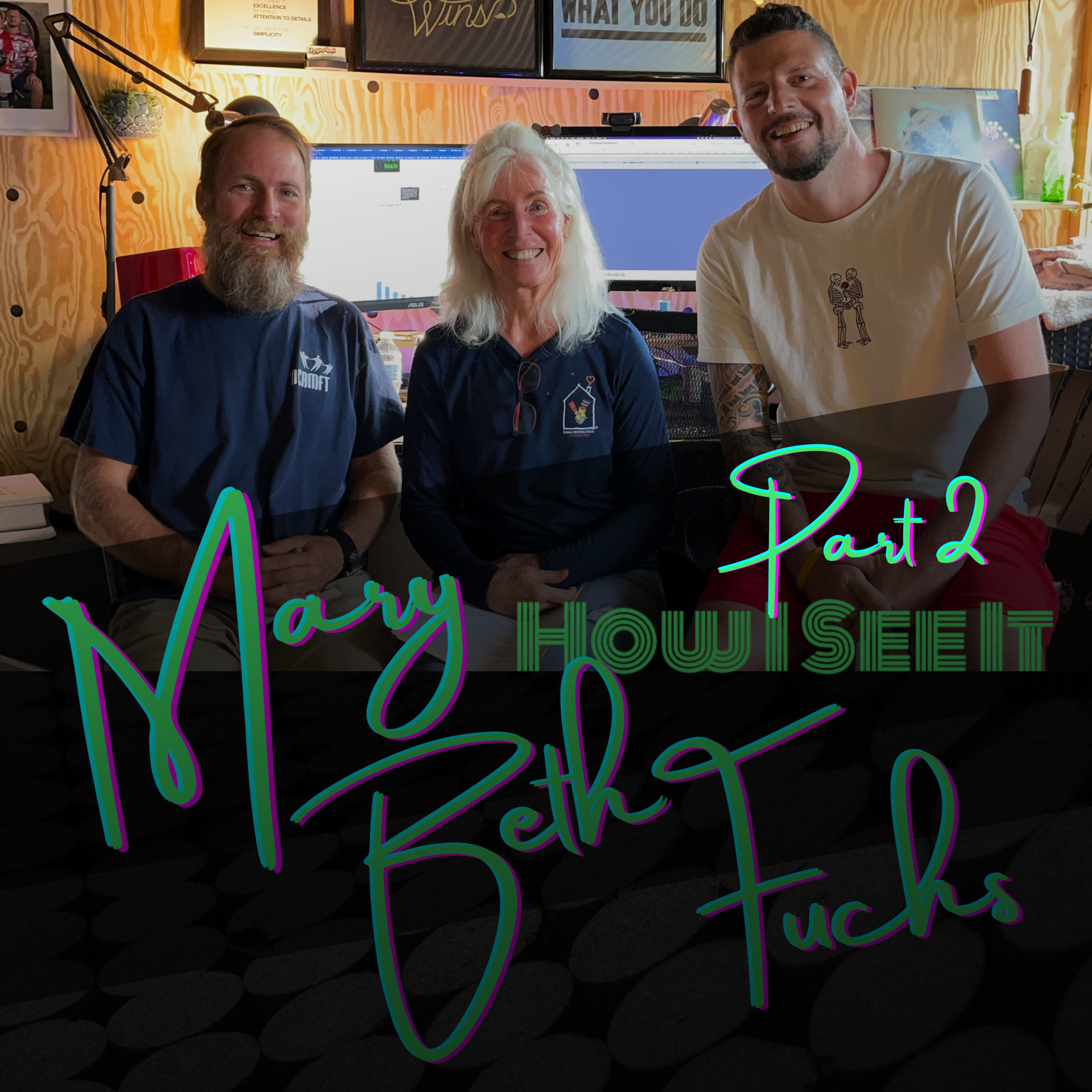
In this 2nd part of our conversation with Mary Beth (listen to part 1), we continue the topic of integrative health and ways we can optimize our body’s natural systems. We also work at convincing her to start a blog AND a podcast, and finally, Mary Beth asks us how we got started with “How I See It”.
As this is a continuation of last week, forgive us again for the audio not being up to our usual standards.
Disclaimer:
Statements made on this podcast have not been evaluated by the U.S. Food and Drug Administration, nor are they intended to diagnose, treat, cure, or prevent any disease.
Information provided in this podcast is not a substitute for individual medical treatment or advice. It is the responsibility of you and your healthcare providers to make all decisions regarding your health. “How I See It’ recommends that you consult with your healthcare providers regarding the diagnosis and treatment of any disease or condition.
Show Notes:
- Listen to Part 1
- Dr. Mark Hyman’s site
- And his podcast
- Resources from Mary Beth:
- Something to think about
- Baby steps to health (PDF)
- Favorite books on Health:
- Terry Wahls MD: The Wahls Protocol: is a beautiful, easy-to-read book on healing from autoimmune disease and helping anyone reach a more vibrant state of health. Terry was in a zero-gravity wheelchair due to MS and, out of desperation, learned how to heal herself with food and a few supplements. She now again practices medicine, lectures, holds group sessions, teaches others how to heal, and rides a bike, no wheelchair.
- Mark Hyman MD: 10-Day Detox Diet: A simple, step-by-step plan on what to eat, what to avoid, and how to feel better to beat disease.
- Tom Brady: The TB12 Method: So why have I included a book about a football player? It’s hard to brush aside the facts: he’s 44, injury-free, and still playing football. His book spells out a lot of key points on how he’s accomplishing this, and most of them are simple practices we can all incorporate.
- Mentioned in episode:
- Gary Taubes’ site (Case Against Sugar)
Something to think about:
With vibrant health, we’re able to mentor, share more fully with our loved ones, give more, and show up in life the way God designed us to.
There are Physicians who’ve been taught to look at the root cause of illness. You can search for one on https://www.ifm.org/ or make an appointment at Robinhood Integrative Health in Winston-Salem (they accept health insurance) or Carolina Total Wellness in Raleigh (they do not accept health insurance). There are more; these are offices I’m familiar with.
You could consider the Ultra Wellness Center in Lenox, MA. You will need to make one visit in person, and then they will work with your physician for labs and follow-up care.You do have choices, pray about it and ask for help. Keep searching. The answers are out there.
— Mary Beth Fuchs
Show Transcript
Mark:
Um
Justin:
just like I think I think one thing I like to do too is balance some of these things with the reality, the the other side of the reality, which the whole thing with plastics and that’s also produced a world where there’s a lot of sponger So there’s a balance because even as we’re talking about I think it’s important to re uh it to represent how the other side might see it or whatever and understand that there is a lot going on in our planet, right?
Mark:
Welcome to How I See It with me, Mark Pratt and
Justin:
Justin Sternberg. This is a podcast that works to counter cultural polarization through thoughtful conversations. And the things got the way they are for reasons. And it’s kinda like the Chesterton’s fence thing, Mark, where we look at a fence and we go, That needs to go, it’s in the way, and we remove it without knowing why it was put there in the first place. And Classics is an example of that We need to get rid of all plastic, yada yada yah, drun yarn way. And yet I think so much of the fact that our world’s poverty is is decreased over the years is a result of our preservation techniques, is a result of our manufacturing processes and our shipping processes. And they all coincide with this plastics generation, right? I think it’s it’s a fascinating balance to what we’re seeing.
Mary Beth:
It is a balance, but maybe we just need to make other products. Maybe we need to go back to more blast, stainless steel, cast iron. It can be quite overwhelming, right? I mean when you really think about everything that you touch tastes smell, walk-on, shoes, molding , toilpaper. And so I think there’s things you can do. And so um
Justin:
As as an individual, as a consumer,
Mary Beth:
we can make choices and that’s where as we say demand to change. That’s where the demand of change comes in and it can be overwhelming, but it doesn’t need to be overwhelming. You can think of making one small change every day and make that change till it becomes a habit and then add something else on. Yeah, so I’m gonna look at all my beauty products and let’s see what we can don’t need or what I can use in a spice like the or the coconut or the central oils. Maybe we can buy a bidet for our toilets. And so a little attachment, $60 or under Just think of the toilet paper that you would save in me time. Um and the cost of the toilet paper. And so that’s foreign here in the United States, I think not so much so. I know European nations use them No, I don’t have that on my toilet yet. My husband’s walking.
Justin:
No, but
Mark:
it’s funny. I probably know at least ten people.
Mary Beth:
Oh really? That’s wonderful.
Mark:
I’ve recently put a bidet on their toilet in the last ten Yeah, last year.
Justin:
I wanna say it’s recently recently
Mary Beth:
the tonepaper shortage, maybe they didn’t know.
Mark:
I I no, that’s definitely where it came from from the people that I know. It’s like they didn’t want to have to deal with that again and they found it to be
Justin:
Yeah, pleasurable. Right, right. And it’s yeah.
Mary Beth:
It prevents hemorrhoids.
Justin:
Typically is thought of as a luxury. Yeah.
Mary Beth:
So
Justin:
why aren’t we doing this?
Mary Beth:
Why aren’t we doing this?
Mark:
And and I’m thinking about your I appreciate what you brought to that as far as conserv not conservation so much, but the um food and hunger and so forth. Um this like I’m thinking of the soup can, the tin
Mary Beth:
can.
Mark:
Does that factor I mean, are there things that we’re not aware of
Mary Beth:
based on that?
Mark:
I’m just ’cause I mean, in some ways that can It’s not as easy to do as plastic, I’m sure, because in within if you’re only gonna configure a tin can You can’t make a tin can look like, you know, Mrs. Buttersworth, as well as you can’t a plastic junk. You know, I’m thinking about it from a marketing perspective. But yeah, are those same things that are.
Mary Beth:
Because most Tim Cans now aligned with fast.
Mark:
Wow, there you go.
Justin:
I give up.
Mary Beth:
I mean, if we’ve been able if we’ve been smart enough to devise the plastics and
Justin:
Right.
Mary Beth:
Why can’t we be smart enough to devise something? Right. We continue to evolve and we can it’s not toxic to the human body and we can make vaccines that aren’t for preservatives to humans you know, Mercury and the Marisol and we can make a healthy dix and
Mark:
gotcha.
Mary Beth:
And so there’s a lot of things we can do. Why aren’t we doing
Mark:
why aren’t we well
Justin:
I know
Mary Beth:
Uh oh yeah, somebody right. Why
Mark:
put it in the middle of the thing?
Justin:
Yeah, the money it’s it’s uh the faster faster you can produce a thing and the longer you can keep it viable. The more money.
Mary Beth:
The sicker people stay, the more they have to keep
Justin:
doing it.
Mary Beth:
Yeah.
Justin:
Yeah. And I think if I had to guess I want to say that the percentage of the medical profession that is on the nefarious side is very small. I think most medical professionals are purveying the system that
Mary Beth:
right
Justin:
You know, has some weaknesses or whatever, but they’re not
Mary Beth:
evil people thinking.
Justin:
I think you said that already, but I wanted to repeat that. I think there is a side of the medical industry probably on the pharmaceutical side, you know, there’s this whole thing with the the the this getting sued for the oxycontin, that whole family, that whole thing, you know That is that’s falling on the evil, nefarious side of things. And I think there is an element of that. And like I said, probably in the pharmacy movies because that’s there’s so much money in that side.
Mary Beth:
Right.
Justin:
Uh but I think just the balance I think.
Mary Beth:
To me, how I see it. shouldn’t the majority of the members shouldn’t be from the pharmaceutical world.
Justin:
Yeah. That’s kind of a conflict of interest in
Mary Beth:
and so
Mark:
I gotcha. Yeah. No.
Justin:
Mark I’m going to anomaly eat them in
Mark:
point. No thanks. No thanks. Um uh this is you know me, Justin. That’s uh not part of who I am, but I uh yeah, yeah, I just go ahead. You what do what do you think, Justin? Talk with us about that.
Justin:
I was gonna say I think it would be really awesome if we could have like and it maybe we’re not we probably don’t have time for all of it here, but if we if you’d be willing to put together some list of here’s some simple steps you could do. Baby steps. ‘Cause like uh Financial Peace University. That’s a Dave Ramsey
Mark:
thing.
Justin:
And he basically makes addressing your financial health s he simplifies it into some baby steps to say you’re not gonna be Warren Buffett tomorrow But if you do this today, mm, you’ll get closer to this. And if you do this tomorrow, you get close in this whole concept, this baby step to get to where you are making a significant change to where you have financial help It would be awesome to have because this is all too big for me. Like everything has plastic. Ten cans have plastic in them. So that’s right. There’s that you know, um shampoo, yeah yah, all this stuff. There’s no way to solve All the things, but I think what you’ve been saying
Mary Beth:
If you can make small changes. You know, don’t use the touchline Good cast iron, good stainless steel.
Justin:
And I think I
Mary Beth:
know. But um you reward and then reward yourself self like so you know your tough one’s falling apart no you’re fine the tough one’s falling apart anyway and so you those chemicals are really leaching and so Okay, we’re gonna invest in some cast iron and that’s gonna last a lifetime, you know. Um and there’s no toxic chemicals getting into your body. And so I think if you focus on the bucket the bucket is overflowing. And so if you can just take away a little piece here and a little piece there and a little piece here,
Mark:
so
Mary Beth:
the buckets are not overflowing, then you notice, hmm, I’m thinking a little bit more clearly today I’m not quite as fatigued. Why is that? I’ve got more energy for my head. Why is that? And I think when you see the correlation of I’m removing one thing here, one thing there Um it does take some work and it takes I think where the work comes in is looking conditioned we think that we may need these things. Um that it’s so bad. Canola oil is so bad. Seed oils are so bad. So we go over to Leland to um Northwest Farm Um AJ’s wonderful there. We buy five pounds. Five pounds of fats.
Justin:
Okay.
Mary Beth:
Um it’s tallow, it’s beef fats. Uh-huh. And she and This is always Jeff’s job. He simmers it on the stove till the moisture comes up and we just put it in jars. And we have a jar in the bathroom. That’s my skin. We have um jars in the in the cupboard that ‘s we cook with. It doesn’t need to be refrigerated Um
Mark:
I don’t care using coconut oil at all if I want to.
Mary Beth:
You are
Mark:
okay. I knew Chris wasn’t gonna go for me boiling down beef fat in the You must be a lot of fun to go through a grocery store with. I could just I could I can imagine you just crawling out of your seat Skin.
Mary Beth:
I do sometimes grocery store
Mark:
and looking at people’s bio.
Justin:
That would make a great podcast episode. It’s bringing many of that to the grocery store.
Mark:
We’d have to video it though. It would be so fun to be able to it’s like Excuse me, ma’am. Excuse me, sir. You know, do you know that that product there causes hair loss and promotes weight gain? You know, it’s like
Mary Beth:
Or or you can just look at someone and you can see, well, they’re losing their eyebrows. They’ve got this
Mark:
Did you notice that?
Mary Beth:
No. But I do notice that it’s a curse and a blessing because you’ve been trained to do that five second assessment. You look at somebody and they’re healthy or they’re not healthy.
Mark:
S
Mary Beth:
you’re healthy. You are healthy. But sometimes I feel like going in the grocery store. Mars healthy.
Justin:
Yeah.
Mary Beth:
I feel like going or you can see that kind of double look in the bottom
Mark:
Quick question, I read something the other day and I don’t want to get off topic, but is it true that there are no physical markers for age In other words, the only way that a person, a doctor, a PA , it’s like you can’t take a blood draft and tell someone what they’re aging. Is that correct?
Mary Beth:
Uh no.
Mark:
Shu it’s not correct?
Mary Beth:
No, but I don’t know enough about it yet. But I also listen to Several podcasts. I think Mark Hyman is a really good one to listen to. And so
Mark:
any other good ones you like listening to? Podcasts. Podcast that is.
Mary Beth:
Podcast, yes. This is one of my favorite podcasts. Oh okay. That’s what thank you for taking the bait there.
Justin:
Mark was doing this.
Mary Beth:
Oh well three. That’s fair enough. And you’re one of the three.
Mark:
Well cool. Oh
Justin:
wow.
Mary Beth:
Um and so I totally forgot what I was talking about.
Mark:
No, Mark Mark, you would lo the other podcast you’d listen to.
Mary Beth:
Yeah, so the other podcast I listened to, Mark Hyman, he’s talked about um having markers drawn to see what his age is. His chronological age is 62, but his biological age is 44.
Mark:
Okay.
Mary Beth:
So there are tests. I’m really curious about it. It’s on my list of researching.
Mark:
Yeah. ‘Cause I’m curious about that too. Has it become another thing where we promote normal based on a unhealthy society. You know, that that kind of thing where I I was just because I’d read that they’re, you know, short of knowing someone’s age there are typically not biological markers. There are
Mary Beth:
biological and I don’t know them all yet, so
Mark:
I appreciate your honesty.
Mary Beth:
Your mitochondria, how many mitochondria do you have the power houses of the cells. How long are your telomeres on the DNA, right? Uh-huh.
Justin:
Telomeres.
Mary Beth:
Yes. So there are marks in your telomeres. Uh the telomeres are the DNA that we have that cause cells to replicate when your when your cell is really old. Um you want those cells to die off And so you want to make new cells. And so are your cells dying off at a good rate? Are um are they dying off too quick? Are you doing things to help yourself get rid of the old cells like in the fascinating
Justin:
um
Mary Beth:
are you giving your body a time to rest well enough for the feet. Um
Mark:
Oh.
Justin:
Yeah.
Mark:
So I
Justin:
I do a little bit of intermittent fasting and there’s uh James Clear is an off the our humanity square. Okay. He promotes it and he does it and that’s kinda how I got on the PMA. And I don’t I’m not religious about it, I’ll do it. I’ll incorporate it for a period of time. and I’ll go back to just whatever I want, however I want.
Mary Beth:
I think it’s a good way to do the bee.
Justin:
Cool.
Mary Beth:
Yeah.
Mark:
But
Mary Beth:
his whole thing is
Justin:
right. His whole thing is you give your body enough time, it will stop trying to deal with what you’re putting into it. So then it can start paying attention to other things. Sometimes that’s burning fat, sometimes it’s healing parts of your body, whatever. But it like releases its its focus from consuming to you know, fixing, producing whatever.
Mary Beth:
I think it is too. I think it’s the American way if a will is good A lot is better, right?
Mark:
That’s right.
Mary Beth:
So you only want to fast for so long and depending on your health condition, women who are menstruating, they don’t want this They can’t fast physiologically they shouldn’t fast as much as not fast. So maybe you just do an intermittent fast and intermittent fastest You know, you just shorten your eating window. You know, maybe you want to finish dinner at five and you know breakfast the next day until you know nine, ten, eleven Um and just give your body time to repair. Give your digestive system as hard as the rest. Um
Justin:
So for me, just to put it out there, like it’s very doable for me. And but I work from home so I don’t exude a lot of energy might any work.
Mary Beth:
So
Justin:
I can’t speak for someone like Mark who gets up and goes out and builds stuff. Like you might need a little more energy and but I can’t speak to that. But for me it works well to basically try and cut on an eating As early as possible. I like to snack at night so I try and you know, whatever and then skip breakfast and don’t do basically eat less than I think fifty calories and just forty calories until lunchtime.
Mary Beth:
Right.
Justin:
And for me that works. I can do that And once I start sometimes I’ll be a little hungry in the morning. Once I start working, I’m not thinking about it. So just for the listener, like, it’s pretty doable and I don’t feel tortured when I do that
Mary Beth:
Right.
Justin:
Yeah and like I said, I don’t I’m not religious about it, so I’ll go back.
Mary Beth:
Our body likes to cycle, right?
Justin:
Okay, so that’s good too. There you go. So I’m healthy. She said I was healthy. That’s why I cheat the system.
Mary Beth:
If you wake up tired today, you don’t want to do intermittent fasting. If you’re a woman and your menstrual cycle’s ready to start, you don’t want to do intermittent fasting. Yeah, you know, just We’ve sort of gotten out of touch with this and done our our body ‘s feel too nice.
Mark:
That was just kind of what was going through my mind is this process of I’m not sure I listen we don’t always do a good job of listening to our bodies and and sometimes we go to someone else to tell us or, you know Yeah, I think we’ve elevated that I don’t know what’s wrong, something’s wrong, so I need to go to someone who can tell me who is an authority. I’m just, and uh that being said, Murda, I appreciate you bringing your authority, your voice, if I may, to to this opportunity Thank you for sharing with us in that process and
Justin:
we might we might have to have you back sometime in the future because there’s just so much Here and that ‘s yeah, there’s just not enough time then. I mean this is what we always say at the end of almost every topic like These things are there’s there’s so much depth to it you can keep mining but um I feel like we at least dug some nuggets out of the the soil at the top at least And I would love if if you’re willing to have, you know, some sort of baby step, some sort of you talked about the bucket in uh inputs or uh would be vulnerable.
Mary Beth:
Yeah That’s what we put in the button. Yeah, yeah.
Justin:
What do you call the word but in the
Mark:
I. It was an I word. Yeah, insults.
Justin:
It was an interesting word that’s why I think that’s a good one.
Mark:
It’s a good word picture.
Justin:
But I would love to have an idea of some of those insults that we can potentially limit. So like if we just put like a list of ten things or something. I’d love to get that from you and it would be really cool that when we promote this episode and say, and here’s this resource Sure, uh freely given it. That’d be awesome if we could do that. Um I know I’m putting you on the spot. On microphones, so it’s a little hard to turn it down. Yeah, exactly. Uh that may or may not serve. I might have to edit this out if Mary Beth says no, thank you.
Mary Beth:
I would love to. I’m all about helping people get well.
Justin:
Yeah.
Mark:
And that’s the part I think at this time I’ve become more aware of through this opportunity we’ve had. You know, I’m thinking about it from a scriptural standpoint. of, you know, how we we we mentioned rest, how we mentioned there is a season, there are cycles, you know, and I’m thinking about the fact that you know, overall this is a spiritual dynamic and I think as we tend to ignore that I think we do our our bodies are more insulted.
Mary Beth:
I agree.
Mark:
You know
Mary Beth:
I’d like to add one thing to that. Um God gives us the whole and the Holy Spirit gives us a conscience. And so when we sin We feel that inside. And we need to pay attention to that. Um I feel we eat donuts every morning. And you stop eating them for a while and then you don’t move in. You feel that sitting through your life is starting to touch with your body in the same way you’re getting touched The Holy Spirit and something. If you continue to sin and you don’t pay attention to the signal, you continue to sin and you don’t pay attention to that signal. Patients is seeing the other snow. And so it’s a somewhat similar correlation to health. He gave us amazing bodies to give us sickness. Don’t we ignore them?
Justin:
Or your s you’ll sear them.
Mary Beth:
You’ll sear them.
Justin:
Yeah. That’s good. No, that’s that’ll preach.
Mary Beth:
No, that’s preach. No.
Justin:
No, so there’s this i yeah, y you listen to these episodes and you think it’s just overwhelming. This how in the world am I supposed to do I can’t be married then Like it sounds like she’s got a lot to figure out.
Mary Beth:
I you’re supposed to if a woman you’re supposed to go through menopause at age fifty fifty-two. Finally when I didn’t have a menstrual cycle, I went to my doctor and she said, You’re a menopause. I went home and cried because I thought at age thirty-eight, you know, I all of a sudden was old.
Justin:
Yeah.
Mary Beth:
That’s what happens when you’re old. And so I had to sit down and look at what was my part in adding to this. Um how can I do things different? And did I start doing it different right away? No. I think at age fifty I’m now 61. I got really serious. And I noticed the difference in everyone else.
Justin:
That’s awesome.
Mary Beth:
I noticed my energy level Mm-hmm.
Justin:
But the the the difference between you and me is you you started in this industry in fourteen So you have uh no I’m not trying to say I can’t do it. I I’m trying to set up why it’s difficult for those listening and how I want you to help us. Right? So with this resource or whatever. It’s this idea that you’ve been in this industry and then you had like this life thing. This life rock bottom we talk about that in recovery where you hit this point where you say I need to do something different. So my question is how can you help people like me who’s like, I’m not a rock I’m fine. I’m healthy.
Mary Beth:
You said it.
Justin:
But I still want to integrate some changes. I still want to take baby steps. And if this this baby step, for instance, intermittent fa fasting is one of those baby steps I’ve taken where I recognize, hey, I can do this. So now I’m listening to you and my okay what’s the next thing and what’s you know and I think how can we speak to that? How can we help people in that avenue who aren’t at some crisis point and they don’t they’re not at this place of distrust in the the system or whatever. They’re like, I don’t know, whatever. But what’s some small and so that’s kinda where I’m at is how can we get babies that’s how can we help?
Mary Beth:
Because that’s all it takes is baby steps. And you’ll notice a difference. Mm-hmm. I can give you this baby steps.
Mark:
Yeah. It’s interesting to think about, you know, how many people do actually have to get to that point though Out the rock bottom. Well it
Justin:
flags.
Mark:
It’s almost where my identity, like you were saying, for you, if I may say so, as a female of that moment, to think of you know, menopause I like, okay, I’m no longer a woman to a certain degree.
Mary Beth:
That’s exactly how I felt.
Mark:
You know, or
Justin:
young. Yeah.
Mark:
Yeah. And that that I when those when we reach those moments where our identity isn’t what we thought it was you know I think that’s a that’s a tremendous opportunity to be able to say okay what do I need to be able to do differently here because suddenly what I thought was isn’t And yeah, I think that’s yeah.
Justin:
And
Mark:
unfortunately it it takes so often getting to that point before we will implement. So I like that aspect of baby steps.
Justin:
And that’s an okay thing two to get to those points where you’re like, okay, I’m ready. That means that’s as much as I’d love everyone to stop smoking, drinking, whatever, all those things, stopping those habits
Mark:
off it were
Justin:
part of celebrate recovery and we’re you know recognize that people come when they’re ready to change and that represents all kinds of walks of like you know, w r we can represent rock bottom. It could just represent okay, I’ve done this long enough, you know, it can represent cold turkey and I’m ready to whatever. Um but yeah I I think the idea that someone like my daughter ‘s like you can start like Dave Ramsey, he’s a lot of his material is focused on people who’ve hit rock bottom financially, right? It’s this idea that we don’t know what the heck we’re doing and we’re broke in it We want to fix it. But he also speaks to but also s set your kids up with a piggy bank or you know a savings account and teach them the value of it so that they don’t get in the deficit that you uh that you got to be
Mary Beth:
the way of life.
Justin:
Right. And so
Mary Beth:
in nature.
Justin:
Yep.
Mary Beth:
Mm-hmm.
Justin:
So those are the kind of things that I think would be awesome too, to be able to say, what’s something Mia can start to do or we can start to teach kids in terms of that piggy bank that can contribute towards a lifelong habit of health that contributes to not financial health, but health health. Yeah.
Mary Beth:
I mean I Can give you some now. Are you on a list? Do you have written no are you doing written notes after your podcast?
Justin:
Yeah, I would uh so yes, yes, ish. Um what I would love to do is get, you know, some Yeah. And then actually
Mark:
typed out.
Mary Beth:
Well I have just different I printed some old notes of things I had like you know hormone replacements. Yeah. So
Justin:
Yeah, I would love to
Mary Beth:
differ cleaning products. Well let’s see.
Justin:
I would love to promote those full f full-fledged resources. We can we you know whatever documents you can give me, we can put those on the thing. But I would also love to just have Like a ten point bullet whatever, something simple.
Mary Beth:
Sure.
Justin:
And I can make a little PDF and that can be like a downloadable resource to anything.
Mark:
That’d be cool.
Justin:
Yeah. Because it’d be awesome to have all that. But the percentage of people who would read all that is pretty small. The percentage of people who would take a uh what do we call ’em? We call ’em a uh there’s a turn for it in our in my industry because I do I work for a company that makes the So we’re kinda bigger than the case. I just pointed at a pop-up on a website.
Mary Beth:
So uh
Mark:
I have to I have to know there’s so much more to do Justin. Ooh Justin.
Justin:
Yeah. I don’t blame ya. I don’t blame you. That is until you have a website where you I mean that you respect Dr. And he has follow up. They must work. But interesting fact, uh when I worked for a a web agency building building websites. I we built his website, not this version, but mm like five, ten versions ago. So when you said that Hyman, I was like That sounds very because his name’s kinda funny anyway, if you know the you know that so I remember that, yeah. Uh but I didn’t know anything about it but the site, you know. But it’s interesting how that
Mary Beth:
comes together comes together, yeah.
Justin:
There was also a guy’s website we did with an author And he his big push, his big book, his blog and other things about sugar and how bad sugar is. You might know the guy’s name, maybe, but uh But I that stood out to me too. These two guys were yeah, yeah. Does each sugar.
Mark:
That’s that’s another form of plastic.
Mary Beth:
It is.
Mark:
How many how many how many sugars you have developed Yeah, not just the high school.
Justin:
We’ll say that’s an insult and I have a difficulty saying no to sugar.
Mark:
Yeah. Yeah.
Justin:
Yeah.
Mark:
No, I hate it. I’m working on myself.
Justin:
Yeah.
Mark:
Yeah.
Justin:
Another site that you might be interested in. Have you ever heard of CancerTutor?
Mary Beth:
Cancer Tutor, no. It was a big passion of mine. I don’t I don’t know why I don’t even know many people with cancer.
Justin:
Well
Mary Beth:
I I went to several medical seminars that were integrated.
Justin:
Yeah So their push is kind of more natural as well. And we did their website at an agency I worked at as well. This is not the version I built, but um But yeah, it is z that was my bit it’s interesting how
Mary Beth:
nice.
Justin:
Yeah. So you might be interested in that one. Yeah
Mark:
Well I’m glad we’ve been a Justin, I should say, has been able to give you some food to take home as well.
Mary Beth:
I can love that from you guys. Um Mark, I think you’ve shown me how what little it takes to make a difference in people’s life. You’ve taught me about time management. Like I flounder now, like I’ve hit very tired and I’m here sort of have to since I’ve come here and makes me crazy I like to have more purpose and so you and Chris. Purpose, right? I watch Justin and I purpose. as you touch. Um, we all need accountability partners, right? We all need somebody to show us how we can do like differently, how we can like how we can make the most of the life that God’s given us, right? Whether that’s for our mental health or spiritual health or physical health Really yeah, we all need someone just like CR, right? Do they support one another. It’s the same I think with making medical changes, right? We need someone that uh You know, my husband was very on board, so we looked each other up. He’s like, Do you really want to eat that? You know how you’re gonna feel afterwards?
Justin:
So
Mary Beth:
you don’t want to be a food Nazi, right? And so because that’s not healthy either Um, it’s about
Justin:
as most things in life are, yeah, and moderation. I th I feel like that’s one thing, you know, you’re talking about American culture and you’ve just gotten away from the the idea and the importance of moderation is how you know a little bit of something’s probably not gonna hurt you. You like your body can compensate or whatever, but it’s our If a little’s good then a lot is great,
Mary Beth:
that’s just the way it is.
Justin:
Yeah. It’s just not accurate to the way our body works. Or really to anything in my feeling
Mary Beth:
And I think accountability partners are huge.
Mark:
Mm-hmm.
Mary Beth:
And maybe that’s a core terminology, there’s certain connotations that comes with it. Or
Justin:
yeah.
Mary Beth:
Again from a spiritual aspect. Um my husband and I went recently went through a difficult time And um my ex wife Chris sent me um Psalm sixteen and I read through it and all that stress that was building up from what I knew was ahead of me it went away No, he has this in hopes us through it, right? Um Mark sent um a a snapshot for his prayer journal I have a prayer journal. My husband doesn’t do a prayer journal. My husband didn’t used to do devotions every day. He now says devotions every day. And so
Justin:
Yeah.
Mary Beth:
Some of that is the prompting of the Holy Spirit but some of it is the people that God brings into our lives to teach us a better way. We just don’t know a better way, sadly, right?
Justin:
Yeah. Plus I mean I I could do eight episodes on accountability. It’s just to me one of the most crucial things
Mary Beth:
in my life
Justin:
and I believe in anyone’s whether they do it or not. But um Yeah, I think sometimes you have a desire to change but not. We have the lady or
Mary Beth:
The tools?
Justin:
The tools. Yeah, I think tools is probably accurate. Because it’s like you want to change but you don’t know how. And the barriers to changing are greater than your ability or desire to change And so in recovery we talk about how a lot of times you won’t change until your pain is greater than your fear of change.
Mary Beth:
Um
Justin:
but there are things we can do in life that is largely what Celbert Recovery is all about, is this removing some of the pain so that now change is easier.
Mary Beth:
Right.
Justin:
Instead of like keep increasing the pain to where now you c you have to change. Like we can do some things and go, Oh yeah, I can change.
Mary Beth:
Well, it’s the same way, right? Just decrease some of the insults along and then you feel good enough that you can make the ch
Mark:
I was thinking about that too, it just kinda came to mind as far as you were talking about snacking. I think that’s become an American way you know, that we put stuff in our bodies pretty much And I was thinking about that too. What would you say like for people who desire that snack? What would be a healthy snack? It’s like Yeah, nuts. Are they healthy?
Justin:
Apparently not nuts.
Mark:
That’s what when I was thinking of those bats, it’s like, you know, someone uh like Justin like excuse me, like myself, who basically says, yeah, I like to snack at night. Granted, it’s not the best thing for me. But if I’m not gonna quit You know, what is something that’s actually not an insult?
Mary Beth:
Okay. How about something that’s like if you’re snacking it well, it’s a good example. Is there some caffeine here? Um this may sound gross, but um you could take a tablespoon of coconut oil and you could put in A little bit of stevia , which is a sort of a s a bitter swimmer. No, you don’t like that. Or a A little dam of honey. Yeah, honey would be better. But um and if you really like chocolate, how about some cakeo? Like so I mixed up a big jar. It’s in the cupboard. So when I
Justin:
‘m a coconut oil coconut.
Mary Beth:
But it’s a healthy Nutella.
Mark:
I understand.
Mary Beth:
Coconut oil is a fat So it’s satisfying. Um and so and I need a little chocolate, so there it is, right? It’s like almost dinner time and I’m really hungry or um Yeah.
Justin:
Need a also another PDF or Snacks.
Mary Beth:
Snacks.
Mark:
I was thinking about that in the in the context of it’s not always about Just I can’t pass snacks like that. But what’s something a baby step that I can do that is less insulting to my body?
Justin:
You need paraplody
Mary Beth:
I wanted to do a blog that talked about beach life. So homesteading.
Justin:
Oh yeah. You do that one as well.
Mary Beth:
I was under the impression it would take because we want to be healthier. I was under the impression that blogs took a lot of time and when would I do that? So again, what have you shown me?
Justin:
Well They do take a long time, but so does that.
Mark:
Yeah.
Justin:
And but that could be there and I could say we posted a link to Mary
Mary Beth:
Ven. Yeah.
Justin:
Yeah. I can help you get a blonde that’s difficult if you’re
Mark:
soap I think are the things that make the difference.
Justin:
Yes.
Mary Beth:
Oh , and
Justin:
the reason I said that is because I’m like this should be there so that we can share like I’m like, how can we need a whole section of our website just for health things so that we could and I’m like, no, she really that’d be amazing.
Mary Beth:
Anyway, we didn’t get to that a ramble.
Justin:
Yeah.
Mark:
Yeah.
Justin:
We’ll have you back. We do. Well your movies we do the same thing. We can do it. Yeah we do. Yeah, like I I I’ve given up developing this Because I know with Mark we’re just
Mary Beth:
conversation will come up with it.
Mark:
Is that just me?
Mary Beth:
Like I really like from my you guys did on the holy screen. Spirit. Oh gosh, it was excellent. And oh yeah, I guess there was no like agenda, right?
Justin:
Right.
Mary Beth:
The Holy Spirit, the Holy Spirit probably does have an agenda.
Justin:
Well
Mary Beth:
he moves in us in different ways.
Justin:
No, I don’t admit to you. I’m sorry. Uh that’s what we do though, is uh and I hope it’s good. I think it’s good, but that’s our style and we recognize um I don’t know, it c it can always be better, but this is what we’re good at, is what we can do consistently and I guess and the Holy Spirit episode was not planned. Like you came in that morning, he came in that morning, and he said I’ve been thinking about the Holy Spirit. Read this thing? What do you think about the Holy Spirit? We started talking, we’re like, you know, we should record this. So and we we just went, you know, and So that’s why there wasn’t scripture references and is and my wife was kinda like, Yeah, be careful of that kind of stuff. I’m like, you know what but that’s where we kinda continue to establish this concept of yes but This is how we see it. It’s we’re not meant to tell you how you know what you’re meant to believe about the Holy Spirit. This is this is what we’ve gained, this is what we’ve learned, this is
Mark:
This is the conversations we have.
Justin:
Conversations, yeah. We’re just letting you in on conversations and you don’t have to agree, you don’t have to like it. Yeah.
Mark:
So but so in that in that aspect of conversations and be ready for some questions because people are automatically going to come to just And they’re gonna want more information. They’re gonna they’re gonna want to know. And I know you do, that’s part of uh what I really appreciate is all the assistance you’ve given to Chris and not only that, you know, me and my you know, clients and so forth. It’s just uh yeah, you’re a tremendous resource. Yeah in the
Mary Beth:
two like I I realize I shouldn’t have gotten to May Forest. I didn’t have an undergraduate degree. I was one of the hundred applicants. How did I get in there? And when I look back over my life, um I know it was only by the grace of God, so part of me feels like have I let God down? Maybe that’s a bad thing to say, or a bad way to word it, but what am I doing with this gift he’s giving me? You know. Look at my journey of health through clinical research, getting drugs on the market, through integrative health, through emergency medicine It ‘s just such a broad background of all what medicine is. And so do I just say bye bye. It was a nice life That’s just not a good thing.
Mark:
The blog ‘s a good start. The blog’s a good start. I’m not saying but she can’t. For some people, uh
Justin:
talking’s easier than writing, other people writing’s easier than talking. There are yeah.
Mark:
Yeah. Yeah. You’ve given her both a podcast and a blog. I d I just
Justin:
think one and then you know, you uh the cool thing about stuff like this too is um Baby steps. It’s it always comes back to what’s the smallest version of this that I can do consistently? If if you want to. I this this is so I have a snack. And Mark gets it from me too, is like as soon as I hear a a sense of desire for purpose and w I’m like, well here’s what have you thought about I’m trying to give you a little Baby ramp that says, you know, you don’t have to you’re thinking of this version of you, but how do you get to that version? But anyway, so like baby thing. Like what’s the smallest version of what you could do to feel that sense of purpose that you’re somewhat feeling this calling towards and we just we recorded and we haven’t released it yet. episode of mission statements. And at one point Mark’s like, what do you he asked the question, how do you talk to someone who’s retired who’s and this idea of beginning with the end in mind it’s like, well, the end is you know, I I’ve already lived my life, how do I how do how do you speak to them? It’s like, well it doesn’t matter at any point in your life you can go, what do I want to look like in five years, ten years, when I die And what can I do today to start walking that direction?
Mary Beth:
Right. And that can happen in
Justin:
you could be five years from dying, and you can still do that. Right. Plus none of us know the day. So And
Mary Beth:
you plan for a profession, right? You go to college, you go to school, your parents help you along.
Justin:
But a profession is not identity.
Mary Beth:
It’s not identity.
Justin:
But it becomes that.
Mary Beth:
It does become a big thing.
Justin:
Yeah.
Mark:
But then
Mary Beth:
do you really plan for your retirement? My health is still good. What you know Do I just yeah, go lay in the sun and drink a beer?
Justin:
Yeah.
Mary Beth:
At the beach? Yeah. Because you could I could.
Mark:
What is my retirement supposed to be? And I plan
Mary Beth:
for that.
Mark:
And then I arrive and it’s like What do I do now?
Justin:
And for what it’s worth, I don’t think there’s anything wrong with that.
Mark:
No.
Justin:
I think what’s wrong is when we have that thing. that process and we drown it in beer in the beach.
Mary Beth:
Right. Right.
Justin:
‘Cause it’s like and and that I I believe that’s the Holy Spirit prompting us. And as if someone was retired and spent years in that grueling field, you know, I don’t necessarily think you have to go back into this grueling second part it could be something small or whatever.
Mary Beth:
But how can we touch one another? How can we love one another? Together. Yeah. Mm-hmm.
Justin:
Yeah. It’s very cool. Because I just hear all you have to say.
Mary Beth:
I’m like, man.
Justin:
I’d like to hear you more. Well I think
Mary Beth:
I think that God um tells us things several times if he means for us to do them report. So we just had visitors here a few weeks ago and Um, one of our visitors, Lauren, prompted me to do think about a blog or a podcast. So she said, Why don’t you do Beach Life to Homesteading? And she said, You can just take the healthy aspect And the reasons why you’re doing it. And so that was two weeks ago. And now I’m hearing it again. So um
Justin:
I’m gonna set up a female group Repeating email reminder. Hey, how’s that blog coming? That’ll be your
Mary Beth:
pop-up.
Mark:
Have you done your blog yet? Yes or no?
Justin:
That’s great. Yeah.
Mark:
Have you written anything today, Mary Beth? Click yes or no? Yeah.
Mary Beth:
I do. Mm-hmm. I feel like I because
Justin:
I can
Mary Beth:
stay more focused, yeah.
Justin:
I mean baby steps could be thirty minutes. Ask a quite signed or before whatever
Mary Beth:
night to do.
Justin:
And maybe you don’t finish your post In thirty minutes, but it doesn’t matter. You got tomorrow. You got from now until you’re dead. So whatever you produce in that time
Mark:
is more than when you per
Justin:
is more than you produced had you not started
Mary Beth:
So why did you guys start this?
Justin:
Why didn’t we start this, Mark?
Mark:
I’m I’m not I can defer. I don’t have an issue.
Justin:
Okay Well I’ll just share my perspective how I see it is that Mark and I we would meet regularly for accountability every other Wednesday morning and we would have you know, just conversations uh w uh very much like these episodes and so we would talk about something like the Holy Spirit and very
Mark:
unstructured.
Justin:
Very unstructured and yet
Mark:
Significant.
Justin:
Significant, I think is that’s a good word for. Um it felt so fruitful to have these conversations Because in and often like he and I have a different kind of
Mark:
not we’re kind of different now.
Justin:
We’re kind of different
Mark:
Yeah.
Justin:
Like he’s a hunter. He’s a farmer. He’s a builder. He’s got a beard. He’s a year generation after me. Right, yeah. And I’m a techie. I’m Whatever. I I’m at my life stage with my kids is younger and tall and hand
Mark:
yeah.
Justin:
You know, so we’re just s we come at things from a slightly different perspective. I would argue that he comes from a conservative perspective. I grew up in that, like very Republican, very conservative And I’m still that way. I think when we’re talking about spectrums, like Mark and I are here, you know, like both sides of that kind of middle or whatever. But I veered more towards the social dynamics of politics to where uh, like the build the wall thing for instance. Like it broke my heart that we’re saying, sorry, Mexican lady with two kids, there’s a wall now but I also understand that, you know, so it’s like So we would have these conversations, kind of coming from slightly, slightly askewed positions, and recognize that we’re actually very close, you know, in in when it comes down to it. You know, almost everything but we see it differently.
Mary Beth:
Right. That makes sense. It does make sense. It’s perfect. So that’s
Mark:
That’s that’s kinda how the title came about. And I think part of it, you know, have through us having those conversations and learning from one another. I think part of the passion became in in that era coming out of COVID and and politics and, you know, going through the elections and vaccines, it’s like I know wow, there’s such polarization that we see and it was if that if I not to make it sound dramatic, but it it kind of broke our hearts to a degree. kind of that aspect of oh this this much of you I see and that’s who you are and you need to stay over there.
Mary Beth:
That’s very much how Was.
Mark:
Yeah, and I think in some ways still is, and I think that’s where our passion became, okay, how do we have these discussions in such a way that promotes
Mary Beth:
that
Justin:
promotes, yeah. So it’s it’s it’s not necessarily about even what we had to say as much as advocating for this concept of conversation over polarization.
Mark:
Exactly. And and what we have to say isn’t really that
Justin:
for you. Right. Yeah. A broader goal is more about that producing the interest in it. This conversational interest.
Mary Beth:
It helps you to think a different way then. Yeah Or to s be a little softer to somebody else’s perspective of where they’re coming from.
Justin:
Empathy.
Mary Beth:
Even though empathy, even though your goal is the same or you’re on the same page or you want the same things.
Justin:
Yeah, giving room to find out you’re almost the same person. Where not giving that room no, you’re on the other side of the battlefield
Mary Beth:
Yeah.
Mark:
You get a label. Yes. Like enemy. You’re my enemy. Yeah. Because we disagree about this. when there’s all of this that we’re still very similar. So I think that’s where the the passion to the yeah, this came out at that time
Justin:
Yeah, and like you know, e even in what you were talking about, it’s like how do you how do you change that system It’s like you don’t. It’s too big. It’s out there. It’s in my circle of concern, but it’s not in my circle of influence, which is much smaller.
Mary Beth:
I don’t know if I agree with that
Justin:
Okay.
Mark:
Well let him finish on
Justin:
it. I would love I want to hear that.
Mark:
So
Justin:
so for us it was like what can Mark and I do to fix the polarization out there Well, that’s too broad, but what can we we can have conversations start a pop what can we do to make inroads to do to do something Now, I don’t have any, you know, misgivings. I I don’t think we’re gonna blow up the world and everything it ‘s gonna change ever but if it changes one person, that’s good enough for me. If it helps one person think How can I give room for conversation instead of instant judgment, instant pigeonholing? That’s a win Right. It is a wind. And and that person hopefully can produce that change.
Mary Beth:
Yeah, you just change it. It’s the snowballs. And you change it one person at a time in the snowballs. Yeah.
Justin:
Right.
Mary Beth:
And it does. When I listened to the Holy Spirit I was painting the screenforge So I was painting and it’s like, oh, what did he say that was so good? So I get back down off the ladder, I back it up, then they get back on the ladder. I wasn’t done, I had so much exercise that day, going
Mark:
up and down to hear the rest of the
Mary Beth:
day I get my steps that day. I think in the medical field is maybe really easier to change.
Justin:
Well.
Mary Beth:
It’s about what patients demand. And so I did somewhere in these notes I have down. I mean, you basically you just don’t go to that doctor I mean if they if they can’t listen, if they can’t offer a better solution, if they don’t, if they say to you, there’s nothing you can do for a Heshi motos autoimmune disease you just need to you can question them or you just need to go to another doctor. And if going to another doctor means maybe you have to go to another city um a couple times a year. Who goes a different city a couple of times a year to get the labs drawn and to get the medications you need or I’m just using national. I’m not saying you should do that, but I’m using that. And so um if you can’t find a doctor in your city, um you can get on um IFM’s websites, functional medicine, where’s the I stand for? Integrative functional medicine. And they’ve got doctors in your area. You can look on if you look online now for integrative health and functional medicine, they’re everywhere. But if you click on their websites you’ll see Aesthetic medicine. Botox. You know, beautifying your skin. You don’t want to go to this. Maybe that is what you want to go for. If you want to go for it, there it is.
Justin:
It’s everywhere.
Mary Beth:
But if you’re looking for someone to help you with your Hashimoto ‘s, that’s probably not where you want to go. Let’s put some Botox in there.
Justin:
That’s fascinating. But even that’s a big set to be able to say what’s that’s something you could do. You can rush me a few doctors
Mary Beth:
Which is a huge step.
Justin:
Prescription advice and saying can I do it without that? That’s that’s a very easy baby step. When they give you a prescription for anything saying, Is there a way I can do it without this prescription? Is that accurate?
Mary Beth:
Correct I think a lot of times you will hear, um, no.
Justin:
Yeah.
Mary Beth:
Um, I recently met you a doctor here that said I don’t know Um I was actually asking
Justin:
Which is way better than
Mary Beth:
Which is way better, yeah, it’s way better.
Justin:
I love an I
Mary Beth:
He didn’t have I have a huge ego, he said, Oh I don’t know. He said, Give me some literature So if your doctor’s saying, I don’t know what he wants, and then says, Give me some literature, it’s probably a good person. You can learn together, right? They’re still willing to teal versus
Justin:
And the good news is generally across the board, I think and this is something Mark and I’m talking about Is that the next generation is valuing authenticity over a forward.
Mary Beth:
I agree. You know?
Justin:
So A doctor says, I don’t know, give me some literature generally is going to be more respected by the generations that are coming then well then you know no you can’t do something different or like kind of the authoritative approach where it wasn’t that way.
Mary Beth:
Right.
Justin:
And I think that largely plays into how the system got to be the way it is, is because That you said cer the generation’s expected authority. And if you don’t show authority, you’re obviously don’t know what you’re doing. I’m going to someone who knows what you’re doing.
Mary Beth:
Right. And as your patient base dwindles could you’re also give those points in. How fast is your patient base growing? How many what is your patient base? Mm-hmm. And so if patients aren’t willing or they want a different way They don’t want the fill, um the prescription. You can um go to someone else. So Andrew that happens enough enough. I mean, most physicians, most were all bright, right? How did you get in med school? How did you get through med school? So Um the system doesn’t give you time to read and learn. Um you don’t you’re too burned out to read and learn. Are you shut down just to live within the system
Justin:
Yeah. Yeah. Make your paycheck go home.
Mary Beth:
Well and then
Mark:
which and there will always be those people who provide the information.
Mary Beth:
Right.
Mark:
You know? Because it’s n it’s easier
Mary Beth:
Right.
Mark:
You know, it’s like, oh this helps this, this and this, and this and this and okay, now I know. And I
Mary Beth:
I was learning it for my patients and then I would go home and I didn’t research that.
Mark:
Yeah.
Mary Beth:
She’s saying that and she did this and she felt got brain fall. Um it was when I was actually doing research and so I we did a lot of diabetes studies and one of my patients said to me, Well, On Tuesdays and Thursdays, I don’t eat until dinner time. I was like, what? I was floored by that. This was probably about twelve years ago and he said, that’s the only way I’ve found that I can control my blood sugar and it’s actually reversing itself. And like all the light bulbs went up, ding ding ding ding ding. And so I’m like, he’s reversing his diabetes Probably just uh two days ago. And so um I think you have to maintain for healthcare providers that we have their passion, right? How simple is that?
Justin:
This is uh you know what we’re gonna have judge Jason’s disco on, as I guess. soon and one of the things I’d love to talk to about is how you’d be a politician of integrity when the entire system is built to force you into compromise. And I think the health care is similar in that the system is is built to produce certain kinds of agents, right, that arguably isn’t the correct way to do it. Like if you when it comes to advocacy for your patience, which is what the Hippocratic Oath is all about, right?
Mary Beth:
Right, it is.
Justin:
Do no harm or whatever. And yet the system is built to not not consider that as the highest good. How do you be that in that? You know, and I think that’s
Mary Beth:
I think s some of it too is that we all need to make a living and we need a paycheck. Um there are still our independent groups out there that aren’t owned by the mega revance. Yeah, systems that are out there. Um and so in working for an individual or practice They your paycheck will most likely be lower. Um but maybe there’s jobs like selection.
Justin:
Yeah.
Mary Beth:
Yeah.
Justin:
Yeah ’cause
Mary Beth:
go to an integrated health office. It was very rewarding for me, though scary, um, to have a patient there and I saw her history ahead of time and she had been to, I think, thirteen doctors for her condition Um she had antibodies that were sky high. Um we were in an airy ferry office where there was soft music and low lights It was it was you went hard and fast but we made a difference in that you helped the bodies to heal instead of giving a prescription. So I found it very rewarding. Does my paycheck as high? No Yeah. And so, um there’s a casting expensive, right?
Justin:
Oh, absolutely.
Mary Beth:
Yeah.
Justin:
And if you’re, you know, a believer who desires to serve the kingdom right then a paycheck is not the highest goal and I think I think we all come to that conclusion at some point or should and if we don’t then when we die we will we will learn that but but I think I yeah. Generally speaking, across any industry, the paycheck should not be high good you know the highest goal and if it is then well you’re probably not our audience anyway you know because
Mary Beth:
I think
Justin:
I just don’t think Well hopefully. But maybe
Mary Beth:
maybe they are.
Justin:
Yeah.
Mary Beth:
Maybe they can see in a way.
Mark:
There might be a moment where they can cross.
Justin:
Yeah. And right, and maybe
Mary Beth:
think a different way.
Justin:
Right. And maybe that’s never been positioned as this isn’t the highest good. And maybe this is the you know, this could be the first time that it’s even presented and uh yeah, that’s
Mark:
the sea stuff.
Justin:
And it’s kinda cool as you know We just need uh we need more than uh two listeners to No, I think we’re at like what, thirty-five because we’re gonna be.
Mark:
Oh, what if we dropped?
Justin:
Oh yeah
Mark:
Really? Oh yeah.
Mary Beth:
So you see um now when just people are added or they will like you or whatever. So how does it how does it work? How do you see that your audience is Growing or falling.
Justin:
So we have uh analytics and it basically tells us kind of the average estimated audience, tells us the unique listeners in the last seven days. And this is based on recent episodes, Mark. So at some point, you know, we had a pretty decent listener.
Mary Beth:
Don’t be discouraged.
Justin:
No, I mean
Mary Beth:
it’s the enemy, right?
Justin:
Well that’s the thing we talked about is uh there’s various parts to this, but one of those things that I r recognize and we talked about is Anything worth doing takes work, takes time, takes build a building phase and
Mark:
foundation.
Justin:
Yep, a foundation, right. So we recognize it it could require fifty two episodes. It could require, you know
Mary Beth:
and then
Justin:
Hundred and four episodes, two years, right. And that thirty-seven, like you said, doesn’t represent thirty seven people who kinda patronized us and said, sure I’ll listen. It represents people who care about what we have to say and theoretically the snowball effect is happening and they’re like to wear the things we have to share the things w that we’ve learned. They’re now learning without having to go through the junk that maybe we did and so, you know, it’s it’s not about numbers and we kind of committed that from the very beginning in career and and that kind of thing to recognize.
Mary Beth:
Like you said, if you only touch one person, right?
Justin:
Yeah.
Mark:
Yeah.
Mary Beth:
For me to get up and down off my painting lens so many times.
Justin:
That’s really cool here. I appreciate that’s a great yeah.
Mark:
Did we go did we go up with last week? I I think the w one on the wives has been
Justin:
upstairs. It’s been a boost. Yeah.
Mark:
That’s why I’m surprised we’re at thirty-seven.
Justin:
You know, they have some sort of
Mary Beth:
the guns, yeah.
Justin:
Yeah, so good. That’s the best story, yeah.
Mary Beth:
I was gonna text her, but I thought oh this leaves a lot of things.
Mark:
Yes, we can’t wrap it up much better than that, other than saying this is how we see it.
Justin:
This is how we see it.
Mary Beth:
This is how we see it.
Justin:
Hey, thank you for listening to our podcast If you like how I see it, please do all the things that podcasts tell you to do. Subscribe, rate, review, follow us, uh, and or talk nicely about us on social media. If you want to reach out, the email is us at howiseeit.click. Yep, I said dot click. As in dot C-L-I -C-K Please tell your friends about this show and we’ll see you on the next one.
Mark:
You see how we’re dressed, you see how we’re alternating on like I’m already uh feeling that dry mouth that
Justin:
‘s I would give you a water bottle that I gave her the last
Mark:
it’s all good.
Mary Beth:
And I haven’t even tried.
Mark:
It’s all good. Well
Mary Beth:
I think I think
Mark:
I’m good
Justin:
She she won’t bring it because it’s in place.