
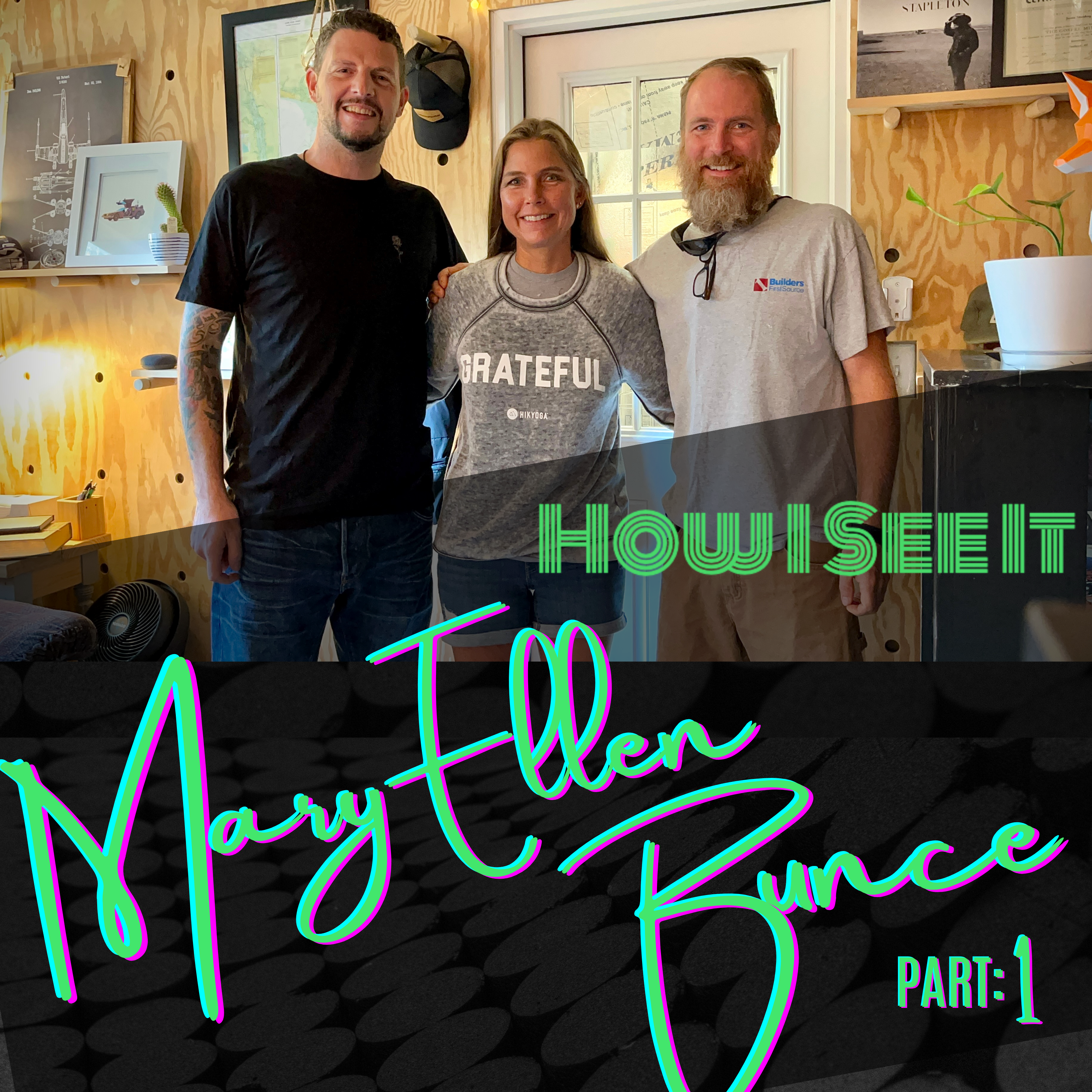
Enjoy this interview with MaryEllen: She describes her journey dealing with Lyme disease and other tick-borne diseases, despite the medications given, and the odds-defying healing she has found through a natural/Vegan lifestyle. Our standard disclaimer: we are not doctors! But if you’re struggling with chronic health issues, this episode (and next week’s) has some helpful nuggets and encouraging ideas you can talk to your doctor about.
Part 2 available now.
Show Notes:
- Part 2 of this show
- MaryEllen’s website: plants4living.org
- Resources shared by MaryEllen:
Show Transcript
MaryEllen:
Yeah, so the interesting thing was I I mean, I my faith obviously plays a huge role here because um even going off the medication was was something that was would have been greatly frowned upon. One of the the characteristics of both Lyme disease and Bartonella is that If you have not completed the cycle of treatment, the diseases will come back stronger.
Mark:
Welcome to How I See It with me, Mark Pratt and Justin Sternberg. This is a podcast that works to counter cultural Polarization through thoughtful conversations.
Morning Justin!
Justin:
Morning, Mark.
Mark:
How are you, sir?
Justin:
Doing pretty well.
Mark:
Yeah.
Justin:
Pretty well, yeah. Well
Mark:
exciting.
Justin:
Like these cool almost fall mornings.
Mark:
Yes.
Justin:
But not so cool that it’s cold. Exactly. Yeah.
Mark:
Yes. Well I just uh morning Mary Ellen as well.
MaryEllen:
Good morning.
Mark:
Yes, it’s good to have you with us. Welcome. So this is how we see it. So in the in a how we see it moment, we routinely talk about continuums and the process of uh Just
Justin:
I think continuum is our favorite word.
Mark:
Yeah. So when we can’t say continuum, we say spectrum. So you know it is
Justin:
we try and mix it up.
Mark:
But we recognize that in that, if you will, bell curve Not everybody’s experience is right smack dab in the middle.
Justin:
Right.
Mark:
And if anything, there are people who are different than us who might be on an end or we might find ourselves on one end of that exp spectrum and it and recognize that Okay, somebody else’s experience is different. That’s our hope.
Justin:
Yeah.
Mark:
Is to be able to understand that someone else’s experience is different. And so that being said, um I want to introduce Mary Beth to you. Um Mary, Mary, Ellen, doggone it. I blew that. I’m gonna read it.
Justin:
Pause and then I can edit it out. Go.
Mark:
Okay, beautiful.
Justin:
Now you gotta reintroduce her though.
Mark:
So Mary Ellen. Um friend of my wife’s, someone who I have known for years. um a strong individual, um someone who I respect, who has been on a journey, I’ll call it, at this point, and someone who has sought her own healing through a diet. I’m gonna say a lifestyle change because I recognize diet has implications to it. Correct?
MaryEllen:
Yeah, I would agree.
Mark:
Yeah.
Justin:
It’s a polarized word.
Mark:
It is. Because we can tend to think it’s just
MaryEllen:
weight loss.
Mark:
Weight loss. Yes. That I’m doing this for a momentary benefit. Or it might even be something that fluctuates. And in who you are and valuing your intelligence, I recognize you have been on a journey And that’s where that’s where we’re at. I’d like you to be able to kind of describe what that journey is and what brings you to the lifestyle choice you are choosing.
MaryEllen:
Yeah, so I think I’ll start with um some background.
Mark:
Yes.
MaryEllen:
Um probably 13-14 years ago, um I was strong and healthy, very athletic, and Started becoming very ill quickly. And it took about two years to figure out what was going on. And I was diagnosed with Lyme disease And later on, a few years later, three other tick-borne illnesses as well.
Mark:
Wow. Yeah.
MaryEllen:
Um So the journey New York State.
Justin:
I’m gonna avoid that state.
MaryEllen:
Yes. Um and at the time uh it it’s very difficult to get treatment for Lyme disease unless you’ve caught it early on.
Mark:
Sure.
MaryEllen:
And it requires specialists that you have to pay for out of pocket and for Fortunately, insurance doesn’t cover it.
Justin:
So
MaryEllen:
I um sought treatment in the sense of just lifestyle and things that I could do on my own. And and did a lot of exploring and reading and in um also talking to people in the Lyme community as well for ideas. And so over the years I’ve tried a lot of different things, um, including diet changes. And um at the point where I was where we made the big change in the way we were um eating and living our lives. I was uh completely I had no gluten in my diet. I also had no dairy. I had eliminated both of those because they were causing a lot of inflammation in my body. Um but at the start of the pandemic, um so this was uh February of twenty twenty, I had Was at the end of about two years of very deep treatment for Lyme disease. I had been working with a specialist for about two years And I went that direction because prior to that I had taken a turn and I was very sick using a wheelchair. Sleeping half the day, I was in debilitating pain. Um and I also had a lot of psychological symptoms, which are very common with Bartonella, which is one of the tip-borne diseases that I had. So in order to save my life, we sought a professional tick-borne disease specialist. And there are a lot of different treatment methods which I’m not even going to begin to get into but in that particular situation I tried a lot of natural things so we went down the Pharmaceutical route, which is a cocktail of different pharmaceuticals that you’re taking at the same time, and After two years of that, I had made a lot of progress. Um neurologically um and physically I had made a lot of progress I was nowhere near 100%. I was still needing a two to three hour nap every afternoon. I was still dealing with a lot of symptoms, but I had made a lot of progress. Unfortunately, I’d taken a tremendous toll on my body So I had was struggling with my organs near failure, especially my liver and my kidney function. as well as um I one of the drugs that suppresses your bone marrow production so I had very low white and red blood cell counts so As the pandemic started, there was a huge concern for me ending up in the hospital and the fact that I also had no ability to um fight off the illness. So at the advice of my doctor, we paused treatment and I moved to like an herbal protocol. And at the time, um Of course, we were praying through the next steps to take, and I really felt that God was leading me away from this form of treatment, that I was, he had something different. And so I felt very comfortable with that pause. And I also really, my body was so depleted. So I was just focusing at that point on praying, what the next step was, and also how do I restore the damage done both by the Lyme disease and all the pharmaceuticals I had been on. So that was our prayer and that was the focus. I started with um working with a doctor, a functional medical doctor, and taking a lot of supplements and kind of going that route, which I think is what a lot of people do because that’s kind of how we we roll with things and then about May June timeframe uh a friend of mine sent me a of course you know everyone was working from home and a lot of things that were people who go to in person were now being offered online. In a lot of places, organizations and nonprofits and things were offering things for free just to educate people while they were at home and keep them busy. And a friend sent me a link to a summit that was being offered online. And there was someone different, our couple doctors speaking every day about different things and she said, oh, they’re going to be talking about autoimmune disease tomorrow. Maybe you would be interested. And so I was like, sure, why not? So I listened and there was two different doctors on there, one with um lupus and the other one that had MS and they both had completely reversed their late-stage diseases using lifestyle primarily um a whole food plant-based diet. And I was like, wow, I’ve never really I I I never really heard of it, to be honest with you. Um I was familiar with veganism. My daughter was a vegan. Um And honestly, I hadn’t even considered removing meat from my diet at that point because um One of the things in the Lyme community is this fear of carbohydrates because there’s a concern that they feed Lyme disease. Um sugars definitely do. Simple sugars. There’s no doubt that um table sugar and simple sugars are not healthy For a um well for anyone but for a sick individual in particular.
Justin:
So that would have been the enemy
Mark:
Yeah.
MaryEllen:
Yeah, so um long story short, it basically opened up a rabbit hole of sorts for me. Um and I’ve always been one to do a lot of research, so I just really really started researching and um I made a decision actually I I talked to my husband at the time and I said would you be willing to do this for six weeks with me because I really felt strongly that it would be much easier if our household wasn’t divided.
Mark:
Sure.
MaryEllen:
Um my children were grown um and the youngest that was in college was Staying in college and not coming home. Um, people were afraid I I literally did not leave the house other than to get fresh air for months. Um And I will tell you, even after taking a pause from all the medication, they were taking my blood work every two weeks. And I even had to make arrangements with a lab so there wasn’t other people there. Um
Justin:
I mean just take like the level of anxiety and kind of fear that was happening at that time just to be a normal person.
MaryEllen:
Right.
Justin:
And you didn’t know how it spread or whatever and you’d look at somebody like I said Are you a COVID? Yeah, it’s like didn’t apply your situation. I can’t even imagine that would be.
MaryEllen:
Yeah, so the interesting thing was I I mean I my faith obviously plays a huge role here because even going off the medication was was something that was would have been greatly frowned upon. One of the characteristics of both Lyme disease and Bartonella is that if you have not completed the cycle of treatment the diseases will come back stronger. Um they hide all through your tissues and cells and become um very difficult. So the more times you kind of go at them and then don’t finish what you’re doing and come back, it’s they’re just get stronger and stronger and more difficult to treat, which is partly why I was in the position I was in in the first place because I didn’t ever f completely get um healed or the Lyme disease world uses the world word remission. Um for me now I I I consider myself uh healed. Um my body is still healing, but for me personally that’s part of my journey is um n not identifying with that illness anymore as well. So yes, um definitely. So at the time it was just my husband and I and He said, of course he was willing to support anything and I was the one that did all the cooking. So he was like, sure, let’s give this a try. Um and I also had him listen to a couple podcasts and watch a couple documentaries that um I had watched and He’s like, I’m sure you’ll make everything taste good. Let’s do this. And so we jumped all in to a whole food plant-based diet. Which is basically no animal products at all. No fish, no dairy. No eggs. And in addition to that, it’s focused on whole foods. So it is a vegan diet taken to another level. And the focused being on a variety of whole plant foods, you can eat grains and lots of potatoes and you know vegetables. For me, I took a little bit different one step further, just to be clear, because for some people a whole food plant-based diet and that transition is all they need to heal their health. But for me, I was very sick and I also had depleted um a lot of the um my immune system was just and my microbiome from all the medications I had been on, my intestinal track and everything was just a wreck from all those medications. So I did what was called a hypernourishment protocol, which is a lot of dark leafy greens and um That’s just one more step in that. I had a little bit more of a strict focus than my husband did. But we jumped all in and I was having blood work done every two weeks, so it was very easy to track. And so We stepped in in faith that this could not hurt and it could only help. And it did. So what
Mark:
did you notice from your blood test in that in that realm as you engaged in the right.
MaryEllen:
So when I say blood work, the blood work was basically measuring my organ health as well as my red and white blood cell count.
Mark:
Sure.
MaryEllen:
And in six weeks it was back in the normal range.
Justin:
Normal.
MaryEllen:
Completely normal. Healthy. Healthy range.
Mark:
Organ function as well. Wow.
MaryEllen:
All of it was back in the normal range in six weeks So, and at that point I felt, I mean, obviously we were thrilled,
Mark:
but
MaryEllen:
I also had such confidence in that season that God had led us there. And years ago, actually, my Lyme disease doctor, he was a Christian man and very it was an old guy. And when we I first started treatment, he would s he said to me, Whatever you do, do it in faith. Like believe in what you’re doing. And I understand the wisdom of that now. And so I I think it’s important that, you know, when we we we are not in conflict with what we’re doing either. So
Mark:
Kind of that double-minded man is unstable in all he does type perspective.
MaryEllen:
Yeah. So and in this time I continued to educate myself. Um uh one about the benefits of a plant-based diet, also um on how to cook a plant-based diet and how to um Live that that it is it is a lifestyle because it affects all areas of your life because our culture isn’t just not supportive of it in general And so that um that fall I enrolled in eCornell has a course through Cornell University called the Plant-Based Certificate, and it’s a educational course teaching you all about the nutrition aspects of a plant-based diet. And I enrolled in that. And that was just the icing on the cake for me of really understanding the benefits not just for myself but for those around me um to a plant-based diet. And we’ve never looked back. It’s been over two years and the best decision I ever made. And so I’m continuing to heal. I am A year from that date, I hiked the mountains of Virginia day after day and continue to do so today. I am living a full vibrant Life. I am not 100% yet. My body is still healing, but I feel like it’s healing cell by cell as I give it what it needs.
Justin:
In what ways are you still healing? Like how does it impact you still?
MaryEllen:
So th there was a lot of damage from the pharmaceuticals. So um I’m still I still feel like I’m working on um my microbiome and d dealing with that. I still have some pain issues um that come and go and a lot of that has to do with just the breakdown of my muscle tissue and just I did I’ve done six years of physical therapy. So prior to that I had done four and I’ve done some since then. I had a left side partial paralysis and neuropathy. So I mean, I literally went from using a wheelchair. Like I could stand. I didn’t have to have it to walk, but I could not stand for long. So if we went like to Lowe ‘s
Mark:
or
MaryEllen:
You know, anywhere where we I needed to walk around a lot. We were using a wheelchair to hiking in a year. It was amazing.
Mark:
Yeah. What was that like for you to experience that?
MaryEllen:
I think you just have a better appreciation for everything in life when you haven’t had it. You know, when you haven’t had the ability to do things. Um And and honestly for me, just like even being able to once again for me give back to others in the sense of encouragement and saying like there’s hope Um, there is a lot of hopelessness in the Lyme community. There is hundreds of thousands of people that who are so sick and they just see no way out of it. Um And it’s a very, it’s a very depressing, can be a very depressing community just because people are really struggling to um maintain hope when they’ve tried so many things and they’re not getting well. So for me, that was being able to say I there is hope, you know, and so that was felt good to me because for myself. Um and also I was able to finally be the wife and mom that my heart longed to be and start to give back. Because for for a while I was only able to take care of myself really. And that’s hard.
Mark:
Yeah. And even even in that journey for you personally to go from someone who would consider themselves very independent athletic, strong. That was that was a difficult process for you just to experience that, yes, in that
MaryEllen:
it was. I mean, I learned a lot in that season, um, about w how It’s easy to give and hard to receive for a lot of us. And so I had to learn that. I also had to learn to slow down. And um For me, really, uh, I think that season when I look back was a deep interdependence on God for the strength and energy for the day and also my mental health, just not losing hope and just finding something in each day that was still good even though I didn’t feel well and But then in the turnaround is the remembering. Like for me, it’s like I have not forgotten and I am I am thankful. Um so when I do have some harder days, which sometimes I do, um Because I’ve, you know, I’m still healing. It takes your body a long time to restore all that’s been depleted when you’ve been ill for a long time. So I have to remember how far I’ve come.
Mark:
Yeah. Her
Justin:
her shirt says grateful, which I think is appropriate. I agree.
Mark:
I agree. I was thinking about that in that aspect of finding the daily things that we can be thankful for.
Justin:
Did you know Mary Ellen when she was going through that process? Well I don’t know what you how
Mark:
not to that extent. I knew in other words, um Mary Ellen and Chris became friends when our children were young when we lived in New York State.
Justin:
Okay.
Mark:
And we moved out of New York State in 2008.
Justin:
You knew her when she was pre
Mark:
Yes, pre-pre-Lyme’s disease, basically.
Justin:
So that the the healthy version that Right.
Mark:
And we knew we would visit. I mean Chris if in her and and who she is, of course, she would make time typically as we would go to New York State for family visits at Christmas. you know, her and Mary Ellen would kind of get together as they could type thing if it worked out, you know, that kind of thing. So we were aware, you know, of what was going on, but I don’t believe we were, you know, aware to the full extent.
Justin:
I I think obviously your story is is pretty impactful and and amazing what you got. It’d be interesting to hear those around you, kinda what their perspective is too and ’cause I’m I’m imagine Yeah, it would just be like it’s so much better. You know what I mean?
MaryEllen:
Yeah, I think you know what’s interesting is Um Lyme disease is for a lot of people it’s kind of an invisible illness. So even when I would see Chris, she would have had no idea how sick I was most of the time. You know, I would run into somebody in uh a grocery store that had knew me well from church or somewhere, but didn’t know the deep, intimate details of what I was dealing with and I would be using one of those scooter chairs or whatever and they would just be like, what happened? And I, you know, they just had no idea. So you know, you can um give all your energy to the two hours of that day that you need to. And I mean I was for a long time I was still serving and and functioning what what most people would have thought a normal life. Um, they wouldn’t have known the tremendous suffering that was going on. And that’s true in general in the wine community. It’s it it is known as an an invisible illness. Um So, you know, it’s interesting ’cause
Justin:
I feel like would make it harder.
MaryEllen:
Absolutely. Yeah. It does make it harder.
Justin:
Dependent on others when it’s like you don’t have the visible You know, whatever healthy otherwise that they can go, you’re fine, whatever.
Mark:
Yeah.
Justin:
I doubt. I hope you’re not going to be able to do that. uh
MaryEllen:
it it’s interesting the things that you don’t think about until you have to be there.
Mark:
Like
MaryEllen:
for me, like the first before I used a scooter at the grocery store, you know, one of those ones you just borrow from them. I I went through a lot of like internal battle. It’s like when I got my handicapped parking permit.
Mark:
Like
MaryEllen:
a lot of lessons for me in humility and also in what what is of value, you know, and what where do I place my significance and my own self-worth in that? And So it you know, looking back, there was a lot of a lot of lessons in that. But even my husband, we’ve been married for almost five years. We’ve been doing a lot of talking and reflecting this week, and and I asked him Could you have known the impact this would have on our lives? Like he it’s like I knew you were sick. But I didn’t he didn’t ha even doing life with me before we got married, he had no idea how um impactful it was.
Mark:
Yeah.
MaryEllen:
I tried to talk him out of it.
Mark:
Yeah.
MaryEllen:
I did. I was like, you don’t want to marry me.
Mark:
Yeah.
MaryEllen:
It’s not fun being married to someone sick. Yeah. So You know, now I feel like I’m trying to I don’t want to say make up for lost time, but just live every day to its fullest. And I think we all should, but
Justin:
Yeah.
MaryEllen:
It’s it’s definitely one of great uh intention for me.
Justin:
In in talking about like the scooter and in even wheel wheelchairs and stuff. I know like my daughter, she has some issues with her bones and stuff, and so w we went to Disney World and she can’t walk for hours at a time. So we got a wheelchair. And it was kind of that same I mean I guess I I guess I can somewhat uh connect with what you’re saying, because it’s like we would wheel her around and we’d go through the lines fast. That was cool, but then she would get up and get in the ride, and I’m like I wonder what people think. You know what I mean?
MaryEllen:
Absolutely. Like people don’t understand. So if I got a lot of mean looks for the handicap parking spot. I mean
Justin:
So having to like process that that look doesn’t matter. I guess kinda w to what you were saying about what matters. Um it’s unfortunate that that that’s the experience that you have to go through, but yet what matters is being able to shop. Being able, you know, whatever. Right. I don’t know. That’s it’s just
MaryEllen:
Yeah, it it’s it’s that whole we don’t th we want to say that we don’t care what other people think.
Justin:
Yeah.
MaryEllen:
But at the end of the day, most of us do.
Justin:
Yeah. Yeah
MaryEllen:
Yeah.
Mark:
So in your process, and I I think, you know, there’s there’s definitely two different aspects of, you know, it’s it’s the lifestyle change. you’ve made and yet there’s still the Lyme’s disease experience that you’ve had. And I’m and I’m just curious in that process. It’s a un what’d you say a hidden hidden disease? Line disease?
MaryEllen:
Invisible. Invisible. Yeah.
Mark:
And uh I was thinking what would you say to someone and it’s funny you it’s like I have learned a little bit since the property. You know, it’s like I got bit by a tick a couple weeks ago, you know. And we oh no, but we think about So in that process we think about it, you know, and sure enough, you know, it was, you know, you you gently pull it off, that kind of thing, whatever, you know. Not whatever, I shouldn’t say it like that. But you know, there’s this thing that we’re invincible to a certain degree. And I think that kind of plays in, it’s like, this won’t happen to me.
MaryEllen:
Well you also don’t get it till you get it.
Mark:
Right. And that’s what that’s what that’s what I’m saying in that process. You know, what would you say? And it, you know, it’s like I even just talking with other people. I learned, well, the best thing to do in what I should have done in that moment, knowing that I had been bitten, was send a tick off for twenty-five dollars and it can be inspected or you know lab tested and you can know. It’s like we took a picture of it and then threw it into trash type stuff. Because I didn’t know that at the time. Can’t be responsible for what we know. I see the look in her eyes. It’s like Like you you fool you. No, I’m not. It is it is
Justin:
that’s how everyone has got Lyme disease got it, right? Like it’s yeah.
MaryEllen:
Well mo uh a lot of people don’t even know that they’ve been bitten.
Justin:
Yeah.
Mark:
Sure.
Justin:
Yeah.
Mark:
And that so speak to that
Justin:
deer ticks are
MaryEllen:
the ridiculous the first hatching of the t the the deer tech when they do their um feeding right after they’ve hatched out, they’re tiny. They look they’re the size of a poppy seed. And so they estimate 90-some percent of Lyme disease comes from those ticks. And you’re not likely to find it. The they’re called nymphs. It’s that first because they’re so tiny. I mean they they you know uh they’ll do things where they put one on one of those poppy seed bagels and you literally can’t see it
Mark:
Oh wow. Kind of creepy, right? Yeah.
MaryEllen:
Give me one of those everything bagels.
Mark:
Yes. Find find the deer tick nymph and the bagel.
Justin:
We can put that in the show notes.
MaryEllen:
So what is your question?
Mark:
No, I and that’s what what would you say to someone who is in that possible beginning stages? They’re not sure. They’re just they’re just recognizing they’re tired, you know, because because even what you’re sharing can sound so much even like cancer.
MaryEllen:
Right. So
Mark:
you know, so many other things.
MaryEllen:
Absolutely. Um So there’s two scenarios here. There’s one, your scenario. You found this tick.
Mark:
Right.
MaryEllen:
I get those phone calls all the time from that.
Mark:
I bet you do.
MaryEllen:
Or text messages or and you should properly remove the tick. And it’s definitely worth sending an offer testing, especially if you live in an endemic area,
Mark:
sure.
MaryEllen:
Um, which about 80% of the country is at this point.
Mark:
Sure.
MaryEllen:
Um, it is the largest specter borne disease disease in the US. Um At least five
Justin:
-born
MaryEllen:
vector born. Insect born. Insect-born. So they estimate at least 500,000 people a year are contracting Lyme disease, at least
Mark:
Wow.
MaryEllen:
So if you find the tick, it is great to send it off for testing. There are labs that charge and there also are some that do it for free. Okay. And you can find that by looking it up online. And just you just save the tick in a slightly damp little paper towel or something and put it in the baggie and you can send it off. Um it’s worth it because if the tick has no diseases you can just Know that. And if it does, then you know, okay, maybe I need to think about this and definitely watch for symptoms. Um, some people get the classic symptoms, and I think this is the misunderstanding that There’s a a way that Lyme disease progresses and it does for some people, but that is a small portion. What’s really interesting is the this is a slight diversion, but uh the long haul COVID epidemic that’s going on is similar to chronic Lyme disease in the sense that th they don’t know what to do. And everyone presents a little differently Um and so that has brought a lot of awareness um to the fact that there can be kind of these lingering things that go on. And now with Lyme disease, they they can find um with certain tests the existing disease still in your body. So that’s So anyhow, um the testing for Lyme disease is awful. So I’m just gonna say that right out front. It misses at least 50% of and it’s just the nature of it. They there is research, they’re trying to develop a better test.
Justin:
Um Yeah, that’s crazy. Have you heard of the I guess there’s a vaccine or something coming out? Have you heard about that? I’m curious what your thoughts are on that.
MaryEllen:
Yeah, so the the original Lyme vaccine that they created years ago gave people Lyme, so that didn’t work, or it made them very sick with a similar Lyme type symptoms But it worked for animals. So the the vaccine that our animals get that they give to dogs was originally a human-developed vaccine. So my concern, I’ll be honest with you, I mean, I I I’ve been a part of a lot of clinical studies because um I do test positive for Lyme as well as um I’ve had or I did. So as they’re trying to develop things, they try to find people that they have a clinical diagnosis as well as a lab diagnosis. So I’ve been a guinea pig for the sake of progress. So I’ve followed this quite closely and I have mixed feelings about a vaccine because there’s more than Lyme disease. So you rarely get just lime. So you rarely get just lime. Ticks carry all sorts of different diseases and Bartonella, which is one of them, is very debilitating. In fact, there is a lot of children that have like autism or uh different um mood disorders and different things that turn out to have Bartonella. Um and And so that also rolls into that question you gave me, what would you tell somebody? So um Even if they had a vaccine, they’re gonna miss the mark. On one, it there’s a lot of different strains of Lyme.
Mark:
Okay.
MaryEllen:
And there’s all these other co-infections. So I just I think it’s a move in the right direction. Um, but personally I think they should move spend the money and resources trying to find an a good diagnostic system for it and treatment. Because if Lyme disease is caught early and treated appropriately um about eighty-five to ninety percent of people get well.
Justin:
Can define treated appropriately.
MaryEllen:
So
Justin:
And f and found early. Like what
MaryEllen:
so if if Let’s just say you had started coming down with symptoms or um you
Mark:
Who might that be
MaryEllen:
So you could have gotten the bullseye rash. So the bullseye they call it the bullseye rash because it’s like a rash in circles. Well it’s not always a bullseye rash. Actually it can be anywhere. So I I did not get that the first time. I’ve actually gotten lime twice. So you really don’t want to come to New York State, right? In our area, over 50% of the ticks carry Lyme.
Mark:
Okay.
MaryEllen:
And I’m an outdoors person. So the second time I got it, I knew I got it because I got the rash. But it I still didn’t find a tick. But I got these bullseye they look like circular rashes similar to a bullseye. I had like six or seven of them on my body. So it’s not like a rash that comes right where the it can be right where the bite is. Sometimes people get this perfect rash right there and I’ve seen it. And then other people get almost like an eczema. rash type thing or with me I had like five or six different bullseyes. They were just like all over my torso. I I was going to the gym for um aqua physical therapy and I put my suit on I’m like, oh my goodness. And so that’s probably, you know, part of why I got so sick the second time around. Because I got more of it in my body, and who knows what I picked up that time too. So There are a lot of symptoms, but in the beginning, when I say the life cycle of the spirochete, which is the actual, it is an at actual You’re not just your body, you’re getting something inside your body. So it’s being transmitted through the tech into your body. Um, starts to replicate and grow and multiply inside your system. It’s in the syphilis family, so it’s a very can be a very difficult thing to catch in the beginning because it grows very slowly in your body. So if you were to have the classic symptoms and get on, it would be antibiotics That’s the the typical way of treatment. And it’s four to six weeks But for some people that’s not enough. So it’s until symptoms resolve. And I will tell you that’s not how it’s treated right now. A lot of times it’s two weeks and you’re not going to kill all of it because the life cycle is 28 days. So you have to at least be on medication for 28 days. There are great herbs for Lyme disease and there are some people that go that direction and um have great success with that as well.
Justin:
Is that uh something you could name?
MaryEllen:
Now there’s a whole combination of them. But there with research you can find it. Yeah, it’s an herbal cocktail really. Um but they are they can be very effective. The thing with herbs is that you have to be very intentional and very like taking them every three to four hours and disciplined with them. And it’s not covered by insurance. So a lot of people, you know, that route can be more expensive. Um, but it’s also not destroying damaging to your body in the meantime, it’s just helpful. Um Some people get very sick in the beginning with Lyme disease. They just get it and they get really, really sick. For me, it started with joint pain and fatigue. and that direction, which is I would say is true for a lot of people um that have chronic Lyme. Um it it’s a slow, slow downhill um adding up of symptoms. And You can also be treated and not get well. So if with when I said 80, it’s they say 85 to 90% of people, if they went the right direction and they go on the antibiotics for four weeks. or six weeks, whatever, but they’ll get better. But then there’s that’s those that don’t and they have lingering symptoms. And for some people it feels like it’s just some extra fatigue or um arthritis. And for some people it’s extremely debilitating. Um and it and like a lot of things in life, certain other things can contribute to it. So if you have, you know, a lot of people have issues with mold or, you know, there’s other contributing factors that make them more sick. Yeah.
Justin:
Is that
MaryEllen:
it’s another tick-borne disease, yeah, absolutely.
Justin:
A a good friend of ours. Um b ha ha got that at some point and it made him very sick and dealt with that for a while and it seemed like it pretty much resolved except every once in a while I think he’ll still feel the same symptoms of fatigue and stuff like that. And then he got COVID and he, of all the people I know who got it, had it the worst. And he was knocked down. He was out and I mean they were very worried about him, you know And I almost wonder if that has something to do you know, if that can if they can the two together can be problematic or um because of what the tick borne disease does, it it creates this m you know stronger sensation if you get COVID. I don’t know. I’m curious if you if you’ve heard anything like that.
MaryEllen:
I think it depends on what else is going on. You know, I think that’s true of all things in our bodies. That’s why Um certain people uh all of a sudden become really sick with, you know, uh like a mold sensitivity you hear of that. People like all of a sudden and other people they’re not bothered by it. I think it’s A great visual is like we have this cup and at some point it overflows. Like it just can’t handle any more of the toxins in our body or uh whatever’s going on. And so some people have had mono as a child and it’s just laden. It’s it’s like when someone gets shingles because they had chicken you know, the chicken box virus is still late in their system Um so with Lyme disease, some people if they have had mono, it can come back and come back out and contribute as well. So it’s like you’re just treating um all of these things all at once. environment is huge as far as uh and lifestyle is huge and we have a very stressful uh lifestyle in our in our country for most people and stress is terrible for our immune systems and our health.
Justin:
Hmm.
Mark:
So as you mentioned lifestyle, what about your specific whole food plant-based lifestyle? created this opportunity for healing as you’ve learned and as you see it. What what made that so different than say the person that just has a regular regular diet.
MaryEllen:
Right.
Mark:
Even even someone who might be somewhat healthy.
MaryEllen:
Right.
Mark:
You follow me?
MaryEllen:
Right. So I’ll be honest with you, this is what surprised me. I was I was pleasantly surprised that it worked as well as it did.
Mark:
Sure.
MaryEllen:
And I think part of that was um a lot of our information comes from media. And you know, even when we look and research uh uh it who who’s paid for that research whatever you right so finding truth Truth.
Justin:
It can be difficult. We’ve talked we talk about that a lot, actually.
MaryEllen:
It’s like the obvious hidden hidden somewhere, right? And that’s what I actually, you know, that was been my experience with plant-based nutrition. Like once I kind of knew the rabbit hole to go down or whatever, thus the to how to look for it, I was able to find the the information and they’re it’s still out there. Um so to answer that specific question, it has to do with your immune health.
Mark:
Okay.
MaryEllen:
So I think I know that we are nutritionally starved in America. Absolutely. Like we are overweight and and underfed of nutrition by far. And so that that plays a huge role. Um but but at the end of the day with Lyme disease, you need your immune system to be able to fight. It’s it’s fighting in the beginning. That’s why some people get bit by a tick, and they may fight the Lyme off and not even know. Like you could have it in your body and just not get impacted by it as much. Um but if your immune system is weakened and and honestly it’s it’s some of it is is food and it’s also lifestyle. Like if we’re under a lot of stress, like our immune system just is not working well. Um, and that’s probably the case in my situation. I was in a very stressful season in my life, and I think that played a role I was very worn down, I wasn’t getting enough sleep, and um all of these things I have learned. So the plant-based diet is optimal for health. It provides all the nutrients that we need and it also is very good at for our immune system because of all the antioxidants and everything that you’re getting from the plants.
Mark:
Sure.
MaryEllen:
And in my situation, because I was focusing so much on the um like overnourishing my body you know it was lots of dark leafy greens um and omega-3s through flax and chia seeds. Um I just flooded my body with nutrition and gave it the ability to heal. So, you know, my biggest takeaway from this The whole thing was just that God has created our bodies to want to heal. We just need to give it the right tools to work with. We just need to give it the material, the sleep the fresh air, you know, all of these components play a role and just giving our bodies what they need to heal. So for me, that that was the turnaround. So, you know, I didn’t the I don’t believe the plant-based diet was working like the antibiotics were as far as like attacking and killing the spire key in my body and killing the Lyme disease off and the diseases off It strengthened my immune system to do that itself and gave my body the ability to heal itself and continues to do so.
Mark:
So speak to that from in the process of your journey. I mean As Americans, I’ll say, you know, we’re we have this pharmaceutical ability.
MaryEllen:
Right.
Mark:
You know, and I think in some ways it can be something all it can it can be something we put our faith in. Strongly.
MaryEllen:
Right.
Mark:
You know, when you take you know, you have this, you take this.
MaryEllen:
Right.
Mark:
Speak.
MaryEllen:
For everyone to think about.
Mark:
Yeah.
MaryEllen:
Look around you. Is it working?
Mark:
Okay , I hear you.
MaryEllen:
So we are very sick in America. And if we didn’t already know that, COVID showed us that. We had the highest death rate of any country in the world for COVID. There was third world countries that did better than we did.
Mark:
Sure.
MaryEllen:
And it’s because we live extremely unhealthy lifestyles. And I think that the reason I was so surprised the plant-based diet worked for me is because I was um the uh the high the spectrum of very healthy
Mark:
it
MaryEllen:
is as far as Americans go in how we ate. Um, I did not eat not any processed food really at that point. Um when I say processed food I don’t mean like opening a can of vegetables. I mean processed food, you know, chips and you know, take out and all that kind of stuff.
Mark:
Food that can last for five years on the ship.
MaryEllen:
Right. Um I also um, you know We were buying free-range organic meat from local places. Um I was trying to buy all organic vegetables. Um we ate uh you know we ate healthy, very healthy compared to what most people do So it was amazing the turnaround in my health from it’s not so much just what you’re not doing, it’s what you are doing with a plant-based diet. So you’re you’re not just removing things, which I think is what everybody focuses on. You’re adding in all these other things that are full of nutrition and some of the other things are void of nutrition. So or have very little.
Justin:
Because if you’re f full on something that is nutrient fill, then there’s no room left for uh meat or whatever whatever the the thing is you’re replacing. I I that’s an interesting perspective that I can’t say I’ve ever really heard, which it’s it’s uh it’s not this idea of taking away as much as it’s giving
MaryEllen:
right
Justin:
uh your body.
MaryEllen:
And honestly, you know, I uh now I’m in in the position where I’m helping others um with their plant-based journey and transforming their health. And that’s one of the first things I say to them. This is true of all areas of life. We have to focus on what we can do instead of what we can’t do. And you know, for me, I just jumped all in to the plant-based diet. And I I truly feel that’s the e it doesn’t sound like it, but it’s the easiest way to do it because We have food addictions. There is absolutely no doubt we do in this country. Our food is designed to be addictive. We also have just taste preferences and yes, it’s like ripping off that band-aid. If you keep both feet you know, a foot in each camp, it’s really you’re just you’re always gonna want to go back to that thing that was comfortable. Um but a lot of people slowly transition. And so one of the advice advices we give is, I mean, it can be eliminating certain things, but it’s like crowd out your plate. That’s what I tell people. Like if you don’t Not everyone has to go all plant-based, but we do need to eat more fruits and vegetables. There is no, I don’t think anybody can argue with that. But the biggest question that we get in the plant-based community is, I bet you can guess.
Mark:
You don’t eat bacon?
MaryEllen:
Where do you get your protein? Everybody, including You know, when my husband first went to his doctor, he’s like, wow, you’ve lost weight and wow, your, you know, your cholesterol’s all better. And, you know, you’re he was just like, Where do you you know, my husband’s like, well we’re eating a plant-based diet. Where do you get your protein?
Mark:
You know.
MaryEllen:
Um 97 % of Americans eat too much protein. And ninety-seven percent of Americans do not eat enough fiber. We are fiber deficient in our diet. I mean, there’s people that don’t eat a single vegetable all day long, let alone fruit. And so we are not d protein deficient. We are nutrient deficient. And um we’re we need fiber and you can only get fiber from plants.
Mark:
Sure So uh back to that that dynamic of the pharmaceutical, what was that like for you in that transition? No, there’s nothing to be sorry about. I appreciate what you share, especially in that in that protein, you know, because I think You know, even I’ll I’ll hear it so much even in my F3 world, you know, eat what is it, half your weight and and grams of protein type thing? They should roll their eyes on that one just so But you know, yes, we we do have this protein fixation if I may say so. you know, versus a nutrient
MaryEllen:
right
Mark:
filling. But what was that journey like for you? And you you mentioned it a little bit because it took a certain faith step.
MaryEllen:
Right. So let me go back to the pharmaceutical question. Um So this is the scary things. There’s been a lot of lessons in all of this for me, and a lot of lessons in why do we do things the way we do in medicine? Because One of the things I learned, so when we when I took the plant-based certificate courses at Cornell , and the reason they teach them there, by the way, is because T-Cal and Campbell Who is one of the pioneers in the plant-based movement? Did he taught there and did his research there. He wrote a book called The China Study, which um And he came from a dairy farm.
Mark:
Hmm.
MaryEllen:
His whole life he grew up on a dairy farm and in his quest to discover a way to provide um nutrition to third world countries and starving people. He was trying to find the perfect protein and discovered that that was not the answer.
Mark:
Mm-hmm
MaryEllen:
So he wrote a book called The China Study based on this mm the biggest study ever done on nutrition in the world. And it’s it’s really incredible. So anyhow they In that they debunk a lot of things and they also help us to understand why we know what we know. So why do we think protein’s so important? Why do we, why do we go to the pill? You know, a pharmaceutical route? Why do we do these things? Why do we not stop and You know, even the simplest of things. We have a headache and we go, you know, do we stop and say, maybe I need some fresh air or uh I need a glass of water? We just take an Advil. Um or whatever your choice of simple thing. I mean they’re very inexpensive and so our doctors have also been taught that way. Um the average um physician gets two hours of nutrition training in all of their years. So they do not, they’re not equipped to give nutrition information, nor are they paid to do that So they are paid to write prescriptions.
Justin:
Yeah. You’re you’re the second person to speak of this uh on our podcast. And the cool thing is the first person was an im uh What physician physicians assistant, so ki kinda from the inside and you’re kinda coming from the outside doing a ton of studying and I would definitely say for anyone listening to this listen to the other Mary as well because it definitely I mean th they coincide very well with what you’re saying. One one of the things I really love about this, this is an aside, I still want to get the to the front Pharma pharmace
MaryEllen:
Pharmaceutical
Justin:
pharmaceutical stuff thing that you’re talking about. I love how this kind of idea of filling our bodies with nutrition and and Mary Beth spoke of this as well. is that it doesn’t just, you know, uh deal it’s this is not just for people with minds. It’s for everyone.
MaryEllen:
It’s for everyone.
Justin:
So if you’re struggling with depression You know, this is one thing that you know, a lot of things I’ve uh heard about that is like one thing that helps us to go outside in the morning and look at the sun. You’re like, what? That doesn’t make sense. But it’s you know, simple things like that that are um Part of like how we’re created to be, if that makes sense, that if you can partner with the way your body is meant to work Things start to work, right?
MaryEllen:
Well, I heard this statement the other day um in a a conference call I was in and the man said if you want to live like modern day people, you are gonna die like them. You’re gonna die of modern day diseases. Because a lot of the the lifestyle medicine is that. It’s It’s breathing techniques, it’s getting out in nature. I mean, all of these things that people did for all of creation until recently. I mean, it’s only very recently that we’ve been in front of screens and using artificial lighting. And honestly, processed food, I mean, there is a direct correlation between processed food and people’s health decline. And You know, I think we are um comfortably unaware. It’s that ignorance is bliss kind of thing. And also we just uh we don’t have time or energy to like research every little thing. Um and even when you do a lot of times you’re getting misinformation. So that’s part of go back to the pharmaceutical thing. I don’t think that doctors are Trying to give us misinformation. It is all they know, and they have a tremendous amount of education, and we put a lot of faith in them. So when we go and we have something wrong with us and they give us a a prescription, we just uh the majority of people do not look at the side of they don’t look at the consequences of that. And there are. I mean So much of the health-related problems in our country right now are related to the way that we’re treating our bodies with what we put in it the lack thereof and the the medications. Um, you know
Justin:
I think Mary Beth used the term offenses, is that correct?
MaryEllen:
Yeah, like well if you think about Most people don’t even understand what their microbiome does. I mean, there’s all this talk about probiotics and things now. So a lot of people have heard that word, but Uh you know, there are some antibiotics where and I I’m there is a place for pharmaceuticals. There absolutely is, but we just understand that there is a cost for that.
Justin:
Right. A trade out.
MaryEllen:
There is. And it’s not just what we’re putting I mean, even the pandemic uh uh some of the roots of some of these things that are going on are and related to how we are treating the environment and all the medic the pharmaceuticals and things, the all the antibiotics and things that we’re giving to animals, livestock, and stuff and how it’s being raised. So all of it all of these things come come around. But as far as pharmaceuticals go, there is a place for them. You know, and there’s a place for an antibiotic. There’s a place for some of these things. But a lot of them A lot of the annu the the pharmaceuticals that people are on are for lifestyle things, or for diabetes, or for heart disease, they’re for, you know, cholesterol. Um all of these things can be completely managed, reversed avoided with lifestyle.
Justin:
Yeah, and again I’m just happy to have you kind of add to these previous conversations because I think it’s easy to write it off one time. I just I love the perspective that is coming from this uh physician’s assistant who kinda come came up in that and then someone who’s very sick and w you know It’s just two different perspective polarizing perspectives you might say. No, I’m just kidding. Um but just kind of corroborating the same thing.
MaryEllen:
I mean a great example of that. Um is that my husband, you know, he just jumped in for me. But we now know we saved his life as well because he had just months before been diagnosed with high cholesterol and high blood pressure. And he did not go on medication. I was like, we’re gonna figure this out. Um, little did I know the answer to it. But, you know, a year later he goes back to his doctor. He’d only been on a plant-based diet for six months. And he had it completely back. Not just in a healthy range, but in a low healthy range In six months. And his whole family has high cholesterol. His mother told him, go on the medication. You will not get this down with diet.
Justin:
Hey, thank you for listening to our podcast. If you like how I see it, please do all the things that podcasts tell you to do. Subscribe, rate, review, follow us, uh, and or talk nicely about us on social media. If you want to reach out, the email is us at how I see it dot click. Yep, I said dot click. As in dot C L I C K Please tell your friends about this show, and we’ll see you on the next one.