
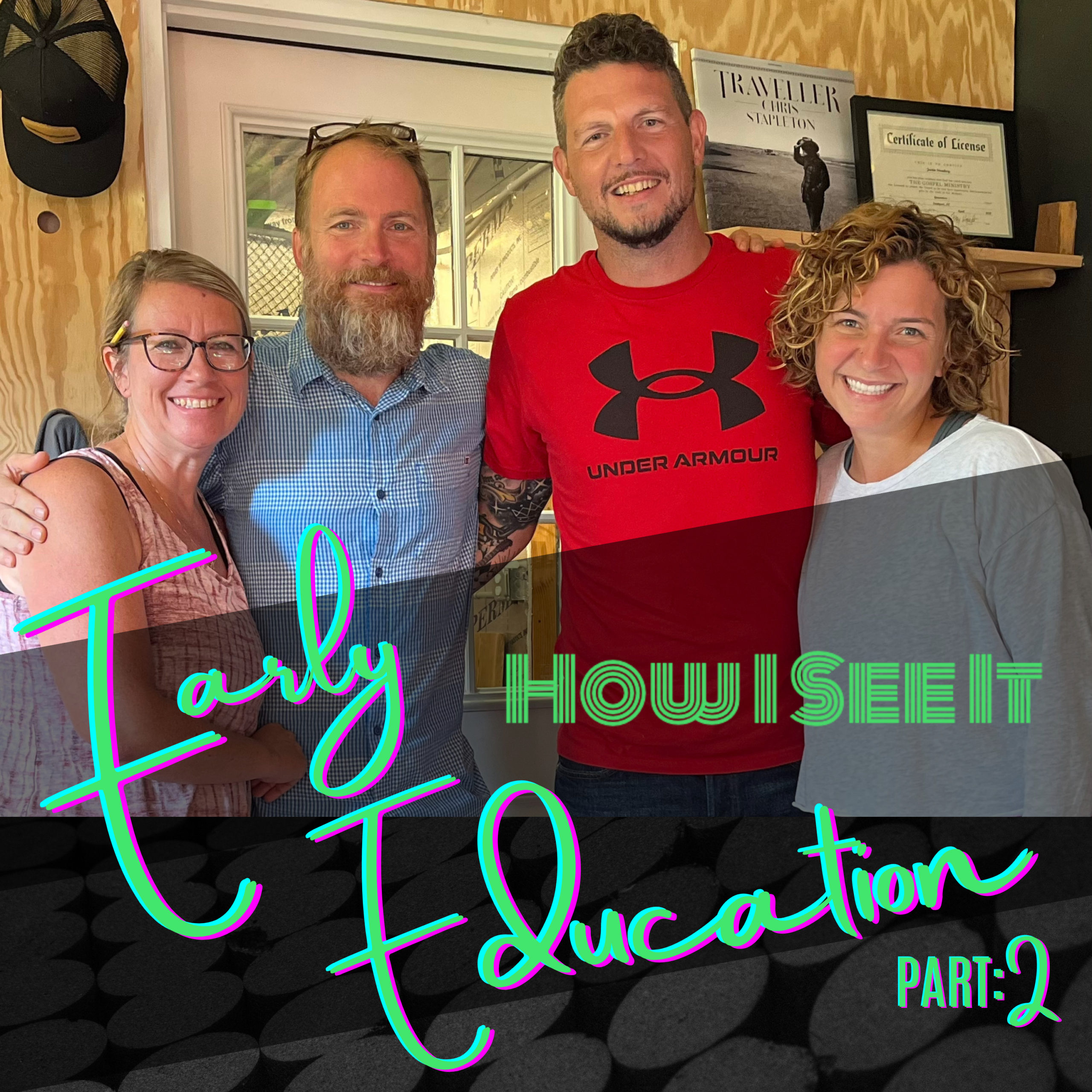
Welcome back for Part 2! Last week, we got started in our conversation with Chris Pratt, Mark’s wife and Kellie Perry. In this two-part episode, we’re discussing a topic these women are so passionate about, Early Education. We chat about the value of reading in the home, what aspects of education can be polarizing, and with all the educational offerings and opportunities, how do you choose the best option for your kids and your family, and In this 2nd part, we share how each of our educations shaped us.
Show Notes:
- Listen to Part 1
- HISI – Reading Resources (PDF)
- Some of our favorite books: reading-aloud, picture books, books for beginners, and elementary-aged kids, historical fiction, etc! We hope you enjoy this valuable resource!
Parent Resources:
— for Reading
— for Leadership
Show Transcript
0:01
[Music] we're officially beautiful back on so
0:08
yeah goad sorry before we start the Cockroach was right here like at the beginning and it was like crawling right
0:15
here and I was like what do I do huh she picked up her feet pretty close to your feet she picked up her feet pretty close
0:21
to your feet but I was like this is just happening and then it saw it crawl around and then I saw it come out from
0:26
under Mark's chair and I was just like I didn't see it till it was at the door over there I remained so calm I didn't
0:32
see it till it was right by Kelly's head it had already done all that at that point I was like well Mark thank you
0:39
rescuing yeah it's still right there but it's not going to move from that spot well no until someone does I got move
0:48
it well I have I keep looking at it just wondering if it's going to wiggle a little or something and it doesn't but
0:55
that's that's what it felt like to does your foot I just wiped it on he
1:00
definitely wiped it on your rug definitely did that you know that that's okay
1:07
considering you you save this from yeah exactly I figur you know it's part of the price you pay for you know
1:12
extermination it's a little bit of extermination juice exactly yes all
1:18
right all right we [Music]
1:24
ready welcome to how I see it with me Mark Pratt and and Justin Sternberg this
1:31
is a podcast that works to countercultural polarization through
1:37
thoughtful [Music] conversations so uh Mrs P sorry didn't
1:43
mean to do that clap right there for editing purposes there you go but um Miss beia in that process of
1:51
intergenerational learning I think it's I think it's interesting as you bring that up and how our culture has shifted
1:57
because I think even on the other end of that that you know we have a whole generation of people who are
2:03
uncomfortable with young people we separate you know the kogin comes to mind you know and even in our Even in
2:09
our I would say times in our church settings it's like babies crying is a
2:15
terrible thing you know uncomfortable well yeah some would see it as terrible
2:20
just because it's like interruptive yes what what's that kid doing in here
2:26
someone's not going to get the word of God in their heart because yes
2:33
which and I'm and here again this is how I see it exactly as I as I move my hands
2:39
through the air as I'm juggling well but you know it's that this is how I see it and I think you know we have missed out
2:46
I think it's a great point you bring up at times yeah well you bring up great points all the times but in that uh era
2:55
of you know okay kids go here adults go here junior high goes here and I think there is a part we're missing out on
3:02
there was a teacher a specific teacher at Southport Elementary when I was there who intentionally sought out
3:11
grandfather type men to come into her classroom once a week and would invest
3:16
in those boys in that classroom I mean and they were maybe veterans I mean they
3:21
had so much to offer but that did so much more than just give her a helping hand I mean it it it brought a new um um
3:30
experience to those boys it made that comfortability between the generations easier there wasn't this fear of from
3:37
the younger boys to okay this man I don't know who he is I mean it just developed a relationship I loved that
3:44
she did that and she did it with one one of the gentleman's passed away gentlemen passed away and she within a few months
3:51
found somebody else replaced he wasn't replaced found somebody else to come in
3:57
and serve that role and I just love and that's was one of our neighbors the guy across the street he was actually one of
4:03
her helpers and it was good for him too yeah right no doubt yeah gave him
4:08
purpose and gave him this opportunity to invest in the Next Generation yeah and I
4:14
think it even adds to that that storytelling I think we've lost some of that
4:19
storytelling dynamic in our culture as you know that inner generational Dynamic
4:25
has fallen away you know and yeah it's a it is a it is a loss it is a loss yeah
4:31
and I think too like our kids teaching our kids like the art of like good conversation and like like when someone
4:37
sitting in front of you especially someone who's older like they've got a lot of cool things that they've done
4:42
with their life you know so teaching our children to be like even if in their their youthfulness they might say like
4:50
so were you alive when there was no telephones you know like things like that like you know like maybe they're talking to Uncle Justin when they say
4:56
that like Uncle Justin you're pretty old tell us about when you were
5:02
anyway yeah like I but I feel like that's like for them to realize like man if I can have conversations with people
5:09
like I can learn so much too and definitely I mean I feel like they can always learn in any conversation but I
5:15
feel like especially with people that are older than them to like learn from their experience and hear about what
5:22
they did with their lives and like I feel like I missed out on that like in
5:27
the aspect of like my grandparents and things like I never took advantage of hearing more about their lives and like
5:35
what they did and like their their time in the service and just like the the way that life was when they grew up like I
5:41
wish I would have done that you know um and I didn't you know so I think teaching them that is I think a pretty
5:48
cool thing too for that emotional intelligence is something that's not given enough credit or enough focus and
5:55
uh makes me think of you know when I when I have a conversation with a young let's say middle schooler
6:02
or so I work with middle schoolers uh bless you
6:08
so I am always impressed I have a couple in my class who come to mine immediately
6:13
I'm always impressed I'll come and you know we'll do a little chatter and a couple of them will always say Miss spr
6:18
how was how was your day like when they reach out to me and they ask questions
6:26
instead of me always being the one to um offer or probe or question or whatever I
6:33
find that very um interesting and I wonder hm how did the parent Foster that
6:40
yes that um confidence maybe is it a confidence or is it just a care a
6:46
compassion for people it could be a lot of things a curiosity but I always think wow that is such a good quality they're
6:55
not intimidated by me being older you know they are comfortable and they are
7:00
caring and so that's that's maybe one of my gauges about kids or when I meet kids
7:05
or when I you know talk with kids it's like are they able to carry on a conversation back and forth yeah or is
7:12
it always one-sided it's funny you bring up emotional intelligence because once one of the
7:20
First episodes you seen another book no all right Mark the killer on the cord I
7:26
was thinking you can pull that up there you go if you need a little more more there you go thank you perfect um as one
7:32
of the First episodes we we recorded I made a joke kind of thing about
7:37
homeschoolers and their lack of emotional intelligence oh we know we know you made that all the homeschool
7:44
listeners are angry at me the funny thing about it was and I think this would be maybe a good transition to talk
7:52
about that's a yeah I would love to hear from each of you like how you were
7:57
schooled through High School BAS basically um but for me I was homeschooled and I lacked emotional
8:05
intelligence so when I told that story I was thinking of me entering sixth grade
8:10
in a Christian School from being homeschooled and how rough it was and like I was made fun of and I was the
8:16
nerd and I didn't know how to deal I didn't have the emotional intelligence that I then had to learn so my I I went
8:25
to it's very confusing I did homeschool for kindergart garden and my mom said I
8:31
can't do this and I don't blame her cuz I was I was a handful at that age and so for a year I didn't do anything so I did
8:37
home school kindergarten then nothing and then I went to a Christian School for first and second grade and third
8:44
grade and then they pulled us out no in in fourth grade they pulled us out we
8:49
did home school for fifth grade and then I went back to a Christian School from sixth grade all the way to the high
8:56
school right so wow yeah so I kind had a his a storied School career not really I
9:03
mean it was mostly a Christian School and a little bit of home school splashed in there yeah how about you mark what
9:11
was your story oh my story is uh is not nearly so complicated um I long story short I grew
9:18
up uh well my elementary school I could
9:23
walk there oh cool from and if if I missed the bus you know that was what I
9:29
had to do back in that day was you had to walk you know there's there's there's many stories that go along with that as
9:36
far as whether I did or whether I didn't walk seven days but um cu the fishing
9:42
hole between your house you could always count on a neighbor going by so you could always hop in you know and then
9:47
you know but yeah it was it was a different era but I there were many times I did have to walk yes and then I
9:54
went into into town as we called it you know for um Middle School whatever
10:01
Elementary School that kind of thing and then um I graduated from that same
10:06
public school you know and I think for me um education the the
10:14
education and learning wasn't something I did well early on and and I not a
10:20
passion topic for Mark well it is it is but it's something I yeah exactly and
10:26
you know my my poor brother and mother they were not sure that I was going to make it through Elementary School you
10:33
know just because of my grades and so forth at that point it's still kind of one of those uh family dynamics that I
10:41
wrestle with at times but yet I I have come to appreciate you know education
10:48
but I also recognize how as you you mentioned being a handful you know and I
10:54
respect you know you know as you share and I think of John early on it's like Ed ating boys and educating girls are is
11:03
quite often two separate things you know from a developmental standpoint and so I
11:08
really do appreciate you know the teachers who were able to you know decipher that
11:15
difference for me and I and I can and no offense to you ladies I think about you know I'm also thinking about you know
11:22
growing up the the men the the as you mentioned Jackson you know the the male
11:28
teachers that I had and how formative they were for me in creating a you know
11:34
a rigid structure that I needed you know I needed a little fear of God in Me at
11:39
times you know I'm not saying it's all about that but yet there is that part where no you can do this and you may
11:46
need to Buckle in a little more you know whereas you know other other people I
11:52
was a little more able to manipulate even if you will you know I can't do this you know and I can remember being
11:58
inspire ired or called out kind of you know as you were sharing you know
12:03
pursuing that upper level I can remember the teachers who called that out of me
12:09
you know in that early age so yeah that's kind of small and just just as an aside uh I think again Mark homeschooled
12:18
John for two years and I think in middle school years sixth and seventh grade I am so grateful I'm so grateful
12:27
not only for those don't start crying at Mark but uh the relationship that was
12:34
forged between Mark and John during those years prepared them for what was coming for the high school years I mean
12:40
that that relationship with Father and Son would not be what it is today
12:45
without those years and I'm not saying it's anything that we did I feel like God put his hand on our decisions and he
12:51
knew what was coming and he knew what we needed and um if I had been the homeschooler if I had been the one
12:57
educating we would have missed out so much on the relationship that John and Mark have so that's an aside that's an
13:05
side it's good so make that part of your school yeah Dads Dads get involved dads
13:11
absolutely so good yeah so the summarized marks basically it was I was a traditional path right one school
13:19
basically one school system top to bottom yep one or bad whatever that system was that's what you were in one
13:26
local school district very small community though everybody which I think has value again
13:32
that intergenerational Dynamic was very present in his education I say was
13:38
present in mind as well because our Christian School was um all the high school was sixth uh no seventh grade all
13:44
the way up to uh seniors right so we were all in the same quote unquote high school and we would interact in a lot of
13:51
ways and do plays together Sports together because you didn't have enough to have just a high school team usually
13:57
we would have some yeah so a lot of that intergen I mean that's not really intergenerational but even that blend I
14:04
felt like was healthy for my emotional intelligence but no doubt but I feel like Mark's experience is truly
14:10
intergenerational when I first met him and he could inter I mean a lot of his
14:15
friends were two generations ahead of him mhm and I was I was just wow this is
14:22
interesting old soul old soul and I and I think about it too even
14:27
in I was I had five in the elementary you know kindergarten through fourth
14:33
grade um my parents had social interaction with three out they
14:39
definitely knew all five but there was an ongoing social interaction between my
14:46
parents and three out of five of those teachers you know to where whether it was church or whether it was work
14:51
environment you know it's like that definitely had some inspiration you know cuz you knew it wasn't I could give get
14:59
away with it you know what I'm saying there was going to be a conversation you know and it wasn't like and your parents
15:04
knew knew them ethically and morally like they could trust your education to
15:09
those people true they knew them they knew their values so which is very different from our education public
15:16
education today yeah there's more stories that could go along with that but yes let's
15:23
get moving on Kelly your experience yes okay so for me I went to a private
15:30
school the same private school as Justin actually from kindergarten to I believe
15:35
it was fourth grade mom if you're listening maybe it was fifth um I can't
15:41
remember I think it was fourth grade though she'll tell us we put it in the show notes maybe yeah yes um but and
15:48
then we decided to go and homeschool at that point and the main reason we decided to do that was um my brother and
15:57
I at the time were just not being super challenged in the school setting that we were in and my mom just felt like she
16:03
was like Hey if you guys want to do this I think we should do this and um they did kind of I I feel like they let us
16:09
decide maybe they just made us think we were deciding I don't know it worked um and so so yeah at that point I was you
16:16
know Middle School age and so it was pretty self-driven my homeschooling
16:21
career um my mom was very involved and helpful but most of the learning I did
16:26
was pretty Independent Learning and then and we moved here to North Carolina and
16:31
when I was in n9th grade I started doing just taking college classes at the
16:37
community college they allow homeschool students to do that and it was free just
16:42
had to pay for books and so then when I graduated from high school I graduated with a 2-year degree associates in
16:48
Business Degree um and so that was a great experience for me I don't have any
16:54
I don't have any really big negatives there was a season where it was hard my mom was also my teacher and my mom we
17:01
had like a year that I was like I really and I I couldn't put words to it I think
17:07
it was maybe my seventh grade year but it was like I really didn't want her to be my teacher and my mom like it was too
17:12
it was too much it was too hard to have her telling me what to do on so many fronts in my life um and so we
17:18
definitely wrestled with that and but came out the other end better you know and so I think it was worth the the
17:26
wrestling and really it was just me being a little bit of a punk and so I
17:31
eventually got over it um and realized that my mom was just looking up for me
17:37
so so yeah so that was my experience I appreciate even that if I may too and I think as a as a form of encouragement
17:44
recognizing that there will be Seasons too yes you know in this educational learning process I think you know as you
17:51
mentioned kids are older but you know there's Seasons that go along with that and as parents not giving up in that
17:57
process you know M cuz our kids aren't going to be well they'll be full of energy most of their lives but you know
18:03
there's not going to always be that hyperactive type movement of the younger
18:08
you know and it it does settle into something you know and Direction and that just just as an encouragement you
18:14
know from that you know thinking of your personal experience yeah there will be that punk stage
18:21
but there's there's there's hope they grow out of it you know and you know
18:26
each stage I think it's helpful if you can just remember that yes this is a season and being able to stay steadfast
18:33
in that through yes for sure yeah and as a homeschool parent realizing too that it is really hard that you are the
18:40
parent and the teacher cuz I I even feel that sometimes like it's just there's a
18:46
lot of Direction happening you know and so to give yourself Grace in that and also to give your child Grace and
18:52
realize like you're expecting a lot from them you know and that's okay and that's good and healthy but it also is a lot
18:59
you know so um yeah yeah what about you Chris so I am a product of public
19:06
education um kindergarten through 12th grade um my early year actually all the
19:13
way up through 11th grade so first grade through 11th grade I was in a small
19:19
District of an Upstate New York and very
19:25
um very not cutting edge necessarily but they uh they did things well Excellence
19:31
it was a school of excellence it was a a district of excellence and I can remember in second grade um my teacher
19:38
uh would challenge us and we learned sign language that year because you know there were a group of us that you know
19:45
felt like we needed a little more Challenge and so she instead of doing the spelling words normal you're going to do them in sign language and so I
19:51
felt that there was that creativity all the way up through that that was a wonderful District to grow up in um it
19:57
was small enough that I was given leadership opportunities and um so yeah a lot of great things
20:05
happened and then um my junior year my dad lost his job um so we moved uh to
20:15
like a back back to where my grandparents were an hour and a half away to a much larger district and so I
20:21
was at in my senior year I was thrown into this huge school um not a great
20:27
experience I could tell stories about that as well but um so I feel like if I had grown up
20:34
in that that large District all of those other years I would have been a completely different person I wouldn't
20:41
have had the leadership opportunities everything would have been kind of right by the book or the state curriculum
20:47
which you know is questionable sometimes um but again with God's Providence and
20:54
sovereignty I am just grateful for that experience of the where he play placed me in my formative years educationally
21:01
speaking wonderful teachers I didn't have the same experience with Mark in the sense that it was a larger District
21:06
so my parents didn't know my teachers personally um but very positive I think it's
21:14
interesting um and one of the reasons I wanted to get your each person's background is just to see like how
21:20
different are educational experiences can be and yet still be in the same room
21:26
having the same conversation and think that's really important for parents to
21:31
understand which is one of the premises you started with both of you which is it's about doing what's best for your
21:37
family right and so and there's going to be and then Mark you mentioned Seasons it's not a one siiz fits all
21:45
situation for every kid for every family for every season and I think it's important to do the the work to figure
21:52
out what makes sense in whatever season you're in for whatever child you're dealing with and also know that it's not
22:00
about that school is not going to make or break your child it also has a lot to
22:05
do with you as a parent has a lot to do with the cultural influences you put in front of them it has a lot to do with
22:11
books it has a lot to do with so much more and also not every High School is
22:17
created equal right like not every school district as you mentioned not every private Christian School whatever
22:23
is going to hold to the same principles or whatever not every homeo school is
22:29
going to be run the same way some people have the passion for some don't and their kids do languish because we
22:34
thought it would be good it turns out it wasn't right um I just think that journey is so important to understand
22:41
too um in education but yeah what do you guys think about that when you said that
22:47
it make it made me think of the colors like okay let's say public school is green but within the green color
22:56
family there are how many shades of green right I think that's the same way with private education with
23:02
homeschooling it's not a one one size and one one model there's so many
23:09
different factors um so my first teaching experience was in a private
23:14
school well my very first teaching experience actually was in a bilingual inter city school which was fabulous I
23:20
loved every minute of it um but again these all these experiences make you think of Education like bilingual
23:28
education versus you know only learn in English and so and then um my first job out of
23:34
college that was my student teaching experience was actually a Christian School in Buffalo in the area of Buffalo
23:41
it was super difficult and the reason was parents sent their kids they paid
23:47
the money for you to to educate M and I felt like U there was a whole lot of
23:52
pressure in that private school Christian School environment on the teacher to be the bulk of of the the
23:59
child's education and um it was just very difficult for me um now here I am
24:06
however many years later teaching again in a Christian School I can see it as a parent I can see it as um you know I
24:13
have friends that send their children to this to the school I'm at now and um so there is I think an element of we're
24:20
paying money for you to do our job or do a good job or um so live up to our
24:27
expectations maybe but there's also the idea that um maybe private school isn't
24:35
a sense move trying to remove their student from the culture of the public
24:41
school experience so at our school we have it's a Christian school but we have
24:47
students who are not religious or Christian at all which is another really interesting Dynamic right so they're in
24:54
the our school because they their parents did not want them in public education so I feel like again if we're looking at
25:01
colors we've got this Christian School blue but there's such a spectrum of
25:06
what's happening within that Christian School environment which is a challenge as a teacher you know teaching Bible to
25:14
churchy kids who whove grown up in the church and then to a student who is
25:19
there and has never even opened the Bible for himself so
25:24
um so anyway that my my that was my first uh experienced teaching and then
25:30
um moved into public education I've never done the charter school oh I do have my opinions about
25:37
that um only because I've interviewed done interviews with Charter Schools as
25:43
a teacher coming into North Carolina and it wasn't necessarily positive um but I know a lot of parents
25:50
who love their Charter School mhm so um again variety of shades of color within
25:57
that one term of Charter School sure I love what you're saying too about the the parents
26:04
setting expectations on the school to prod that was one of the questions I was
26:09
going to have is should we as parents be expecting these institutions assuming
26:15
not homeschooling right you're sending them off to get educated one way or another high schooler should we be
26:20
expecting what should we be expecting of them should we expecting them to instill character for instance should we be
26:27
expecting them to produce some sort of result uh I don't you know like what are
26:32
what are healthy expectations for Education institutions versus like
26:39
you've already called out like expecting them to do your job is not good but what does that mean like what what is a
26:45
healthy expectation for a school and when do you know okay they're not meeting that and it should I should look
26:51
at something different does that make sense what I'm saying because we do need to have some sort of expectations what
26:57
are they right well what is the teacher's job I think that's the the the question what is a teacher's
27:03
job now if you ask that question today versus 20 years ago it's a completely different answer and from a public
27:10
educator standpoint the public educator today is expected to do way too much I
27:16
me they are they are not the person who should be feeding the child or making sure the child has clothes or making
27:23
sure the child has whatever but I think unfortunately in public education the
27:29
teacher is more than a teacher and the expectation just keeps getting piled on
27:35
to the public educator um as far as you mean it's
27:40
almost like the the teacher is more of a social worker now looking for resources is that I would say yes yeah um to be
27:49
the emotional um support for that child yeah um I think I think in some cases
27:59
not in all cases in some cases that teacher is the person of
28:07
stability unfortunately only for a year but you know there's there's situations
28:13
that the teacher needs to be that stability and Embraces it but at the same time it's emotionally draining to
28:20
have a classroom of 25 or 30 kids and trying to meet all of those needs now we
28:25
all know about maso's hierarchy we we all yes we do but remind us who have May
28:33
got's you got to have certain things met before you can get to education right so if they're not fed if they're not
28:39
emotionally safe yes all of these things need to be met before you can teach a child so if a teacher's coming into a
28:46
situation knows that those things aren't happening there's no use trying to teach him well you try your best and then the
28:53
the really bad part is at the end of the year you're going to test these kids and you your success as a teacher based on that score well this kid didn't even
29:00
come with food so how am I supposed to teach this child if they're not well fed
29:06
but you're going to you're going to make sure that my salary or my bonuses are
29:12
going to be tied to my scores you know there's a there's so many things with public education but um it's painful
29:19
what is the expectation uh what is the expectation
29:24
of a public educator I think is just to provide a safe environment for your child now they're doing their best I'm I give
29:31
the educator the benefit of the doubt they're doing their best with the environment they have with 25 kids that
29:38
have all different needs um yeah you're giving them an almost impossible
29:44
situation to be successful with every 20 each one of those 25 kids think about
29:50
think about your own kids I mean how you as a parent are trying to meet their individual needs well let let me
29:55
challenge that not because I disagree I completely agree but how did they do in the one room School houses where they
30:02
also had 25 kids but they were their needs were even more varied than I mean
30:08
I think maso's hierarchy is that is that the thing we all know uh probably but I'd love to
30:16
know I think the pressures weren't there then I think the the community was more involved then I don't think the teacher
30:23
was expected to be all things to every student and I think there was an inner
30:28
connectedness between the students yeah like okay if you're in seventh grade you're gonna come over here and help this first grader and I think there was
30:35
a more of a community feel rather than the teacher do it all but I that's just a that's just a guess on my part that's
30:42
great that I thought that was my immediate thought how they do it and I think those are almost obvious easy
30:48
answers but it's it's a good thing to think about you also talking about parent uh they the uh teachers given the
30:54
responsibility of kind of that emotional support and and even in some cases their
30:59
needs and yet we've stripped them of any uh ability to
31:05
discipline and like how do you do that like you're expected to emotionally support this kid but you can't
31:11
discipline them short of saying calling the parent and their parents saying well
31:17
you got to fix that you're the teacher right like well no uh I've I've seen
31:22
that in my daughter's when she was in Middle School she did home school this last year she might go back to high school school this fall but we basically
31:31
pulled her out of the middle school because there wasn't the ability we we could see there wasn't the ability on
31:37
the teachers and even principal side to do the discipline that we that we felt
31:42
we needed to see to be able to trust them to educate our child cuz there was other children in in the environment
31:48
that were talking about death threat type stuff and it's like what are you going to do about it well we've called
31:55
the parents it's like okay that's it that's all we got you know and I'm not
32:00
trying to cut them short or whatever I don't know what all goes on behind the scenes I just know that the ability to
32:05
discipline has been shrinking every you know decade while the expectations of what we want from them to accomplish has
32:12
been increasing well that's a that's a that's a culture-wide
32:18
um reaction against Authority yeah I mean I don't think it's just in the school system we see it across the board
32:26
like a Authority is not Authority MH we don't have a respect for authority and
32:32
then even within the the school district um the the child is right like the
32:39
parent is going to back his child whether they're right or wrong that's what I was going to say I feel like now
32:44
not only is that the way the kids feel but that's also the way the parents feel like the parent comes into the situation
32:51
not giving the educator the benefit of the doubt but coming in saying how dare
32:56
you do this to my perfect child who never does anything wrong ever and this
33:01
is your problem and you will not you you know and and again the Educators hands are tied and so it it's really tricky
33:11
isn't it and so you're unfortunately we are losing many many many fabulous
33:16
Educators out of public education yeah cuz why would you do it yeah it's emotionally exhausting every day to walk
33:23
into that situation and never know you're going to be supported never know that this ision you know that your
33:29
education your experience is not enough and that you're going to be questioned
33:35
it's it's not worth it yeah because I've I've been there I've I've come out of
33:40
public education and to put your family right marked put your family through the stress of coming home every day with all
33:47
of that because your your brain never shuts off the students are always in the back of your mind you're lesson and then
33:52
not you're talking about lesson planning like every day you you've got to have a full lesson ready to go I mean when do
34:01
you do that before you walk into the door before you walk in the door and it has to be quality after you walk out of the room and then you walk out with
34:08
papers to grade and you know professional development that you need to finish for the district and the job
34:15
never ends and so there's also there's probably like six jobs within a teacher's job but you're willing to have
34:22
you have to perform all of them so kudos to the public Educators because it is
34:28
not easy and I think it's getting more and more difficult
34:33
yeah Justin's tired just thinking about it yeah worn out emotionally worn out by
34:40
hearing about their emotional uh yeah struggles well cool any other thoughts
34:45
you guys have about Early
34:52
Education I think we covered it all we did it I'm going to give you another um show notes oh great um there's a great
35:00
teacher Tim Elmore we used him at um some parent educating um events that we
35:07
had at Generations Church excellent teaching and it's not necessarily Christian teaching it's like
35:13
generational this is what this generation is dealing with as parents this is the best way to you know work
35:19
with your your Gen X or whatever um he's just has a lot of great resources
35:24
awesome yeah no doubt yeah we're going to have a bunch of good resources in the show notes we'll include a list of some
35:30
of our favorite books all four of us I think that'd be fun we'll also include uh link to the reading list thing that
35:37
Kelly mentioned earlier what was it called it's a book um it's honey for a child's heart honey for a child's heart
35:43
you how can you forget that come on a title like that you just can't forget it really who doesn't want honey CH yeah
35:50
sticks yes who doesn't want honey for Clear uh and then Tim Elmore whatever
35:56
that link is love to include that and um yeah and and then you were also mentioning there are reading tools to
36:02
figure out and assess your child yeah that would be great to link so um yeah a lot of good stuff we'll have for people
36:09
yeah yeah I think the big idea is parents you have power you have influence you have control um and you're your child's best
36:17
teacher absolutely always no matter where they are or what they're doing with their education you yes you are the best one
36:25
embrace it yeah and yeah tangent or not really but just
36:30
think about even my kids in school and like the stuff they go through or you're
36:35
right like they bring home questions they bring home stuff drama with kids or whatever and like I could say what's
36:42
going on I shouldn't have to deal with this because it's you know the school is supposed to be figuring out how to educate my CH children and make sure
36:49
they have good social interactions and all that but no I feel like we me at
36:54
homeschooled this year we had to do way less educating for Mia this year because she
37:01
did homeschool and she did she did the curriculum as Liberty online she handled that almost didn't need a thing from us
37:09
where the previous year was like we were helping not just with homework and kind of that stuff but like a lot of just
37:15
mental stuff right like these kids are this is happening or the teacher is
37:20
talking to us like this or and and I'm not saying I'm not complaining I'm
37:26
saying what you said KY which is we still have to be part of their life we still have to educate in even no matter
37:33
what education system they in it is our role to to educate them and I was
37:39
thinking about books earlier you talking about certain books will have certain Concepts in them and I was thinking
37:45
about like some books even have attitudinal problems right like there's nothing wrong with the material but like
37:51
that's not how I want my kids to think it's okay to talk to adults for instance y but like
37:58
we have to continue to educate them so that they know when they come across those types of materials or whatever
38:04
that they come back to us to say hey what about this or they know like oh yeah kids aren't supposed to talk to their parents like that this kid is rude
38:11
and they know that reading the material on their own in their room or whatever because we have to continue to educate
38:17
and continue to be involved and be proactive um and also Justin I know you're Stevie Steven cubby right you're
38:25
a fan so beginning with the end in mind I'm thinking about me a situation what do you want her to be
38:31
like as an adult right like do you want her to be able to process all of these
38:37
difficult situations um as helicopter parents
38:44
sometimes um there's this this feel that we don't we want to make everything perfect and we want to get all the the
38:53
failure out of their life we want to make sure that they have the best influences is we want to make sure that
38:58
you know everything is just right but if you fast forward 10 or 15
39:04
years is that what you really want for your child who is now an adult you want
39:09
them to be able to process those things you want them to know failure and that they it's it's just a little bump in the
39:14
road it's not like the end of the world you know so there were times in in my
39:19
children's experience that I wanted to make sure they got the right teacher I wanted to control it yeah see
39:27
and so I had to step back there were moments I steep back God I'm just going to let you choose and the teacher was
39:33
not the teacher I would have chosen but what did they learn that year other than the content of the classroom they
39:38
learned a whole lot more than I could have orchestrated yeah and so I feel like there's we could go into to
39:43
helicopter parenting that could be a whole another episode um but anyway that's another that's so good yeah 10
39:51
years from now 15 years what do you want your child what kind of adult do you want them to be yeah and are you
39:56
preparing them well for that that's good yeah that'll preach yes I love it Chris yeah I love
40:05
it and and as I'm I'm thinking about you know even our journey with Chris that kind of thing um I was I was mindful
40:13
again of how you know God is in that process and you know and yes there will be fears and yet you know there is this
40:21
opportunity to to go forward to be strong courageous to make the choices you need to make for your family and it
40:28
may not be the cookie cutter Dynamic that fits for you know the other people
40:34
in your social group you may be that out you may be that parent y you know that
40:39
we all think about it's like oh well you know the brats they're a little sketchy you know or that that but still you know
40:46
being able to do what you feel led to do as your child's parent I think that's
40:53
you know that that and and as Chris was saying and I think it was more so early on you know being able to build the
41:00
foundation that our kids needed because I and I'll admit I think um as a Christian I was a jerk sometimes because
41:08
I thought you know here's this public educator you know and they're trying to
41:14
indoctrinate my child and so I didn't handle that well at certain times
41:19
certain junctures when we'd come you know evolutionary versus creation you know type Dynamics as we've dis you know
41:26
podcast but I also recognized too it was a learning for me to be able to recognize there is a curriculum that
41:34
sometimes teachers have to teach according to you know and it's not that they can't add to it but yet if they add
41:40
it just lengthens the school year you know and they have so much that they have to teach that they can't
41:46
necessarily add everything else and for me it was a learning to be able to say
41:52
okay ultimately my child needs to learn how to process these these difficult
41:57
Dynamics and like you were saying we bring it home and we're able to talk about it and say well this is how I see
42:03
it based on my perspective and and what the Bible says this is what the Bible says about this yeah what do you think
42:10
you know and teaching them how to think not what to think how to think because it's easy to just say this is what you
42:17
think like this is what you're supposed to think but they need to know how like how do I take in information that might
42:23
not align with what I believe how do I take that in and process it and then
42:28
come out the other end like with better understanding like and everything like how do you how do you think how do you
42:35
grow like that's how they're going to grow and that's the antithesis to helicopter parenting I think is be I
42:40
mean it really is but but you have to teach them that because no matter how
42:46
helicopter you are stuff will leak into their Vision right that you don't think
42:52
they're seeing or experiencing and they have to know how to think about that and sometimes how to think about that is I
42:59
don't know what to think about that and they come to you and you want to teach them that's a valuable practice right like and I don't have all the answers
43:05
either but we can have a conversation right yeah but to think that you can
43:11
protect them you can put them in a bubble and keep them from all the things you don't want them to experience is unrealistic you cannot prevent all so
43:19
you have to teach them to think like how to think and how to process those things
43:25
and tell them warn them like you're going to experience things I don't think that you should experience and I won't know you are but I want to you to come
43:32
back to me and have those conversations and don't just depend on your perfect parenting and your perfect bubble and
43:37
your perfect Christian School and your per and I'm I'm talking about my own parents and my own upbring it's like you
43:42
thought you protected us from all this stuff and yet stuff still leaks in because we're in the world right like
43:48
it's part of our life you can't yeah yes yeah so many good thoughts
43:57
any any closing thoughts ladies no just thank you for this opportunity it's been
44:02
good conversation it's been our pleasure agreed I think it's been a great insight
44:09
into how we see it this is how we see [Music]
44:17
it hey thank you for listening to our podcast if you like how I see it please
44:24
do all the things that podcasts tell you to do subscribe rate review follow us uh and
44:31
or talk nicely about us on social media if you want to reach out the email is us
44:38
how I it.click yep I said do click as in c c k please
44:48
tell your friends about this show and we'll see you on the next one
44:54
[Music]