
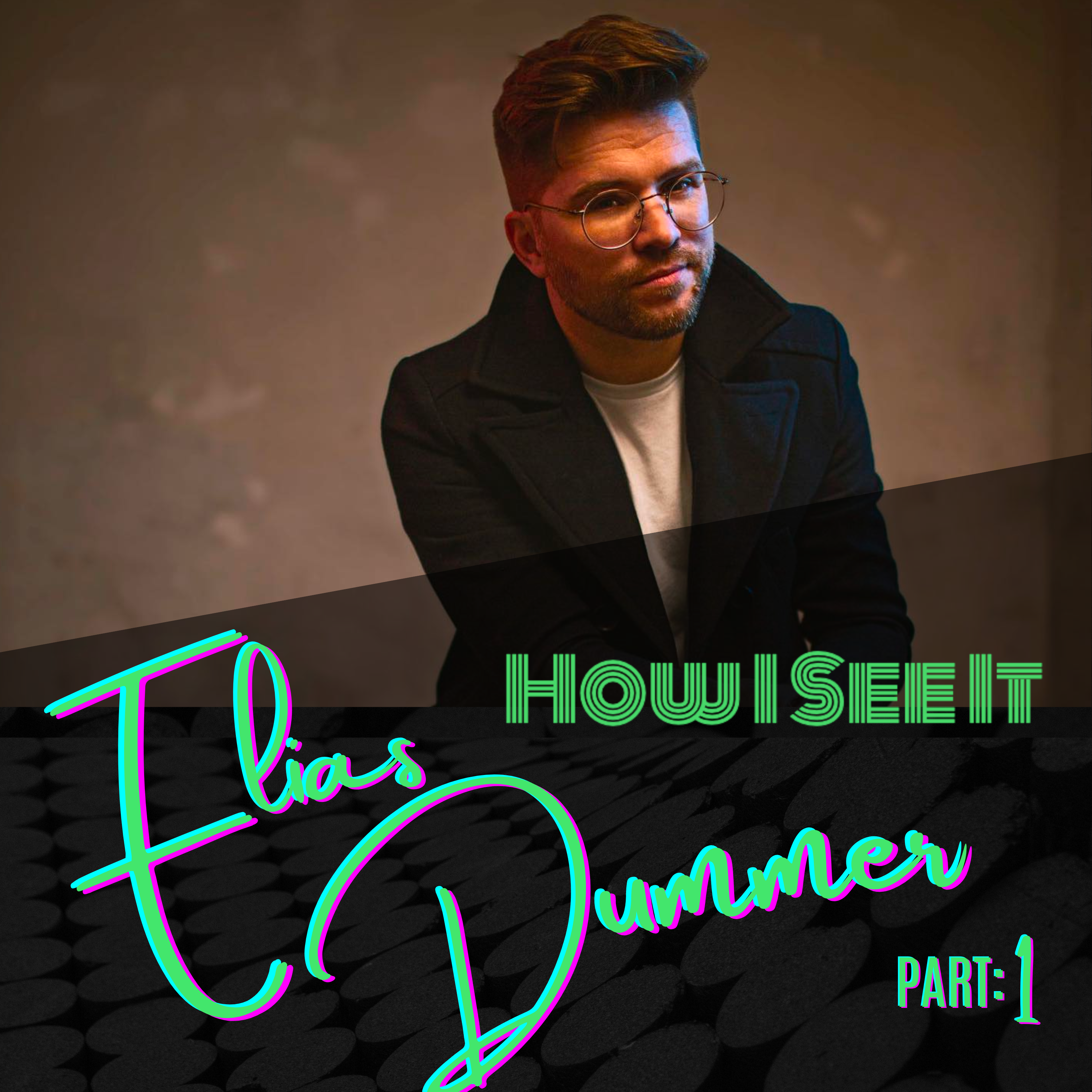
We get a unique opportunity to interview Elias Dummer (a Canadian musician, songwriter, and writer well-known for co-founding the contemporary Christian band the City Harmonic) about all things worship, his new album (The Work, Vol 2), favorite memories and songs from The City Harmonic days, (Manifesto anyone?!?!), and many other things.
We got to enjoy listening as Elias dove into theological depths and nerded out on some awesome scientific findings regarding congregational singing.
We hope you enjoy the episode, and we also highly recommend you check out his new album, The Work, Vol 2.
Listen to part 2 of this interview.
Show Notes:
- Check out Part 2
- Elias on:
- New Album: The Work, Vol 2
- See the full interview on YouTube: https://www.youtube.com/watch?v=39yBWjPzOKQ&ab_channel=HowISeeItPodcast
Show Transcript
Elias:
Um , before you ask, uh it is dumber. Fair enough.
Mark:
Fair enough.
Justin:
I was gonna say Mark and I are dads.
Elias:
Yeah.
Justin:
So we’re gonna try really hard not to do our dad jokes. But that was one where like he’s heard every Single one
Elias:
first.
Mark:
Exactly. That’s what we realize. It’s like but and then at that point if it’s not original, why bother?
Elias:
Right.
Justin:
Well, because we’re dads, that’s why bother.
Mark:
Yeah, but e even then you think your joke is original. You know, that’s the that’s yeah, you think you’re the only one that’s ever thought of it that way before.
Elias:
Ever every dad is the first dad to pun that hard.
Mark:
That’s right.
Elias:
Yeah, yeah.
Mark:
Welcome to How I See It with me Mark Pratt and
Justin:
Justin Sternberg. This is a podcast that works to counter cultural polarization through thoughtful conversations. So again, thank you for being on here. It is Elias, right?
Elias:
It is.
Justin:
And Dumber.
Elias:
Yes, Elias Dummer. Unfortunately and unfortunately.
Justin:
Yeah. Well, I mean it makes for a lot of opportunities for jokes when you introduce yourself, right?
Elias:
That’s right. Yeah, no one forgets my last name, that’s for sure.
Mark:
So what what is the most redundant joke you hear that you just kind of say, aha, that’s funny. where your name is concerned. What’s the most redundant one?
Elias:
Well the the problem is that my parents uh I often go by Eli.
Mark:
Okay.
Elias:
My parents called me Eli forever But apparently, I was God bless them, they were not right enough to notice that they added is to my first name.
Mark:
Okay.
Justin:
Then
Elias:
what? There’s no Yeah, you don’t even need to you don’t even need a punchline. It is the punchline.
Mark:
There you go.
Justin:
Do you have siblings?
Elias:
I I do. I have two brothers and uh an adopted sister.
Justin:
Are they older? Okay. So they weren’t saying you were dumber than one of your other siblings at least.
Elias:
No, no, no, no. Well and and and i it’s funny like I used to always joke that people would say they’d get made fun of a lot uh in in in school and I was like yes once per year. We grew up in a rough and tumble part of town, so you know how it goes. But um that’s not really my actual way of doing life, but it’s a it’s a decent quip. But nobody uh Yeah, no, people jumped to the V or all the things. I mean I get I’ve had it all. But the name itself just s serves it on a silver platter.
Mark:
Yeah, there you go.
Justin:
That is pretty great. I I admit I didn’t think of that or that that’s pretty great. Eli is.
Mark:
Yeah, I hadn’t thought about that perspective, but yeah.
Elias:
Well i it People don’t know you go by Eli, I guess they don’t think about it, but you know, when you’re introduced to Z Lai as a kid and you go, Oh shoot
Mark:
Well and of course on this end we spent a lot of time saying, Okay, how do we get to this point? ‘Cause I’m sure you’ve heard it a hundred times. It’s like, yes. It is dumber just for the clarification. But yes.
Elias:
Yeah. Well, and my family’s very English too, so you start like English Irish Scotch you start calling us Dumay and it’s a whole there’s war behind us.
Justin:
Oh yeah that’s true. It is exactly what it is yeah. That’s funny Well
Elias:
I was having a conversation with uh a UK publication not too long ago, which was pretty funny because Sarah Ferguson, if you remember the the Weight Watchers commercials and all of that, she’s from Dumber England.
Mark:
Oh wow.
Elias:
This whole this whole thing, those of us with this ridiculous name are apparently quite proud of the Weight Watchers Princess. The whole thing.
Mark:
That’s another claim to fame.
Elias:
Yeah, there we go.
Justin:
Did you know that prior?
Elias:
Prior to what having my name no.
Justin:
No, no, no, no. About Sarah Ferguson and that whole thing. Or what did you figure that out?
Elias:
I at some point, I don’t know, when we were teenager or something, my dad was like, so it turns out Fergie is from and it was before the other Fergie came along. So that was it.
Justin:
Yeah.
Mark:
Neat.
Justin:
Not quite yeah. It’s not quite as c of a claim to fame of the the new Fergie. I mean that
Elias:
No, no, it would be much cooler if that Fergie was summer England uh last.
Justin:
Alright, well speaking of cool, I’d love to talk about your new album and just a few things about it. Um First of all, it’s really cool that you kinda You raised the money. I mean you I think you produced it, you did hm everything, right? I mean to the
Elias:
Kind of, yeah. Well th m but actually less so than on my first solo record. So City Harmonics of course like signed to record label and we did self-produce the f the EP with manifesto and everything. Um Through a barter deal, which is a whole story. And then um and then the rest were all record label records, and then uh my deal finished. So Typically when you’re signed to a record label, you either get dropped or you finish your deal or you never f finish your deal and you’re in there for life. We were we had the luck of having f being able to finish our deal, a couple records were cooped and I was able to go indie without it being terribly dramatic. So when the band retired, I went indie and that was it. I mean I’ve and so we uh did kind of a crowdfunding campaign for both volume one and volume two
Justin:
Yeah.
Elias:
But volume two was whereas volume one was a lot more like scratching all the itches that I never got to scratch in a band. Uh volume two was a little more like, okay, I’m a little more comfortable with what I want to do now. And a big part of that was working with friends. So I did co-produce Richard with Brent Milligan, who’s a legend. played bass on Jesus Freak and he like produced David Crowder Band and Torin Wells and Colony House and all these rat projects. Um and then there’s a lot of like collaborations on this record as well. So it’s yeah it’s very communal, even though I kind of I did have a vision for it and a sense of what I wanted to do. played a heavy hand and all of it, it’s still very much like doing cool things with my friends, you know?
Justin:
I was yeah, I was gonna ask you about that because you know a lot of songs have, you know, bylines and uh different artists and I also noticed uh well JJ Heller she I think was in manifesto right in that video that’s right not Minute
Elias:
No, no, it’s great. She did a version of Holy Wedding Day with us years ago. We met years and years ago. Then when they moved to Nashville, we like helped them move in and hung out. So we were kind of like family friends. I get together Particularly with her husband Dave, you know, pretty Rick Bully. And and so it yeah, we we love them. And so it’s just one of those things where it’s like, hey We need to do a thing. Let’s call up our pals. And it thankfully wasn’t much more complicated than that. We just sorted out the details and made music. It was fun.
Mark:
Yeah
Justin:
That’s really cool. Yeah. I I I really liked seeing all the different artists you had on there. And I think you even had your son on at one point, right? Didn’t he read a scripture?
Elias:
No, my kids refused.
Mark:
Oh wow.
Elias:
Yeah, that is a voiceover from Fiverr. It is my my kids my kids full-blown said no. I tried.
Mark:
Oh wow. They didn’t want to be part of that friend’s group, huh?
Elias:
No, they they I mean they’re you know we love we love each other.
Mark:
No, no, I hear ya.
Elias:
But but yeah, no my kids did not want to be on a record.
Justin:
I’m sorry I ow I’m sorry I outed them though.
Elias:
Okay. My my daughter actually sang in a couple things on the first record as a sports. But uh no, they’re they’re they’re all very talented and and Awesome people, but I did not want to read Deuteronomy on my own.
Mark:
There you go. Didn’t want that pressure at that moment. No, that’s all right.
Justin:
What ages are your kids
Elias:
So my youngest is six and my oldest is fifteen and we’ve got five. So it’s nice you know every every year and a half to two years through there. Um so we’re kind of Pretty got a good spread. You know, we got a kid who’s got a full-time job and a kid who Roblox like gets his job. So
Mark:
there you go.
Justin:
Isn’t it though?
Elias:
It’s kind of it. I mean one day, maybe.
Mark:
So speaking of your kids and that kind of thing and your your passion, where did that come from for you?
Elias:
Music or
Mark:
music and your family, you know, growing up in your family, you know, that kind of thing, as as you shared a little bit, you know, you kind of grew up in this construction world and so it’s like You know, there’s a automatically gonna be this part of us that says, Okay, yeah, music is fine, but how are you gonna make a living type stuff? You know, then
Elias:
Yeah, yeah, yeah. Well, so my family, um my dad’s like a architectural engineer of sorts. He does like infrared heating stuff for big buildings.
Mark:
Sure.
Elias:
But every Saturday he would be working on the house and that sort of thing. I was honestly never really part of it. We my family life growing up was like You know, I come from a broken home, my parents divorced, and it got real complicated for a while. Um and so when my wife my wife and I got married pretty young We have my aunt and uncle who uh had five kids and this great life. They’d lived in Africa for years as missionaries. They came back and and he was a contractor when he came back. And so that was all pretty great. Um for me like kind of home reno stuff is really just recreational and a break for the rest of my life. But but you know, I think having a tight-knit family has been important to us from the get-go, honestly partly because My family wasn’t that. I have a my brother my brother I have a I have a brother who has autism and uh you know I have Uh my my been mental health stuff and my family’s history. And so it’s just, you know, uh uh we’re a couple generations away from the from family disasters, let’s put it that way. So So so I think for us it’s been important to sort of as people who want to follow Jesus and all we do, try the best we can at least to to create a community unto ourselves and have that be something good for the community. And I don’t know that we’re nailing it, but it’s certainly been important to us all along.
Mark:
Sure.
Elias:
And I think in a lot of ways that’s what music is. I mean that’s you’re you’re creating And that’s it’s been a good bonding tool for me and my kids. My daughter sings, my son plays drums and piano.
Justin:
So cool.
Elias:
It’s just been fun to connect that way. So when this house is done, it will include a recording studio where which they’ll all be able to mess around in. And I don’t know, I never had that, so that’s pretty wild.
Justin:
Yeah. That ‘s so cool. Yeah.
Mark:
So for you, where did that when do you remember that passion coming for you personally, even before your own personal family, you know, your you and your wife kind of how do how was that developed? And as Jesus walked, as you walked with Jesus, how was that developed for you personally?
Elias:
Yeah, I mean I grew up in the church, so I think it was more There was a a a youth pastor in alive who called us to kind of really see uh things as more than I suppose cultural Christianity. Canada was uh pretty post-Christian my entire life. There was never a point in my life where going to church was a socially convenient, normal thing to do. So I’m I’m I’m from urban Canada, so you can imagine it’s you know halfway to Europe and uh there’s there’s there’s quite a lot with that so The benefit of that is you grow up going to church, at least at the time, you grow up going to church, and for the most part, the people who are darkening the doors of that church mean to be there. Hmm.
Mark:
Sure.
Elias:
So by by high school I was I had been started leading worship when I was thirteen, so music and faith were always pretty closely connected for me and And to be honest, there was, you know, some uh my relationship with that youth pastor became complicated over the years. And We could talk about that at Science is actually a song on the record that uh with Citizens with Zach, who of course was part of uh Mars Hill Seattle. Um so there’s
Justin:
speaking of podcasts.
Elias:
Yeah, speaking of podcasts. Yeah, so we really connected over some pretty similar experiences we had in that regard. But nevertheless, you the good with the bad, that guy, you know, created a great community and a great group of uh a culture for calling each other into Living the way of Jesus and and knowing and being I mean we it was the nineties and Toronto Airport was right around the corner, so you couldn’t really avoid so much of what was happening in terms of w again with the good and the bad renewal and all of the things that were happening in the church in our area. So it was a it was a really fascinating time growing up and I think it’s kind of forever left an imprint on us.
Mark:
No Yeah.
Justin:
That’s fascinating.
Mark:
Yeah. When you don’t see church as a social opportunity, it it it definitely has a different viewpoint for you growing up the way you did. Oh
Elias:
totally. And it’s not that that doesn’t exist in at all, of course. It’s just it’s certainly not the norm. So like having having been to church in the Bible belt in the last 10 years when we were in Nashville.
Mark:
Yeah.
Elias:
Um it is really, really different Really really different.
Mark:
That’s that’s kind of where I was come from. It’s like it’s gotta be how what what did you notice specifically in that era
Elias:
Well, no one ever if you meet somebody in Canada, no one says what church do you go to. It’s not coming up, you know?
Mark:
Yeah.
Elias:
Um to the point where like it’s And I’ve actually thought this, not to get all weird about it, but I’ve actually thought this sort of about the way we participate in culture as Christians, because like I there’s it interestingly in Canada there’s a bit more of like indifference almost rather rather than animosity towards religion and spirituality and Christianity. And so it’s it’s a at least after like the the everyday person you meet in the street. Right. It’s not like It’s not like they’re anti-Christian. They’re just like, oh, cute. Yeah. And then that’s the kind of the that’s the end of the conversation unless something comes up or life gets involved, you know, which it often does. But but I I you know in in the Bible belt there’s a lot more of kind of a what church do you go to, what denomination are you from, what’s your grandpa do?
Justin:
Yeah.
Elias:
You know, all that stuff that just isn’t baked in. So like You know, there’s nobody going to church in Canada to find their next real estate listing. Like that’s not a that’s not a thing. You know, I mean maybe it is, but not Not with any substantial quantity.
Mark:
Right.
Elias:
You know? The pop goes to church for the three months leading up to his election and
Justin:
all the
Elias:
you know.
Mark:
Yeah
Justin:
That’s fascinating. I uh you you’re talking about kind of some of the more I don’t know cultural things and I feel like a big part of this album has a lot to do with kind of some cultural shifts but also I feel like they’re um and this could just be me reading into it reading myself into the album Sure. Well I’ve d so I guess what I’m saying is what you want, I think, as an artist is you want people to hear themselves in the album and like kind of embrace it as if Did you write that for me kind of thing?
Elias:
Right, right.
Justin:
Um, so I’m sure there’s some of that going on, but I also feel like maybe it it is what’s happening on your end. I don’t know. But for me a big yeah. A big part of like a shift Over the years of just learning what’s important, what is meaningful, what actually matters to God versus doesn’t. Um I think about watching like I went to a concert of of uh the City Harmonic was there’s News Boys concert, City Harmonic was a very good thing.
Elias:
Oh yeah, so ten years ago almost.
Justin:
Yes. And watching you guys do manifesto, it was amazing. I mean it’s certainly one of my top three concert experiences. I loved it. I loved it. Just so you know. I loved it. Yeah. And uh the a few people from our church went including our worship leader, we ended up doing manifesto at church many times after that.
Elias:
Thank you, by the way.
Justin:
Oh man. Yeah.
Elias:
Yeah
Justin:
And uh my wife does the keys and she nails the part and uh yeah. I wish she was here, I’d have her play it for you and We in we would indulge ourselves and make you endure it like yeah, people play this for y’all time. Uh anyway, the point is S watching those YouTube videos, remembering that experience and kind of hearing the lyrics of what you’re saying, like do we need another song? Like, you know, like there’s a progression it seems like in your faith of I thought what mattered was this. And now I know what matters is this. That’s about progression that I’ve been going through and again maybe reading into it, but I’m curious your thoughts.
Elias:
So I’ll I’ll probably pop the bubble a little bit. And say that uh the City Harmonic was born from an ecumenical missions movement. So the idea of being involved in uh social good However you wanna however you want to construe that, the idea of the church uh being predominantly about the good of the city and and worshiping God through our entire lives holistically That was that was part of our DNA the entire time. So sn what I think I’ve wrestled with is what role we play. I mean there was certainly we were in our twenties when that late twenties, but in our twenties when that band kind of took off. Um and uh so there was a little bit of like vigor and naivety, I think, potentially around um how much we as a band could accomplish in terms of bringing churches together around the states to the point where we lost our shirts in twenty fifteen on a tour designed to do exactly that. We went around and we organized pastoral roundtables and we were hosting, you know, we were hosting uh Lutherans and Catholics and Pentecostals at the same thing and then trying to get them to take communion like idiots. But like it was
Justin:
They don’t call you dumber for nothing.
Elias:
Exactly, right? Yeah. And it’s it’s funny because we lost that was great. That was well deserved too. We lost a lot of money doing it and don’t regret it in the slightest.
Justin:
Oh, cool.
Elias:
So there was that was sort of baked into what we were doing. However, um I think I’ve I’ve always had a lot of uh I c I guess meta-level hope, but I still do, meta-level hope in the church, and and by that I mean the global Christian church doing Jesus well. I think it’s just increasingly the case, um or increasingly apparent that the disconnect between what we do as public Christianity And the doing of faith as a worship leader, as a guy who writes songs, as a thinker, as a nerd, that that gap is widening, not shrinking. And I think that’s that’s difficult and frustrating and difficult my own life because it’s so disenchanting. So I’m seeing so many people not disenchanting in terms of my relationship to Jesus. That’s kind of what this record is about.
Justin:
Yeah.
Elias:
But disenchanting and seeing So many people I love and know so crushed by that gap that that they feel like the only option they have is to completely turn off their brain or to completely deconstruct And and I and I’m I’m kind of like that we need to stop that game because like there are for for me the disentangling, if you will, of a belief here or there that when you’re in youth group you’re told this is what the Bible teaches. And then you read a few church history books. And you go, hey, wait, that’s that’s like 80 years old. This this thing that you’re telling me is a non-negotiable is a in the grand scheme of Christian history, a baby belief. And and there’s there’s so many of those that you kind of and and for us in the City Harmonic, the simple truth is That all was happening 18 years ago. So by the time the city harmonic was already a band, we were already fish out of water in many of the circles that we were in. Um As obsessed with Jesus as ever in my life at this point and then, uh, but but always sort of figuring out, hey, how do we navigate this? by being faithful in our everyday? How do we navigate this by loving people well and being kind? And how do we our my first attempt with you know our effort in the City Harmonic was maybe if we unite And make clear that we can unite missionally around the person of Jesus and the and the story, message of Jesus, not just in terms of saving souls, but in terms of saving neighborhoods. If we can do this, well, maybe that will and and i I I you know prior to twenty sixteen I think that it was going We we had a lot of confidence that that was the case. And then by the time the band ended, it was clear that things were getting very divided and cultured and that sort of thing. And I think that’s all escalated all of this to the point where now I’m kind of like, hey, you know what? Don’t have to throw out the baby with the bathwater.
Justin:
Yeah.
Mark:
True.
Elias:
Yeah, I mean like you’ve got Amos I’m I’m I remain haunted and people argue about the interpretation of this, but I remain haunted by Amos V. I mean there’s this sense in which We have
Justin:
to Oh aren’t we all haunted by Eamon’s five?
Elias:
But I mean like this is this away with the noise of your festival like away with all of these things but like justice and righteousness like this is kind of like sense of like, hey, you can do church all you want, but if church doesn’t lead to the bottom line of your neighborhood being you know, a better place to live.
Justin:
Yeah.
Mark:
Yes. Yes.
Justin:
And you’re
Elias:
and you’re wasting my time and yours. And this is, you know, the Lord speaking prophetically through Amos.
Justin:
Yeah.
Elias:
And so you you know, you have true religion and James, you’ve got all this stuff. And so I think there is this the business of doing church. And something I’ve kind of tried to offset. I mean I’ve been a tent maker the whole time. Um and in that I I own a marketing agency and a few small businesses in order for me to do music and ministry as earnestly as I can. You know, I tried my best to take money off the table because of my own personality, not the role. And so I, you know, we’re we’re not rolling in it, but we have a at least we’re able to participate in this. by conviction and that that’s been something I’ve kind of tried to try to foster to the best of my ability. Um but but yeah all of that to say like I I I think for me There there really is the like doing of religion and then the way of Jesus. It’s not not religion, it is religion, but it’s doing that in every sphere of life is what we’re called to, plain and simple.
Justin:
Yeah, it’s good.
Mark:
That authenticity that basically goes through whatever my tent making role might be, whatever my Yes, whatever my service might be to the kingdom, as you as we may say. Yeah.
Elias:
Totally.
Mark:
Yeah. No, I appreciate that.
Justin:
Also, while you’re talking too is uh It’s so a big purpose behind our podcast here and is this idea of taking two polarized concepts and the problem We we’ve recognized from the very very beginning is we’re not very polarized, so it can only go so far. But that is oh the video froze.
Mark:
It was that drink of water we figured on this end.
Elias:
That’s right. So you were saying what were you saying, right?
Mark:
Um we were we were talking about authenticity And then Justin was basically sharing the concept of the podcast is you know we’re not that polar opposite in some ways, but yet our desire is to create this um
Justin:
room for conversation.
Mark:
Yeah.
Justin:
Right. Right. And so I think
Elias:
are you guys recording by the way? I don’t see it in
Justin:
Zoom. I’m recording via OBS.
Elias:
Okay, sweet.
Justin:
Thank you for having me.
Mark:
But yeah, thank you.
Justin:
Appreciate it.
Mark:
We’ve been known to record a lot of things and not get it down. So that’s our uh
Justin:
record.
Mark:
Yes.
Elias:
Yeah,
Justin:
yeah, big reason that for the podcast is we really want to talk start having conversations with people who Or with take this idea where you’re over there and you belong over there and I belong over here and we throw things back and forth at each other and that applies across politics that applies across denominations that applies with the theological beliefs, whether you believe in predestination, God’s sovereignty versus You know, like you know what I’m saying, like there’s so many things and culturally
Mark:
The facets, if you will.
Justin:
Yeah.
Mark:
The little things that we know about people that keep us from having the larger conversation.
Elias:
Totally. Well, and and it’s it’s it’s hard because in some ways our brains work against us in this regard, right? Like there’s There’s a lot, I mean, I’m I’m a big nerd, so I’m I’ve you know uh I’m not a scientist, but neuroscience has been a long interest of mine. Uh sociology and behavioral economics, both interests of mine. So it’s sort of one of those things where it’s like You learn enough about how people choose to do things and what they choose to do in life, and you go, oh darn, like we really the deck is stacked against us in a sense. Um because you know, uh There’s this uh marketing guru named Seth Godin. I don’t know if you’ve heard him. He he has this phrase that kind of boils down so much human behavior. And it’s people like us do things like this. And so like at the end of the day, you can pretty accurately predict what a group of people will do if you know what their us is and you know what they think that us is supposed to do.
Mark:
Sure.
Elias:
And it’s it’s kind of fascinating in a sense. Like I feel like, at least in theory, once upon a time, that us was, hey, we’re Christians belonging to the church and belonging to Jesus. And that’s what That’s how we define our us. So when when we approach politics, when we approach municipal issues, when we approach our neighbor, we’re approaching as I’m a Christian and a Christian is like. And it feels like that, I mean Kuiper was talking about this a hundred years ago, but it feels like that first us, that first I tribal first principle, right? Has sort of been replaced by other things, whether it’s politics or personal identity or some other some other allegiance. And Christianity’s in there, but it’s in there in the soup as opposed to in there as the bowl. And and I I think that that’s I think that’s really heartbreaking. And I feel like it’s a it’s a total miss in the church for us to not be really calling people to say, hey, first and foremost , the way of life revealed in the person of Jesus and empowered by the Spirit and in Christ. is the is the first principle from which we go out into the world. And and so like even when we were doing unity work, trying to get people from very different denominations to work together. We found centering on the creeds, like the simplest Christian list, to at least kind of get the like where do we differ off the table? It’s like, hey, look, if this is what the church has always said is the list. We’re gonna use that list so that we can set this topic aside and go do work together.
Justin:
Yeah.
Elias:
And that’s what Manifesto was actually. That it was reads.
Justin:
Yeah.
Mark:
Yeah.
Justin:
Yeah. So good. You I mean y you in one of your songs you say we’re looking for a prophet to teach you, a shepherd to lead you, a king to believe in, but isn’t that Jesus? And I mean it’s kinda speaking to what you’re saying. Well we’re always We always
Mark:
looking towards
Justin:
as humans we tend to do this.
Elias:
Mm-hmm.
Justin:
And we we take our eyes off of the true king and the true kingdom and we start to replace it with proxies, right? Like Oh, Jesus Republican, right? Or Baptist. And this is now Jesus. And that and and but this is easier to see, this is easier to wrap my mind around. This is easier to have an allegiance to And but we still call it the kingdom, right?
Elias:
Oh totally. Well and I think behind that too there’s a there’s uh uh not to get all heady about it, but there’s there’s the healthy degree in which I feel like in Western Christianity, and I I only speak it that way because I don’t know present-day Eastern Christianity well enough, but Within within our context, it feels like there’s a dualism that has been taken for granted where we think of the gospel, we think of the Christian faith and the implications of the Christian faith as being primarily spiritual and having little or nothing to do with the real life.
Justin:
Right.
Mark:
Sure.
Justin:
Yes.
Elias:
So the the implications of knowing Jesus and having the Holy Spirit are a bunch of esoteric spiritual exercises and or experiences and that it’s primarily about escaping And I just I don’t see that in the Bible. I don’t see that in in the Christian story up to up to you know the last up until maybe 150 years ago. And so there is this sense of which like, no, I The Jewish people were a deeply holistic people. They weren’t primarily concerned about the afterlife. They didn’t even barely have a theory of the afterlife. So most of the Old Testament, they’re all over the place in terms of what happens after you die. So it seems clear to me at least that that wasn’t the primary concern of Jesus as he called his disciples. And you know, so much of the New Testament is about how do you live? Now how do you live?
Justin:
Yeah.
Elias:
And that And and I think we’ve kind of lost a lot of that as the main thrust of what is happening. And and so No, with if that’s the case, then I think it kind of makes sense that people are going to turn to other things to say, well, if that doesn’t if Christianity doesn’t answer how I should really live, because there are reasons I shouldn’t take this teaching or that teaching seriously, then I’m gonna look to something else to tell me how I do live because I do have to go to work. I do have to go to the grocery store and I do have to So we kind of need to redeem a little bit of that like this is a way. This is the the early churches, early Christians were called the the way We’re following in the footsteps of Jesus. The red letters in the Sermon on the Mount are instructive.
Justin:
Yeah.
Elias:
You know, and and and really take that to heart. Um, but I, you know, I f it feels a little bit like a voice in the wilderness in our current political
Justin:
to your point about all of that. Um We’re we’re pretty involved. I’ve been involved in a program called Celebrate Recovery for fourteen, fifteen years and Mark’s been involved for a few years with me and We love it and a big reason I love it so much is because it’s basically saying this problem of addiction there is a solution and it’s Jesus Right? And it’s basically take it’s it’s what you’re saying, it’s taking all of these scriptural truths and saying, now apply it for real here and apply it for real here and apply it for real here. and then holding you accountable to that and living in the reality of what it is to be a Jesus follower who struggles. Because all Jesus followers struggle. You know what I mean? And uh there’s the Jesus’ teachings are full of how to live as a broken person but un but trying to follow him, you know? And it’s not hard to find tools in the Bible for addiction for whatever it is. Um so it’s it ‘s it’s all it’s been a passion of mine for a long time because it’s kind of putting boots to the ground in terms of what Jesus said versus practical living things out. Does that make sense
Elias:
Oh, totally. Well, and I think I think with that, like you mentioned the song Kyrie Elie Son, It’s Mercy We Need. So I wrote that with Zach Boland of Citizens, and so Citizens Futures on the song. And of course, that was in response both to my own experiences and his uh in Mars Hill with with Mark Driscoll. So we wrote that song before the Rise and Fall of Mars Hill podcast even came out. Um My experience was had nothing to do with cameras and podcasts, but my youth pastor had similar personality traits. And and the reality is looking back, there is good and bad in that that experience and relationship. I don’t want to throw him under the bus. It’s not that simple. Um, but but the reason that the song the hy the uh the the kind of pretense of the song is it’s mercy we need is realizing that I on some level like personality worship in and up if we throw all of our eggs in the basket of a human being, that human being will fail us. There’s exactly one who hasn’t. And and and you know, I think there’s and I had the gift of having that man in my life saying all along, don’t follow me, follow me as I follow Jesus, quoting Paul. course.
Mark:
Sure.
Elias:
So there there is this sense in which like uh we do need that we we need the social interaction. We need that trust to be meaningful. Like if if in Celebrate Recovery everyone around you failed all of the time and no one actually accomplished what they were trying to do, it wouldn’t be a very effective ministry. Right?
Justin:
Right.
Elias:
And so it’s the same thing. Like, yes, we fail, but we are constantly pulling each other forward because we exist in a community. while redirecting. And that those that that’s a kind of a two-sided thing that we have to do. Um and I think we we so love personality worship as people. We’re drawn to that. And and and so that I think there’s a reason that at the heart of it all, God is sent Jesus essentially calls us to mercy and kindness. in the you know the story of the Good Samaritan, in breaking it all down to the Shema and loving God and neighbor, basically the same. There’s this sort of this sort of like, hey Well, what does kindness mean? Kindness is treating of like kind, right? So there’s this this sort of like, hey, at the heart of the Christian at mess Christian message. is a love that surpasses our failures and surpasses our dividing lines and surpasses our boundaries. And that includes not holding someone up. in a a place that they can’t possibly live up to. Sure.
Mark:
And it’s interesting as you think about that. I think that’s what the Sermon on the Mount was. You have been taught, you know, the Pharisees have demonstrated. You know, but I’m showing you, I’m telling you, this is what the kingdom is about. You know? And I think
Elias:
Yeah, totally
Mark:
And I think that’s what we’re talking about. You know, so so much of what we believe or tend to think about, we have been taught by someone. You know, who we’ve held in esteem, whether it’s our parents, whether it’s a worship leader, whether it’s a youth pastor, those kind of things. And it is about that relearning. based on, you know, Jesus wanting or deserving even and being able to extend that mercy to others and to ourselves to say, okay, yeah, this is what you’ve learned. This is what you’ve been taught. So it makes perfect sense that you’re operating in this way.
Justin:
Because people like
Elias:
that’s exactly it.
Mark:
Yeah.
Justin:
People like us do things like that. Right.
Mark:
Yes.
Elias:
Yes. And I mean Christianity is two thousand years old and as diverse as every nation on the planet. And I’m talking about like Basic Orthodox Christianity, not even talking about, you know, all of the various splinter cults that might break off. I mean, like within the confines of genuine, authentic Christian faith, we have a lot of history and a lot of diversity. And so I think, you know, just because someone failed me horribly, and they did, And just because someone bordered on abuse, and I I don’t know, but you know, it it certainly gets close. And and so like just because those things happen doesn’t mean that Jesus isn’t who he says he is. It means that it means that there’s I’ve got work to do in understanding and unearthing in a sense through history and these ancient writers and current writers and going, what is it? What is what’s the what’s the diamond in the center of all of this coal that just keeps shining through no matter what? And and that that’s you know we’ve talked about this record as like stubbornly hopeful. Um Because it’s kind that’s kind of it. Like it’s not a deconstruction record, so to speak. Because if if if you wanted to describe my spiritual life, that would have happened twenty years ago, and it did, in a sense. Trying to figure out what’s this or what’s that in faith. That’s a journey I’m I’m still on. Um, but it certainly is a like, hey, I’ve been I’ve been as frustrated and angry, and it’s like Lament and hope in the same place. It’s it we started this record, Brent and I, when we were first talking about it. I was like, I really feel like if I make anything Right now. First of all, it was approached as an album, so I appreciated that you listened to it as such. But um it was meant to be a journey from start to finish, um, lyrically, musically, all of it. And so it was sort of this sense in like I think I feel like it’d be really hard to put out a worship record right now or any record that’s designed to help people pray prayers. through music and have it not be at least bittersweet.
Justin:
Yeah.
Elias:
I I don’t know how someone living in North America or the West can look at our life as the church right now and not be like, well, this is complicated. I mean, we’ve got a lot of people angry about a lot of things and for good reasons. And so I think it w as those of us helping people process that through music and prayer, I just can’t imagine having made a record that was, you know. rainbow and sunshines and high flights and unicorns. I just don’t I don’t see it.
Mark:
Yeah.
Justin:
Yeah. Yeah. And uh They those albums certainly exist, but they’re kind of disjointed, right? From
Elias:
it certainly feels like it. But it makes sense if it makes sense if your Christianity’s totally divorced from your real life.
Justin:
Yeah
Elias:
That’s the place where you go to happy that’s where you go to escape the real world instead.
Mark:
Yeah
Justin:
,
Elias:
you do that, you do that, and then you walk into your everyday life going rainbows and unicorns, rainbows and unicorns. It’s like, well
Justin:
Can you please rainbow? It doesn’t seem
Elias:
Like kids already did, I’m sure.
Justin:
I love uh, you know, because you’re you’re saying without you it’s smoke and mirrors only noise, but but And that’s where that hope comes in. And when I when I listen to that song and but so much of the album, there’s just so many moments where it’s like I’m with you in that pain, but there’s always a but because he doesn’t need us culturally to be something. He’s going to be what he’s going to be, with or without us So when he does show up, it doesn’t matter how wrong we’re doing it. Right? And so there’s something about that for me that’s recognized I’ll never do it perfect. Because I I yeah, me and my wife, we lead worship at CR, and so there’s so many days where I get in my way, in God’s way, and I’m like, you know what? I can’t Fix that. A hundred percent. I can work at it and I can repent. Ultimately what I really need is I need you to do what you did last week. Because that wasn’t me you know what I mean you know what I mean? And so but and there’s so many moments where it’s he shows up and you go, Ha! Well that’s not me, so I hope you guys are enjoying this. I am, you know. And th there’s that hope that comes when he does what he does.
Elias:
So I love that.
Justin:
Balance
Elias:
Yeah, well, it’s it’s I think so much of real human life is lived in that tension. It’s in the space in between hurt and brokenness and difficulty and all of that. And the ideal good that we know is there. Like we we see through a glass darkly, right? But I think there’s I think there’s really something to be said for the beauty of the smallness of what you’re talking about in CR.
Justin:
Yeah.
Elias:
Like and and and and there’s there’s I think part of why we are so drawn to the idea of mega movements is because they cost us nothing. Hmm. So easy to wave a flag of belonging to something and maybe give my five percent or two percent or whatever the statistics are. And be like, oh, I’m I’m doing this thing here without having to worry about what Fred next door is doing or whether I’m kind whether I’m kind to him regardless of his choices in life. You know, whether I show him love.
Justin:
Yeah.
Elias:
You know, I mean that’s that’s one of the shocking things about the Sermon on the Mount. I mean, Jesus is sitting there telling an occupied people. An occupied people, like violently occupied, to love their enemy and carry their bag an extra mile. Now there are layers to that. That’s a nuanced and complicated instruction. But it is also a simple instruction. The simple part of it doesn’t change. And so and I think we’ve gotten to the point where we’ve turned our various isms into just another flag that we wave because it’s so much easier than doing it. But you go to CR and you’re part of this small thing and you’re looking that person in the face. I mean I remember I used to run an alpha group at uh years and years ago I was sort of running it with with with my friend um at a uh a shelter like a rehab
Justin:
Oh cool.
Elias:
We were doing alpha and leading worship in that same way with guys who were sharing just heartbreaking stories of the cards real life had dealt them. And uh it’s funny, you know, a few years later I’m on a tour bus tour in the world and fly into so and so and and I love all of that. I’m not saying it isn’t a blast, because there is.
Mark:
Yeah, sure.
Elias:
But like you you I don’t know if it’s age or what, but you go and you’re like both of those things are good, but one of these things changes the world in 300 years.
Justin:
Yeah.
Elias:
And and and another one of them seems to kind of break every ten.
Justin:
See, this is what I’m talking about. What I hear in your album is what you’re saying. Like you you toured the world, you played in fl in front of whatever stadiums, auditoriums, in There was a certain amount of impact and uh significance to that that I think you probably experienced. I would hope. Right? Where it’s like this is amazing. Yeah.
Elias:
I feel like it mattered. I don’t I don’t but it did.
Justin:
Right. At the same time, you get, you know, further on along in your life you’ve and you’ve had enough one-on-one counseling sessions or you know, uh you heard someone’s story come from a broken place and you’re like, this thing matters more than all of that.
Elias:
Or heck, I’ve got to go to therapy myself. I mean, there’s all of that. Like there’s there’s enough real life as you get on, and my kids are teenagers, and so My own failings and I don’t mean my kids’ failings, I mean my own failings as a parent stare me in the face every day where they They’re like, hey, you’re you’re not all you want to crack be cracked up to be. And I’m like, that’s totally fair.
Justin:
Yeah.
Elias:
You know? So I think there’s I think there’s there’s something As you get older where you just go, you know, I it’s I’m I’m as earnest as I ever was. I think probably may well actually probably more earnest. I’m I have, you know I’m I’m I’m less afraid of losing influence or, you know, something like that because I’m just like, you know, at the end of the day, I You need to know who your friends are, you need to know who your people are, you need to know what’s important to you and try your darndest to do it empowered by the spirit. Um and I I you know, I I would love I would love uh at this point I’m hoping from my kids’ adulthood them thinking, you know what, dad wasn’t perfect, but he gave it a solid go.
Justin:
Yeah, same.
Mark:
Yeah, no doubt. No doubt.
Justin:
That would be okay by me. That’s a successful run.
Mark:
Yes.
Justin:
Yeah, I feel the same way.
Elias:
Yeah.
Justin:
I uh it’s interesting. I love hearing a perspective from someone like you who has toured and done those things and con can c has kinda come back to this place of, you know what probably matters more than that stadium room. God could have done something in any one of those stadiums and and and that is imp you know, like of course But recognizing that I could walk across the street and talk to my neighbor in the three hundred years from now that could have a bigger impact Right, is what you’re saying.
Elias:
Yeah. Well like last night, my wife and I are walking. Uh so this is not to say I’m some kind of hero. Far from it. Um my wife was the hero in this scenario. Hamilton is a rough city, so we’re walking you know, from our parking spot to the theater where we went to see a a musical. Um and two homeless guys, younger guy, both Some on something. And the younger guy’s just beating the snot out of the older guy. And my wife my wife jumps in and says, Hey, what are you guys doing? It’s okay, you gotta stop. And I I I’m jumping in the same way. It dawned on me. So the guy comes right up to us, is talking, and we called the police shortly afterwards to get it’s just this like little like I could have not done any of that. I could have I could have done more than I did. I could have done a lot less. But it’s like those little choices, yeah, we encounter them all of the time.
Justin:
Right.
Elias:
All of the time. And that has nothing at all to do with, you know my guitar amp.
Justin:
Yeah.
Elias:
Like it’s nothing nothing to do with it. That’s not to say that’s not meaningful.
Justin:
Right.
Elias:
Those those moments together That’s that sort of fuels the rest of it, but it isn’t the point at all. And so that you kind of get this like Jesus is saying, hey, the crowds aren’t evil. It’s not like the cr and we have a tendency to kind of go black or white in this. Oh
Mark:
sure.
Elias:
It’s all about small groups and home church. Well, problem is the early church went to the temple too. So you kind of have this history doesn’t agree with it’s all about home church. And then you have this kind of it’s all about the big meeting. Well that doesn’t work either because all of the instructions we have are about lived life. And so you have this kind of Tension. I think this this and we want it to be a very simple answer. And God gives us Jesus gives us that. He says The first principle of Christianity is love the Lord your God in every domain in your life, and just like that, love your neighbor.
Mark:
Sure
Elias:
And that’s that’s it. It’s there. It isn’t win at a political issue. It isn’t power at all costs. In fact, if anything, it looks like the opposite of power at all costs. But like, you know, it’s kind of this pursue these two things. And I think there’s a role to be played in podcasts and concerts and albums and all of that. Um but for the for the for the longest time I I concern myself in music with what sort of music it was I was writing. Is it congregational worship music or not? And that sort of thing. And I think on this record I’ve become a little more comfortable with the idea that um There’s a little bit of that on the record. There’s probably three or four songs that would make great worship songs at church. Um, but a lot of what I do is for the rest of the week. Mm-hmm. Sure. my following good and bad out loud in in the hopes of giving somebody else the ability to whether it’s on their run or their morning walk or whatever you know, to to do the same thing and have language that they didn’t have to do that. That’s kind of what we do as as worship writers, you know. So this this record does have a bit more of like an artistic and and I don’t know, vulnerable flair to it than Worship Records can, and certainly than I’ve been. able to produce at different times. So yeah.
Mark:
No, I really and I like you say I’m definitely not uh steeped in worship nearly as much as uh Justin is
Justin:
deep
Mark:
and that’s a compliment, you know, to be a to have that being so much of your life. You know, you you’re immersed in it to a degree and uh and that’s a great thing, but it was uh it was definitely uh For me, you know, from the outside listening to your album, I appreciated the way. I guess my wife and I, whenever we go somewhere to worship, you know, corporately. You know, it’s a we just appreciate so much when there is a vocabulary that draws us, you know, towards Christ and who God is versus the me worship style that you know repeats what I am and how God can help me versus how me focusing on God and and drawing close to him transforms me. And you know and I and I think so much of that is that difference between entertainment and worship You know, and I think that becomes, you know, there again, there’s that tension.
Elias:
It is in that and I was just gonna that’s what I was gonna say, is like I think The reality is though that’s attention. So what o what often worship leaders will do is make that into a hard and fast rule.
Mark:
Yeah.
Elias:
Oh, I can’t write a song with with personal pronouns in it. It all has to be talking to God. The problem is The vast majority of Christian history use the Psalter as the worship book of the ages. Sure. And you know, it were we to make that a hard and fast rule. We only talk to God never about ourselves. We don’t celebrate anything God has done for us. We only celebrate who God is, you’d fail the Bible.
Mark:
Yeah.
Elias:
So so if if the songbook of the Bible can’t pass that rule, it’s a good reminder. Sure.
Mark:
No doubt.
Elias:
And and worship leaders are so often drawn to the simplest version of it so they can move on.
Mark:
Sure.
Elias:
And and I think that’s something that I don’t think following Jesus allows us to do very easily is is move on to the next thing we can be victorious over. Doesn’t
Justin:
yeah.
Elias:
Doesn’t it look it you know what Eugene Peterson called it a A long walk in the same direction, right? So it’s that kind of like so much of Christian faith is showing up again. Like CR.
Mark:
Sure.
Elias:
It’s showing up again.
Justin:
Yeah.
Elias:
And being like, hey, today
Justin:
Uh
Elias:
this this is what it means for me to be faithful of this. And so that’s part of one of the dilemmas in kind of I I don’t want to call I’m not calling anyone in particular out, but this s this occasional tendency to like almost like a toxic positivity in worship. Like the only songs we sing. Are victorious over all of our problems and Jim those walls fell down and says like yeah sometimes the walls just still there
Justin:
But there’s also this other side where it’s all about the drama and how hard life is and yeah, but and Jesus can get you through, but it’s still f it’s focused on the difficult. You saw it’s kind of the opposite of what you’re saying, focused on Positivity right there. There’s also a focus on negativity and exactly.
Elias:
Exactly.
Justin:
Those draw me in more than the positivity ones. Those tie into my struggle with mental health and different things and those can And and it is attention, it is a balance because sometimes that’s what I need to hear. I need someone to meet me where I am, right?
Elias:
And same with you somewhere. Yep.
Justin:
Yeah They both they both are needed. I think this is a conversation I had recently with my wife too about denominations in different churches and it and I think you and I talked about too is There’s a reason there’s a Baptist church and the you know our church and and and this other Baptist church all within five miles and it’s it’s It’s because God said it was supposed to be that way. Because that’s what they needed. That that in his sovereignty and his wisdom chose and I think that’s true with music. I think that’s true with so many things And one of the things we’ve d figured out with polarization in these conversations is that’s the easy part is saying, oh, I’m black or I’m white and problem solving like you said now I can move on to the next problem. When it’s As believers, like you said, if we’re doing number one and number two right, love God, love people oftentimes those things take us away from that, you know, because
Elias:
Yeah, well and there’s a couple there’s a couple of fascinating s things I think with that first There’s a few studies called Dumber’s Number, which has come out, which is talking about how much the brain’s capacity for community size. You remember this?
Mark:
No, no.
Elias:
So so this is a study that’s been debated, and the thing is everyone comes to a number, and that number is never a thousand. Let’s just put it that way. So Dunbar’s first theory was 125.
Justin:
Okay.
Elias:
So the brain basically has capacity for around 125 you know, we can recover community connectors. And of that Uh we have fifteen that dictate ninety percent of our life and time, and of that we have like three to five, which dictate ninety percent of that. So it’s It’s like you have a small group of people, which are relationships you can count on one hand, who are the real people, then you have about fifteen people that are your wider circle, and then you have about 125 people. And no matter what else you’re doing That’s about what you have in terms of meaningful relationships. And that kind of rings true for most people, I think. There’s sort of this sense of like, yeah, I guess there might be contextual relationships. There might be, but if someone at the end of their life is for that, you know Very few funerals have a thousand people at them. And so like there’s this kind of bonded thing. And I think like We tend to think larger than that while still doing small in that sense, right? Like we still do that 125 people thing. So it it’s no surprise that humans organize and divide. The question is, when you have that thing happening, is there a layer above it which we recognize as bonding us and binding us together? And so that’s like, yes, you have the Methodist Church, you have the Baptist Church, you have the Catholic Church, you have whatever Anglican church down the road. The question is, do we all say and we have Jesus in common? And and approach each other as brothers and sisters on mission together as a result of that. And I think that I think that’s a really important facet that I was I’m grateful to have grown up in a city where that was the norm. And that’s a very rare thing. And I’ll be honest today it feels like it’s a struggle to keep in Hamilton It it it feels different than it did. It’s hitting less hard than it did, um, as far as I can tell. But it’s still that desire is still there because we’ve seen it firsthand here. So there is there is that there. I think with the the music thing too, there’s and I kind of get it from a songwriting standpoint. You’ve got a group of people, you’ve got a community of people, and you got a hundred let’s say you’re at a small church of a hundred, you’re at a big church of six hundred, doesn’t really matter, right? You’re at a church of ten thousand, I don’t know. And and you want everyone to come in to Sunday morning and relate to something so that they can be invested and be fully holistically invested in what’s happening together in corporate worship. So that’s that’s a good goal. It’s a noble goal And so I think that naively what sometimes happens is writers and songwriters and and worship leaders or pastors will say, okay, what we need to do is use uh averaging language. We need to use the stuff that is safely universal. But the problem is that that’s often dehumanizing. We take the things that people can actually relate to out of it and we give them almost nothing to relate to in this You know, yeah, platitudes, right. Whereas like, you know, the studies are showing, for example, that people are angry people who are angry are find angry music. more cathartic and more therapeutic than calming music. Listening to music and elevator music when you’re angry makes you more angry You know? So there is something to like everyone you don’t need to have been to New York to hear a song about New York and get it.
Justin:
Yeah.
Elias:
There’s a city just I can relate to that specific experience. I mean it’s It’s Psalm two for Zion, which is a very particular is mentioned. Like the Psalms don’t dodge the specific.
Mark:
Sure.
Elias:
You know, and it’s often those specific things that we grab. And so as you’re talking about like humanity and music and and feeling like, hey, I often gravitate towards the stuff that seems hurtful. Avoiding that stuff actually doesn’t make that stuff go away.
Justin:
Right.
Elias:
And and and if anything, it actually makes people feel like the the gap and divorce between the Christian life and what it’s required to participate in the Christian life and their real life is wider and wider and wider and wider. Sure. Because now they’re they’re not allowed to have any negative emotions in the process. And we all have
Justin:
Yeah.
Elias:
So I so I I think there’s really I I’m just I don’t know that I’m succeeding, but I’m certainly trying my best to go, hey look, I’m gonna try to more and more write vulnerable, honest, human worship songs. I hope that that calls us to more. I hope that that calls us to Christ like living. But I don’t read scriptures. I don’t read Paul. I don’t read David and Jesus and see at the end of that that we’re called to deny Being human through it.
Mark:
Isn’t that not what the Psalms are about, really? When you stop and think about it, the diversity.
Justin:
Yeah.
Mark:
One one chapter, it’s like God, you’re the only thing and then the next it’s like God how’d you do this? You know.
Elias:
Yeah, and and also like how many heads can I chop off? Yeah.
Justin:
Exactly. It is
Elias:
And it is just in case that our song our songbooks aren’t? No.
Mark:
Yeah.
Justin:
Psalms is not neutered to your point. It is very raw, very visceral. In all of David’s life.
Mark:
Isn’t that what made him a man after God’s own heart was that authenticity that we’re actually talking about? Is that ability to say, okay, God, this is where I’m at, but you know that
Elias:
Yeah.
Justin:
Hey, thank you for listening to our podcast. If you like how I see it, please do all the things that podcasts tell you to do. Subscribe, rate, review, follow us, uh, and or talk nicely about us on social media. If you want to reach out, the email is us at howiseeit.click. Yep, I said dot click. As in dot click Please tell your friends about this show, and we’ll see you on the next one.